Watch Trouble in the Image (1996) Online Free
Optical printing pioneer Pat O’Neill uses “his skills in special effects production to extrapolate metaphysical meaning from the ordinariness of industrialized culture” (Scott Stark). In O’Neill’s playful film, “trouble in the image” may take the form of a disturbing moment in a narrative, how-to instructions for creating an image, or pictures that break apart and lose their literal meaning. O'Neill: “The film [is] made up of dozens of performances dislodged from other contexts. These are often relocated into contemporary industrial landscapes, or interrupted by the chopping, shredding, or flattening of special-effects technology turned against itself. The reward is to be found in immersion within a space of complex and intricate formal relationships”. Preserved by the Academy Film Archive in 2016.
More Like This

El Norte
Brother and sister Enrique and Rosa flee persecution at home in Guatemala and journey north, through Mexico and on to the United States, with the dream of starting a new life.
1983

All That Jazz
Joe Gideon is at the top of the heap, one of the most successful directors and choreographers in musical theater. But he can feel his world slowly collapsing around him - his obsession with work has almost destroyed his personal life, and only his bottles of pills keep him going.
1979

Shapes and Gestures
Begins as a whimsical piece with 'sheets' of lines running down the screen, progressing into more and more complex geometic patterns but without deviating from the basic precepts of 'dot and line' animation. Jazz piano on a lazy Sunday afternoon, and a spring color palette. -- Stephanie Sapienza. Preserved by the Academy Film Archive in 2001.
1977

Mountain Music
Mountain Music illustrates what happens when technology gets too advanced too soon. Preserved by the Academy Film Archive in 2012.
1976
Dream of the Sphinx
Gore's second solo film, DREAM OF THE SPHINX is highly representative of his fluid, expressive line work and characteristic traversals through space. Preserved by the Academy Film Archive in partnership with CalArts and iotaCenter in 2009.
1971
The Letter
A collaborative piece by Gore and Beckett, the film begins with one of Gore's characters composing a letter, to eventual mail it. Beckett's animation takes over at this point, transforming the envelope into a looping, cascading form that seems to be perpetually turning itself inside out. A brief Gore finale bookends the piece, which is one of only two extant examples of Gore's unique animation work. This film is usually appended to Gore's own Dream of the Sphinx. [Source: Mark Toscano] Preserved by the Academy Film Archive in partnership with CalArts in 2009.
1970
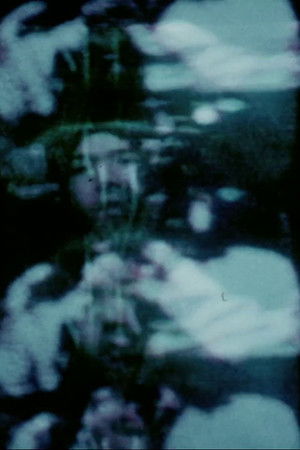
Grateful Dead
A chaotic film featuring the Grateful Dead. The songs that are included are Sitting on Top of the World, Good Morning Little Schoolgirl, Cold Rain and Snow, and something that might be Viola Lee Blues. Preserved by the Academy Film Archive in 2007.
1967

Now That the Buffalo's Gone
Color UCLA Student Film, Preserved by the Academy Film Archive in 2012. The film melds still photos, Hollywood film, television footage, and speeches with a solarized color overlay to portray Plains Native American life during the period of the United States settler military occupation of the North West. 'Described by the filmmaker as 'an elegy to the lost heritage of the plains Indians,' this is a moving and intricately made work utilizing still photos, film clips, television footage, bits of old speeches, solarized color, and stroboscopic effects.' - Media & Methods.
1967

Becket
Thomas Becket, Henry II's longtime advisor, finds his friendship with the debauched king corroding when he is unwillingly appointed as Archbishop of Canterbury in an attempt to gain absolute loyalty from the Church.
1964

Hud
Hud Bannon is a ruthless young man who tarnishes everything and everyone he touches. Hud represents the perfect embodiment of alienated youth, out for kicks with no regard for the consequences. There is bitter conflict between the callous Hud and his stern and highly principled father, Homer. Hud's nephew Lon admires Hud's cheating ways, though he soon becomes too aware of Hud's reckless amorality to bear him anymore. In the world of the takers and the taken, Hud is a winner. He's a cheat, but, he explains, "I always say the law was meant to be interpreted in a lenient manner."
1963
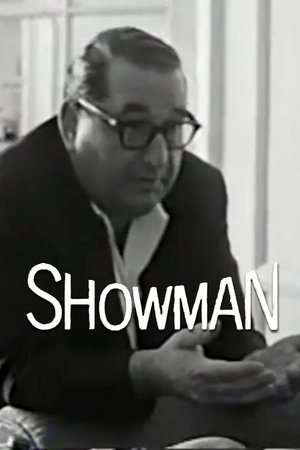
Showman
Albert and David Maysles (Gimme Shelter) directed this 53-minute documentary about movie tycoon Joseph E. Levine (1963).
1963
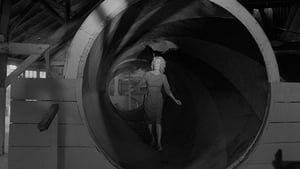
Carnival of Souls
Mary Henry ends up the sole survivor of a fatal car accident through mysterious circumstances. Trying to put the incident behind her, she moves to Utah and takes a job as a church organist. But her fresh start is interrupted by visions of a fiendish man. As the visions begin to occur more frequently, Mary finds herself drawn to the deserted carnival on the outskirts of town. The strangely alluring carnival may hold the secret to her tragic past.
1962
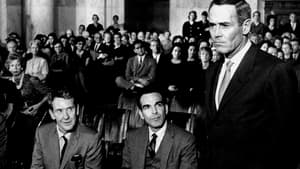
Advise & Consent
Proposed by the President of the United States to fill the post of Secretary of State, Robert Leffingwell appears before a Senate committee, chaired by the idealistic Senator Brig Anderson, which must decide whether he is the right person for the job.
1962

Pather Panchali
Impoverished priest Harihar Ray, dreaming of a better life for himself and his family, leaves his rural Bengal village in search of work. Alone, his wife, Sarbojaya, looks after her rebellious daughter, Durga, and her young son, Apu, as well as Harihar's elderly aunt Indir. The children enjoy the small pleasures of their difficult life, while their parents suffer the daily indignities heaped upon them.
1955
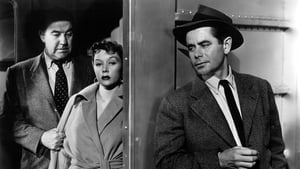
Human Desire
A Korean War vet returns to his job as a railroad engineer and becomes involved in a sordid affair with a co-worker's wife following a murder on a train.
1954
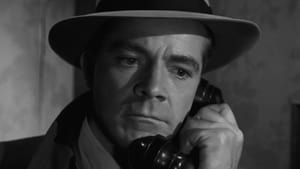
Where the Sidewalk Ends
A police detective's violent nature keeps him from being a good cop.
1950
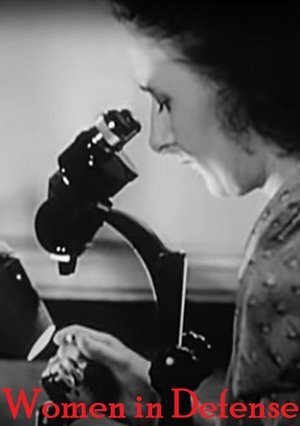
Women in Defense
Short documentary extolling the virtues and necessity for women to participate in America's preparation for war, showing women working in scientific, industrial, and voluntary-services activities. Preserved by the Academy Film Archive in 2008.
1941
Calling All Workers
Documentary short about the government census of unemployed but employable workers. Preserved by the Academy Film Archive, Academy War Film Collection, in 2009.
1941
Story with Two Endings
Documentary short film depicting the disastrous result of runaway prices following the First World War and warning Americans against repeating the crisis as the Second World War nears an end. Preserved by the Academy Film Archive in 2012.
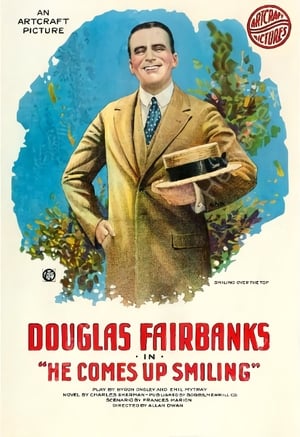
He Comes Up Smiling
Jerry Martin quits his dull job as a bank clerk and falls in with a band of hobos. He takes on the guise of Bachelor, the "king of the market," and finds himself pursued by dangerous men who are after the real Bachelor. *Only fragments are known to exist. Preserved by the Academy Film Archive in 2010.
1918