Watch Amazon Mirror (2022) Online Free
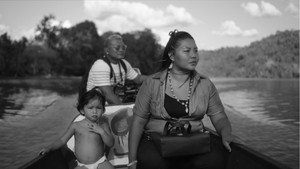
A black and white film about the people who live near one of the world’s largest hydroelectric plants in Amazonia. In the shadow of this environmentally destructive project, they eke out involuntarily meagre lives, without electricity or infrastructure.
Cast
Fernando Segtowick
More Like This
Parasisi
On the border of Surinam and French Guyana, indigenous Wayana territory is overrun by intruders. Illegal gold miners poison the river, missionaries repress indigenous identity, and even doctors with the best intentions leave marks that are often silently violent. The Wayana call these intruders Parasisi.
2026

Copinha
For the first time, Esporte Clube Macapá will compete in the Copinha, the world’s largest under-20 football tournament. For young prospects from Amapá, the competition represents a rare chance to gain visibility. In Brazil’s Amazonian north, they are often overlooked — but in the Copinha, their matches will be broadcast nationwide, watched by scouts and agents connected to major clubs.
2025

The Lost Children
After a plane crash, four indigenous children fight to survive in the Colombian Amazon using ancestral wisdom as an unprecedented rescue mission unfolds.
2024

Guyane, vivre avec le jaguar
2024
Ungezähmt - Im Fluss des Lebens
We get to know a few inhabitants of central European rivers.
2024
A conquista da floresta
2024
Our Children's River
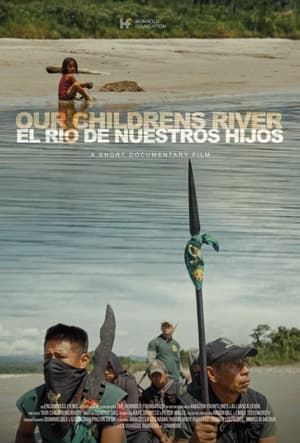
Across the Amazon, Indigenous guards are unarmed patrols that peacefully defend ancestral territories against threats like oil, mining and poaching. They use diverse technologies to monitor their lands, and when necessary, force out illegal operations and actors. Most of this daily work, which involves lengthy hikes and patient observation, goes unseen. This film depicts the process of the Indigenous Guard: its patrols, its watchful vigilance over the landscape, and its support of the community. Their work as guards helps ensure that destruction in the Amazon doesn’t advance, and that their community has the vital space it needs to live life on their own terms.
2023
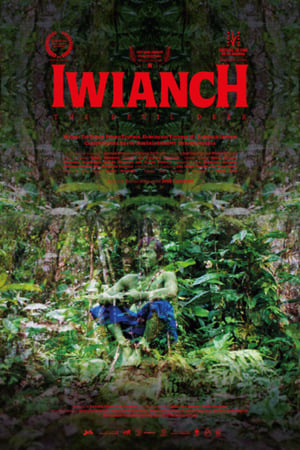
Iwianch, the Devil Deer
An enigmatic presence haunts the depths of the Amazon rainforest, where an indigenous Achuar teenager has disappeared. During the search for the young man, his family decides to consult with a Shaman, who, immersed in trance, reveals that the young man was taken by the devil, but that he has intervened by showing him the way back to his home. While waiting for his return, secrets of the rainforest and Amazonian visions of life after death are touched, vanishing the documentary filmmaker’s concepts of reality.
2021

The Last Shaman
James, giving himself 12 months before he has "a license to kill himself," sets off to the Amazon rainforest with hopes of finding a shaman who can save his life.
2017
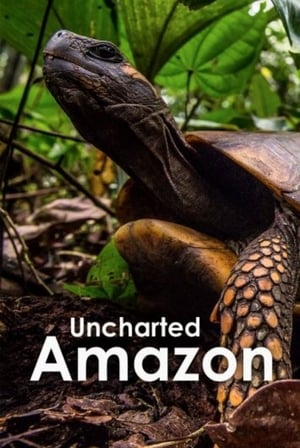
Uncharted Amazon
Deep in the jungles of Peru, a silky anteater is fighting to stay awake and a mother humming bird is struggling to raise her chick. Through millions of years of evolution they have developed bizarre relationships and unexpected strategies to overcome them changing conditions, but for all their ingenuity, they were never prepared for the arrival of a new species on the scene.
2016
Dumulmeori
One peaceful day for the farmers in the summer of 2009, the Korean government announced the master plan for the “4 Major Rivers Project.” The government suddenly announced that organic agriculture severly polluted the water. The 4 Major Rivers Project was a mega-sized national project by the LEE Myungbaek Administration to “renovate” the 4 major rivers in Korea to construct the Korean Peninsula Great Canal. The project constructs 16 dams in the rivers and expropriates farming lands and riverbeds to build bicycle roads and parks. The Paldang “Dumulmeori” organic farming area known as the hub of Korean organic farming was to be included as part of the 4 Rivers Project. This film is about the 40 Months of struggles by organic farmers against the 4 Major Rivers Project.
2013
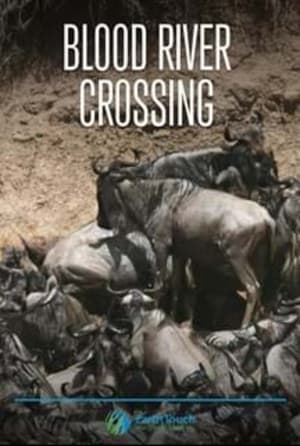
Blood River Crossing
In the most brutal migration on the planet, ride shotgun with ZuluEchoFive and FoxtrotOne, a zebra mother and her son. They run the gauntlet through crocodile infested rivers and lion offensives, culminating in the world's ultimate ambush: the Mara River - where the biggest crocodiles in Africa are on the attack.
2013
Anaconda: Giant Snake of the Amazon
No animal in the Amazon is more feared and more respected than the 'spirit of the river' - The Anaconda
1999
Tropical Rainforest
The story of the evolution of tropical rain forests, their recent and rapid destruction, and the intense efforts of scientists to understand them even as they disappear. This film gives viewers a better appreciation of the importance of tropical rain forests on a global scale.
1992
Don Emilio and His Little Doctors
Don Emilio is a humble, 63-year-old man who lives in the Amazon rainforest, seven miles from the city of Iquitos, Peru. For all of his adult life he has worked as a curandero and vegetalista, a traditional healer. He estimates that in his career he has treated more than 2,500 clients. Through the camera lens of anthropologist Luis Eduardo Luna, Don Emilio tells us about his practice, his beliefs, his community, and his life. He shows us how he prepares ayahuasca and other herbal medicines. Finally, we see Don Emilio treat a man who has come to him for help, and hear from a poor woman who has brought her infant son for medical care.
1982

Broken Fall (Organic)
Bas Jan Ader hangs from the branch of a tall tree, until he loses his grip and falls into a river below.
1971

Fall 2
Bas Jan Ader rides his bike into a canal in Amsterdam.
1970
Rapids Ahead/Bear Country
The first half is a salute to John Wesley Powell, the first man to explore the Colorado River. Walt Disney presents a behind-the-scenes look at the filming of Ten Who Dared on the same waters. Then the True-Life Adventure Featurette: Bear Country is shown.
1960
Die grüne Hölle
Expedition into the Amazon river and its rain forests
1934
Amazon: Longest River in the World
Documentary by Portuguese Silvino Santos, about the Amazon, its flora, fauna, its inhabitants and among other wonderful images from the beginning of the 20th century with alternating close-up shots of caimans, jaguars and tropical flora with footage of Indigenous rituals--including some of the earliest known moving images of the Indigenous Witoto people--and longer sequences showcasing the region’s extractive industries: rubber, the Brazil nut, timber, fishing, even the egret feathers that were a staple of women’s fashion at the time.
1918