Watch To the Arctic (2024) Online Free
The documentary film “To the Arctic,” filmed by director and ethnographer Leonid Kruglov, is dedicated to the discoveries and research of the largest icy desert in the world. For the first time, the film captures all the most remote and inaccessible Arctic archipelagos of the Russian high-latitude Arctic, which are scattered over an area of more than 10,000 km. Among them are Franz Josef Land, Novaya Zemlya, Severnaya Zemlya, Ushakov Island and the New Siberian Islands archipelago, Wrangel Island and the De Long archipelago, as well as many other hidden corners of the North.
Cast
Fedor Konyukhov, Boris Tokarev
More Like This
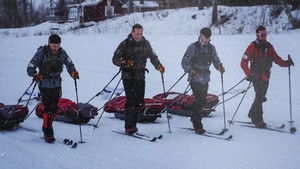
Arctic Adventure: Ultimate Survival
In the Arctic Circle, Jason Fox and an elite team of military veterans open up to each other about men’s mental health while taking on one of the world’s toughest ultramarathons.
2026
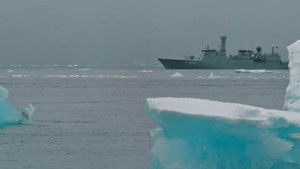
Groenland, annexe-moi si tu peux
Greenland, a semi-autonomous territory of Denmark, is currently at the center of international covetousness and tensions. In his rivalry with China for technological supremacy, Donald Trump has made the acquisition of this Arctic territory a priority in order to secure American control over rare earth elements, of which Greenland is believed to hold one of the world's largest reserves.
2025
Wenn die Arktis schmilzt
2025
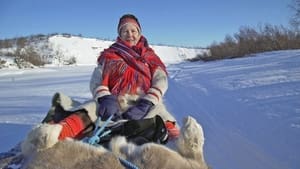
Into the Land of Ice and Fire
Two parallel stories are gradually unfolding the everyday life of two very different persons - that of 86-year-old Sara and 7-year-old Mihka - both residing in Guovdageaidnu - Kautokeino, in the middle of the Norwegian arctic tundra, through the drastic change of the arctic seasons and the passage from the long winter’s darkness to the never-ending light of the summer season.
2022
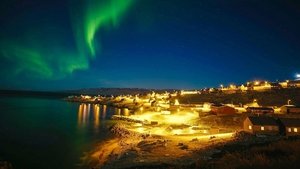
Greenland: in the Glare of Ice
Greenland is the largest island in the world and the landmass closest to the North Pole. 80% of the country is covered by a layer of ice up to 3000 meters thick. Through the eyes of locals we get to know the authentic Greenland.
2020

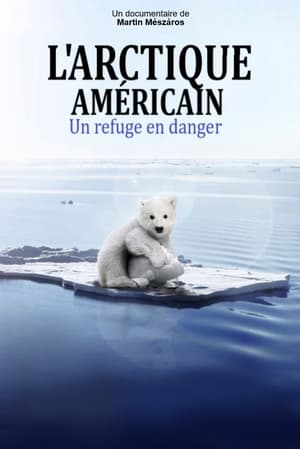
America's arctic – A Refuge Imperiled
The wildlife of the tundra on Alaska's north coast is particularly threatened by climate change.
2020
Arctic
This film shows the splendor, enormous scope and indescribable beauty of this untouched land far to the north of Alaska, one of the last havens for caribou herds and polar bears. Shot over a period of four years, this film offers a unique insight in the lives of the most charismatic arctic animals.
2020

Alone Across the Arctic
Explorer Adam Shoalts embarks on an estimated 4000 km journey across the Canadian Arctic by canoe and on foot, alone.
2019
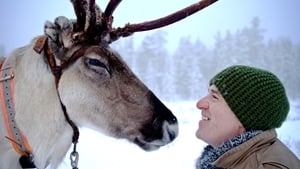
Reindeer Family & Me
Wildlife cameraman Gordon Buchanan travels to the frozen north, deep inside the Arctic Circle, to meet the ancient Sami people and the animals they hold so close - reindeer.
2017
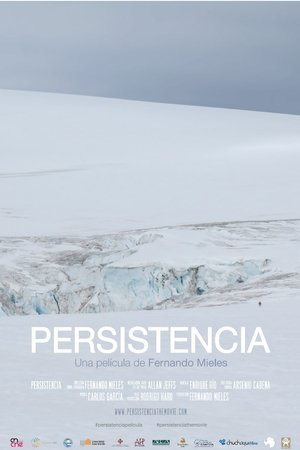
Persistencia
In Antarctica, an artist prepares his installation simultaneously with a group of scientists conducting research. An essay on the persistence and loneliness of the creative act; like the flight of a butterfly in chaos theory or a silent prayer. A sensory experience. A visual poem made of ice, snow and wind.
2016
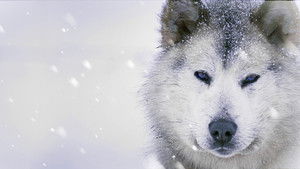
Ice Dogs: The Only Companions Worth Having
The Arctic is accessible to man only because of ice dogs. As hunters, haulers, and guardians, they have been our vital link to nature for thousands of years. Dogs led the Sarqaq people out of Siberia and, a millennium later, led explorers to the North Pole. As the light returns to Greenland, we arrive in Scoresbysund with a troop of the only companions worth having in this harsh environment.
2016
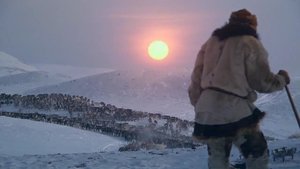
The Reindeer People
The Chukchi reindeer breeders are peculiar people. They are nomads. Reindeers are their welfare, the purport of life. The mother-reindeer is the main divine being; it protects the Chukchi from misfortune and troubles. Nature is not friendly towards people here. Only Chukchi can survive in Tundra. A rush period for the Chukchi reindeer breeders comes in winter, when the temperature rises up to 50 degrees Celsius at night and in the sunlight of the day it doesn't exceed 40 degrees Celsius in tundra: they should separate young deers from the rest of the herd, the weak from the strong. And this, considering that the herds of the Chukchi reindeer breeders number some thousand heads...
2014
Invasion of the Killer Whales
As the ice shrinks in the Arctic, polar bears are struggling to survive in a fast melting world. Although classified a marine mammal, the polar bear is not adapted to hunting in the water. And it is certainly no match for the world's greatest aquatic hunter -- the killer whale. In the last few years, scientists have noted an ever-growing number of killer whales in Arctic waters in the summer months. More and more have been attracted to these hunting grounds by the growing expanse of open water. They attack the same prey as the polar bears: seals, narwhal, belugas and bowhead whales.
2014
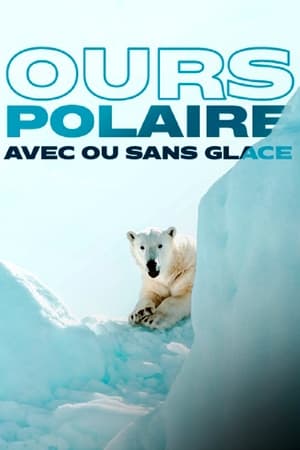
Face to Face with the Polar Bear
Filmmaker Jerome Bouvier spent a year in Spitzberg following the incredible destiny of a polar bear family in a rapidly changing environment. Casting brother and sister twin cubs, this tale focuses on their education and reveals their individual characters.
2005
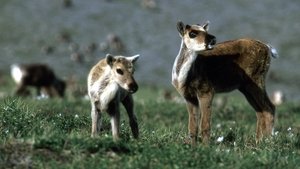
Being Caribou
Wildlife biologist Karsten Heuer and his wife, environmentalist Leanne Allison follow a herd of 120,000 caribou on foot across 1500 km of Arctic tundra, hoping to raise awareness of the threats to the caribou's survival. Along this journey, they brave torrid conditions, dangerous wildlife and treacherous terrain all in the hopes of learning the truth about this epic migration.
2005
Arktis - Zwischen Licht und Dunkel
Arktis is a poetic approach to the bizarre landscape of ice, rock, and water; a journey to the arctic ocean and surroundings, with images and sounds. Seventy one-second scenes of the arctic serve as the original material, which is then transformed in its texture, time lapse, color and light qualities to create a material reminiscent of landscape painting. The sound collage uses fragments from sounds of nature and samples from a piece of music for violin and song, which are also transformed in a manner similar to that of the visual pictures. (Jürgen Reble)
2004
Edge of Ice
This feature documentary highlights the nature of Arctic sea ice, and its crucial importance to life in the Far North. Underwater photography presents rare views of some of the most spectacular wildlife, with micro- and macro-photography enhancing the world within the individual ice crystals. Footage from Inuit hunting camps at the floe’s edge illuminate the relationship between the Arctic people and their intricate ecosystem.
1986
The Land That Devours Ships
For almost a century and a half, Her Majesty's Ship Breadalbane lay wrecked and forgotten under the Arctic ice. In the spring of 1983, noted undersea explorer Dr. Joseph MacInnis led a team of twenty men on one of the most difficult, dangerous and unforgettable undersea adventures of the century--to put a diver on board the sunken vessel and recover some artifacts. This film, introduced by H.R.H. Prince Charles, provides a stunning visual account of this historic expedition.
1984

In Search of the Bowhead Whale
This adventure film features Scott McVay, an authority on whales, and filmmaker Bill Mason. The objective was to film the bowhead, a magnificent inhabitant of the cold Arctic seas brought to the edge of extinction by overfishing. With helicopter and Inuit guide, aqualungs and underwater cameras, the expedition searches out and meets the bowhead and beluga.
1974
The Alaska-Siberian Expedition
Captain Kleinschmidt leads an expedition sponsored by the Carnegie Museum to the arctic regions of Alaska and Siberia to study the natives and the animal life.
1912