Watch Tissu Local (2018) Online Free
Over the past thirty years, the French textile industry has outsourced almost all of its production. Thousands of jobs have been lost, particularly in the Hauts-de-France region. Those laid off have never found new employment in the garment sector. Today, for some fashion designers, "Made in France" is a matter of quality and reputation, and we are witnessing the beginnings of "relocation" for certain product lines. Capitalizing on this trend, a sewing workshop opened in Ham, Picardy, in May 2017. The plan is to employ 30 people by 2020. Supported by local authorities, this initiative is spearheaded by Jean-Luc François, a couturier committed to training in fashion-related professions. For a year, from the initial application review to the delivery of the first orders, Maurice Ferlet shares with us the hopes and doubts of the first twelve people to join this workshop.
More Like This
Arts de la table, une excellence française
2025
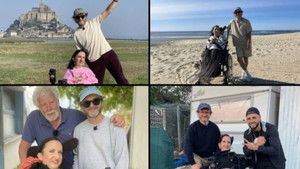
Le Tour de France de Lucie
Aboard a specially decorated motorhome made by Lulu, they will travel the roads of France for the first time, following "an itinerary as twisted as Lucie's spine" (sic). From the French Riviera to Mont-Saint-Michel, via the Arcachon basin, Hauts-de-France and Lot, before reaching the Champs-Elysées for a finish as prestigious as the Tour de France. On the agenda: a reunion with a fourth-grade class, funny gypsies, a haunted castle, oysters and white wine with the most famous oyster farmer, but also a few activities strongly discouraged for people with muscular dystrophy... and above all, big-hearted French people, as funny as they are generous, who offer us the best of their country through their hospitality.
2025
Brocolis
2025
Nowt But a Fleeting Thing
A film about a young farmer's connection to the land, his animals and a changing world in the north of England. Battling against unsustainable farming methods and an unenthusiastic market, Adam Crowe continues to work on two neighbouring farms while fighting to launch his own business and breed a flock of sheep. In rural Britain, the threat of poverty is often frighteningly close.
2019
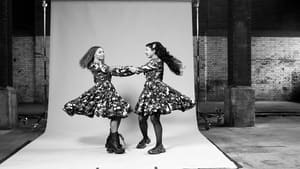
Brigitte
An insight into the creative process of photographer Brigitte Lacombe, exploring her obsession with taking pictures and how her lens defines her relationship with her subjects and the world.
2019
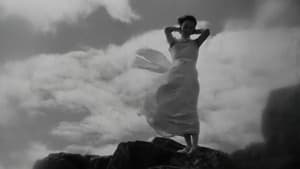
Song of Armorica
A poetic drama, spoken in the Breton language and set in a Breton fishing community, telling of the impossible love between a waifish fisherman and a highborn lady-of-the-manor.
2016
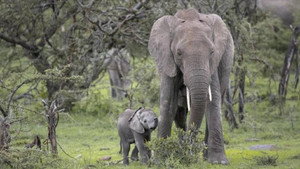
Small Elephant
"Little E" baby elephant born in the Serengeti National Park, Tanzania, must grow up with his family to have every chance of survival.
2015

Planet Food: Lebanon
For centuries, the ports of Lebanon dominated the trade routes between Europe, the Middle East, China and India. In this documentary, our intrepid gastronaut Merrilees Parker finds a world of heavily spiced lamb, cooling salads, deliciously strong wines from and sweet pastries filled with pistachios and honey.
2014
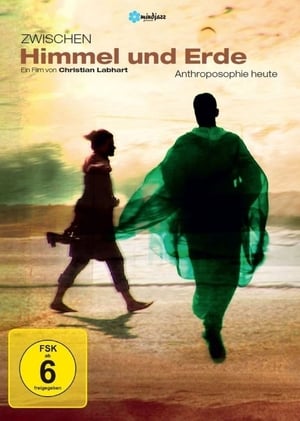
Zwischen Himmel und Erde - Anthroposophie heute
2010

El Fulgor
Documentary directed by Ramón Lluís Bande about the creative process Nacho Vegas makes about El Fulgor, song included in his second album "Cajas de música difíciles de parar" (2003).
2002
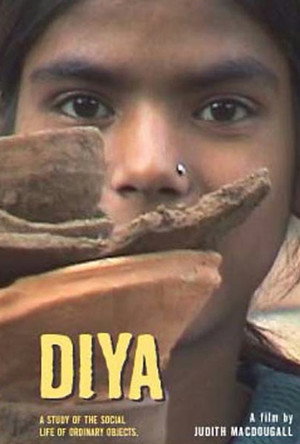
Diya
2001

Fissures
In making this piece, Bourque literally distorted the personal home movie images appearing on the film plane through various manipulations in the process of doing her own low-tech contact printing. The point of contact in printing is continuously shifted so that the film plane appears warped and the images fluctuate, creating a distorted space of fleeting apparitions, like resurfacing memories.
1999
The Refusal
In 1971, the Algerian government nationalized hydrocarbons. The consequences of this decision on the community of Algerians in France are numerous. The Galti family is prey to these economic problems. The father, Khaled, former member of the F.L.N. in France, does not escape the sentence. Sharazade, his wife and comrade in combat, finds herself torn between her role as wife, mother and nostalgia for a country and a bygone past. As for his son Karim, a victim of socio-cultural division, all he has left is refusal.
1982
Ali in Wonderland
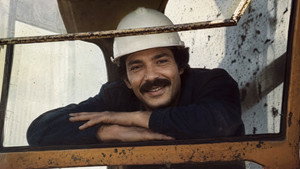
In the 1980s, barely 18 years after Algeria's independence, Algerian immigration to France massively fueled the construction industry, responding to a demand for hard, undervalued labor. Behind the idea of "selective immigration," these men were recruited primarily for their bras and their knock-kneed hands, shaped by construction sites. Invisible yet essential, they built roads, buildings, and infrastructure, often at the cost of precarious conditions. Ali, an Algerian crane operator in France, philosophically accepts the harassment faced by immigrants like himself on construction sites and in daily life. He hopes to escape his situation with the money he wins in the lottery, and from the top of his crane, he allows himself to dream, observing the world through binoculars. One day, the jackpot falls...
1980
The Ambassadors
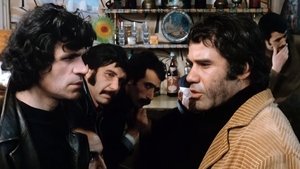
“Each of you is an ambassador, and we are sure that each of you will be the best ambassador of our country.” This is how the film begins; a speech to emigrant workers for France. Salah left his three sisters and his mother to become an ambassador, going to work on a Defense site, wading in the mud, he works with a jackhammer. Salah wanders in search of work and housing. Coming up against racism from the owners claiming the respectability of the building and the good neighborhood, he finds himself in a hotel in the Goutte d'Or district. The body of Mehdi, friend of Salah, was found in the Canal Saint-Martin, murdered by a fascist commando, and Ali died of a bullet, killed by a racist janitor. Faced with crimes that remain unpunished, Salah and his friends organize, unite with the French working class to defend their lives and their right to work.
1975
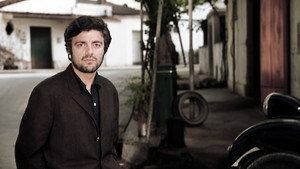
Forbidden Zone
In an Algerian village, just before the war of independence, the inhabitants are under the thumb of a local strongman and a wealthy merchant. Among them is El Faïza, an old woman searching for her son who has escaped from prison. The gendarmes arrest El Faïza and seize the property of the villagers who haven't paid their taxes. The situation is ripe for a revolt…
1974
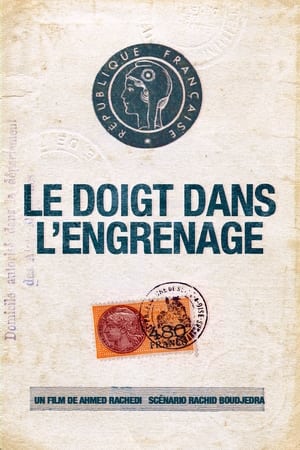
A Finger in the Works
The film mixes fiction, filmed documents and interviews which recounts the arrival in Paris of an Algerian immigrant lost in the metro. On December 27, 1968, France and Algeria signed an agreement which admitted each year 35,000 Algerian workers to French territory in the France of the Trente Glorieuses where the annual growth rate reached 5% and where factories lacked workers. Candidates obtain a residence permit valid for 5 years for themselves and their families. Paris is committed to improving professional training and housing conditions for immigrants, too often confined to the most thankless jobs and often housed in slums. A testimony on the living conditions of emigrant workers "economic cannon fodder" of neocolonialism which simultaneously develops its alter ego, institutionalized racism, as a tool of social stagnation and division of the proletarian class.
1974
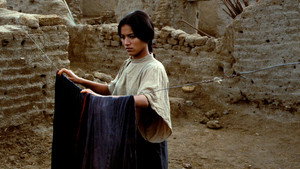
Ramparts of Clay
In a village on the edge of the Sahara, Rima, a 19-year-old orphan, dreams of learning, of discovering, of living free while the men of the salt mine go on strike. The authorities react by sending the army, Rima decides to help the strikers by trapping the soldiers. Co-produced with the Office des Actualités Algériens and shot in the region of Téhouda, 50 kilometers from Biskra, this Franco-Algerian film is fully part of the cinematographic heritage of both shores of the Mediterranean. Bertuccelli adopts the technique of cinema verite, with non-professional actors from the village itself, giving the film a striking documentary texture and a rare force of authenticity. Carried by the moving interpretation of Leila Shenna in the role of Rima, the actor Krikèche and lulled by the music of Taos Amrouche, the film questions female emancipation, social resistance and the relationship with the territory.
1970
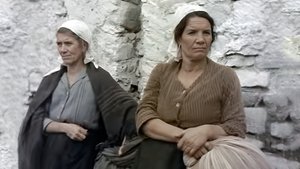
Landslide in Lucania
The life of the Lucan peasant faces not only atavistic poverty, but also the ferocity of nature. When bad weather rages, the hard-won shelters are at risk of being destroyed by landslides. The only thing to do is to leave home, hoping to find it intact on the way back.
1960
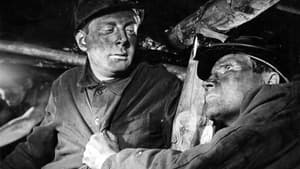
The Mark of the Day
In a settlement in the northern mining country. The Marles, Bréhard and Gohelle families wake up and prepare for a new day at work. The young engineer Larzac, newly appointed to the mine, will soon oppose the authoritarian and conservative methods of his superior Dubard. Georges Gohelle would like to marry Marie Bréhard, but housing difficulties thwart their plans. Brezza, a Polish immigrant, who must return to his country, would like to hate his marriage to Louise Gohelle. Roger, Marie's little brother, has just turned 14. He does not want to go down to the mine as his elders have always done. He will however have to resign himself to it. Marles evokes for him the social struggles of 1906. Roger is injured during a landslide. In front of his family and his friend Marles, who had come to the hospital, he announced his decision to continue his profession. Larzac, invited to the Marles, reveals that he refused a quiet position at the Charbonnages de Paris. He too stays.
1949