Watch Diya (2001) Online Free
More Like This
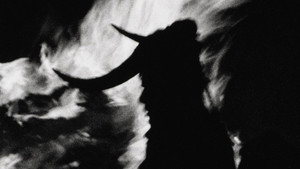
An Unholy Dance
Every winter, a small town in Castilla-La Mancha called Luzón transforms into a little hell. Its inhabitants, dressed as devils, venture into the darkness and roam its streets with horns, bells, and smeared with soot. Una dança non sancta could have been just an anthropological documentary. Instead, it delves into the inferno with the town’s residents to participate in and immortalize this unholy ritual.
2026

Behind the Shadows
The Greek shadow puppetry began 130 years ago. A student of Greek shadow puppetry travels to China, where shadow puppetry began over 2000 years ago. There he follows Chinese shadow puppeteer master He Shihong in Wushan of China. Watching his performances and listening to him talk about his art and his career in it, many parallels are drawn and he expresses them by including his Greek shadow puppetry teacher in the film. This documentary is a cultural bridge between Greece and China through the art of shadow puppetry.
2025

Creature Catalogue
2023
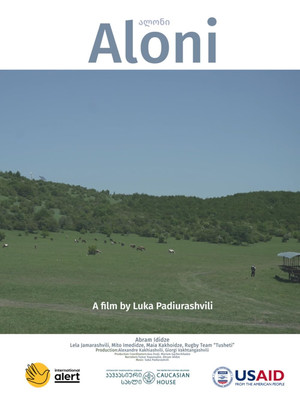
Aloni
A young student heads back to his village during the COVID-19 lockdown to collect ethnographic material for his thesis, but as quarantine stretches on, the rituals and everyday scenes he records start bringing back childhood memories-leading him to piece the footage together into something more personal.
2022

Pileni paualala. Dried giant clams in the Reef Islands
The Reef Islands Ethnographic Film Project was started in 1994 by the two anthropologists, Jens Pinholt and Peter I. Crawford, and village communities in Bekapoa, Ngasinue/Fenualoa and Vaiakau. Field and film visits took place in 1994, 1995-1998, 2005, 2010, 2015 and 2017. This film is based on one such visit in June 2015, by Peter I. Crawford and Birgitte Hansen, a nutrition expert. The focus was on a diachronic study of nutrition, collecting information in three villages and comparing it with material from the 1970s and the 1990s. Pileni was one of the villages.
2022
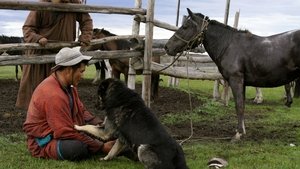
The Bounty Hunter of Mongolia
In the Darhat valley in northern Mongolia, the horses of nomadic tribes are stolen by bandits who then sell them to Russian slaughterhouses. Shukhert, a brave horseman, relentlessly pursues them through the Mongolian taiga, bordering Siberia.
2021

Color-Blind
A synaesthetic portrait made between French Polynesia and Brittany, Color-blind follows the restless ghost of Gauguin in excavating the colonial legacy of a post-postcolonial present.
2019
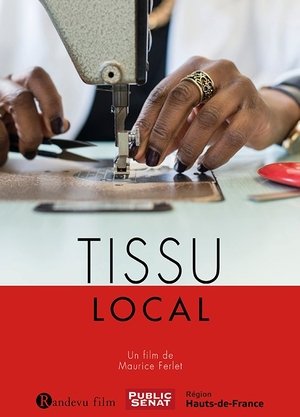
Tissu Local
Over the past thirty years, the French textile industry has outsourced almost all of its production. Thousands of jobs have been lost, particularly in the Hauts-de-France region. Those laid off have never found new employment in the garment sector. Today, for some fashion designers, "Made in France" is a matter of quality and reputation, and we are witnessing the beginnings of "relocation" for certain product lines. Capitalizing on this trend, a sewing workshop opened in Ham, Picardy, in May 2017. The plan is to employ 30 people by 2020. Supported by local authorities, this initiative is spearheaded by Jean-Luc François, a couturier committed to training in fashion-related professions. For a year, from the initial application review to the delivery of the first orders, Maurice Ferlet shares with us the hopes and doubts of the first twelve people to join this workshop.
2018

Harlem School 1970
A unique 'direct cinema' feature length documentary (no narration or interviews) originally filmed in the Spring of 1970 and concluded during the Summer of 2017 (footage added, restored, and re-edited). A day in the life of an inner-city Harlem elementary school. In 2018 filmmaker Phil Gries reunited with seven of his former Harlem elementary students whom he hadn't seen in 50 years.
2018

Awake: The Life of Yogananda
An unconventional biography by Oscar nominee Paola di Florio and Sundance winner Lisa Leeman about Hindu mystic Paramahansa Yogananda who brought yoga and meditation to the West in 1920 and authored the spiritual classic "Autobiography of a Yogi," which became the go-to book for seekers from George Harrison to Steve Jobs.
2014
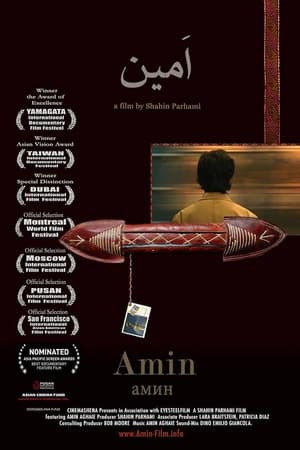
Amin
AMIN portrays Qashqai musician Amin Aghaie, a young modern nomad and his family who despite facing steep financial, cultural and political obstacles are dedicated to their art and culture. Amin travels to remote towns and villages to record the music of the surviving masters whose numbers decline each year. His nomadic family are selling their meager belongings to help support their son's education in performance and ethnomusicology at Tchaikovsky's Conservatory in Kyiv, Ukraine, but it is not enough. Amin, desperate to finish his academic education, sells his violins one at a time just to pay for his tuition.
2010

Bal Ganesh
The film is about the childhood of Lord Ganesh. The film covers a) Lord Ganesh's birth and b) The story behind Lord Ganesh's voracious appetite which recalls the incident of Lord Kubera inviting Lord Shiva and Goddess Parvathi for a feast and the consequential events
2007

Divine Horsemen: The Living Gods of Haiti
This intimate ethnographic study of Voudoun dances and rituals was shot by Maya Deren during her years in Haiti (1947-1951); she never edited the footage, so this “finished” version was made by Teiji Ito and Cherel Ito after Deren’s death.
1993

Hombres de barro
A group of filmmakers travel to a Kolla community in Salta to film their folkways. We see all aspects of their life: farming, herding, cooking, football, and making music during a Pachamama festival. In the course of filming, the leader of the Kolla community changes the filmmakers' view of what the documentary should be, and at the end of their visit they are changed. "La vida se puede ir amasando, como el barro": As life goes along, it becomes more pliant, like clay. An announcement at the beginning of the film states that this is neither fiction nor documentary, but I'd say it's closer to documentary.
1988
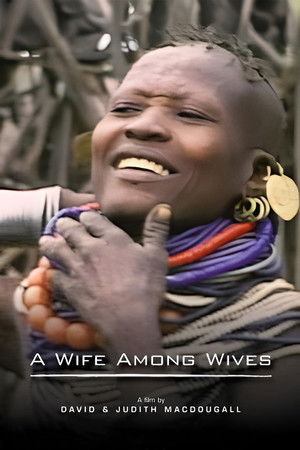
A Wife Among Wives
David and Judith MacDougall are exploring the marriage rituals and roles of Turkana women in this ethnographic documentary. The film's biggest part is taken up by talks between the Turkana people. As one of the first ethnographic documentaries "A Wife Among Wives" subtitles these talks so that the viewer can get a better and probably more personal understanding of the life of the Turkana.
1981

Pam Kuso Kar (Breaking Pam's Vases)
In February 1974, Pam Sambo Zima, the oldest of the priests of possession in Niamey, Niger, died at the age of seventy-plus years. In his backyard, the followers from the possession cult symbolically break the dead priest's ritual vases and cry for the deceased while dividing up the clothes of the divinities.
1974
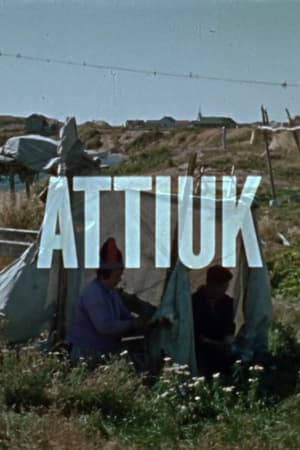
Attiuk
The people of Unamenshipu (La Romaine), an Innu community in the Côte-Nord region of Quebec, are seen but not heard in this richly detailed documentary about the rituals surrounding an Innu caribou hunt. Released in 1960, it’s one of 13 titles in Au Pays de Neufve-France, a series of poetic documentary shorts about life along the St. Lawrence River. Off-camera narration, written by Pierre Perrault, frames the Innu participants through an ethnographic lens. Co-directed by René Bonnière and Perrault, a founding figure of Quebec’s direct cinema movement.
1963
Mangbetu
An ethnographic documentary about the Mangbetu tribe of the Belgian Congo (now the Democratic Republic of the Congo). The film features a discussion of various rites including the Mangbetu practice of head binding, as well as various examples of traditional music and dance.
1954
Beauty and the Beast: Two Igbo Masquerades
Beauty and the Beast: Comparing Two Igbo Masquerades By Herbert M. Cole
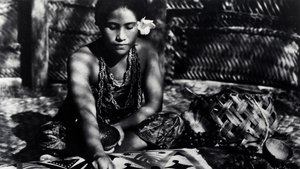
Moana
Robert J. Flaherty’s follow-up to Nanook of the North shifts from the Arctic to the South Seas, portraying Samoan village life with a painterly eye. Blending ethnographic detail with a romanticized “Gauguin idyll,” the film celebrates daily rituals, communal traditions, and the passage into adulthood, suffused with what Flaherty called “pride of beauty, pride of strength.”
1926