Watch The Wonderful Horrible Life of Leni Riefenstahl (1993) Online Free
This documentary recounts the life and work of one of most famous, and yet reviled, German film directors in history, Leni Riefenstahl. The film recounts the rise of her career from a dancer, to a movie actor to the most important film director in Nazi Germany who directed such famous propaganda films as Triumph of the Will and Olympiad. The film also explores her later activities after Nazi Germany's defeat in 1945 and her disgrace for being so associated with it which includes her amazingly active life over the age of 90.
Cast
Leni Riefenstahl, Walter Frentz, Horst Kettner, Ray Müller, Luis Trenker, Guzzi Lantschner
More Like This

Becoming Madonna
Madonna's rise to fame from 1978 to 1992, exploring her personal life, controversies, and the challenges she faced during that period.
2024

Hartheim: The Nazi Castle of Horror
In 1939, as the world stood on the brink of World War II, Hartheim Castle, Austria, was at the centre of a turning point of history. It had been a centre for those with physical or mental disabilities. But from 1939 to 1944, it acted as a pilot scheme for the 'final solution.' Hartheim: the top secret Nazi school for mass murder.
2021

Panodrama
Tommy Robinson goes on the offensive by documenting how his own “hit piece” on his character was being constructed by the taxpayer-funded BBC for their popular investigative news special “Panorama.” In the film he manages to capture footage of the blackmailing of his former employees to invent stories, along with an organization—known as “Hope not Hate”—on set with the BBC, intimidating ex-employees of Robinson during interviews. The host of “Panorama” at the time of filming is caught on camera casually using racist and homophobic slurs during a £220 champagne lunch with the same ex-employee they had planned to coach for a fake interview in which the BBC would possibly edit in which to make it appear as, “a gender, a sexual thing against Tommy Robinson,” according to the host. Within 24 hours of releasing the film, social media giant Facebook made a public statement of their own and removed Tommy Robinson’s accounts permanently.
2019

Eric Clapton: Life in 12 Bars
An unflinching and deeply personal journey into the life and work of guitarist Eric Clapton told through his own words and songs.
2018
American Carnage
See how alt-right icon Steve Bannon’s years as a documentary filmmaker catapulted him to Breitbart News and the Trump White House.
2017

The Artist’s Garden: American Impressionism
Taking its lead from French artists like Renoir and Monet, the American impressionist movement followed its own path which over a forty-year period reveals as much about America as a nation as it does about its art as a creative power-house. It’s a story closely tied to a love of gardens and a desire to preserve nature in a rapidly urbanizing nation. Travelling to studios, gardens and iconic locations throughout the United States, UK and France, this mesmerising film is a feast for the eyes. The Artist’s Garden: American Impressionism features the sell-out exhibition The Artist’s Garden: American Impressionism and the Garden Movement, 1887–1920 that began at the Pennsylvania Academy of the Fine Arts and ended at the Florence Griswold Museum, Old Lyme, Connecticut.
2017

Lenin and the Other Story of the Russian Revolution
Vladimir Ilyich Ulyanov, better known as Lenin, is remembered as the instigator of the October Revolution of 1917 and, therefore, as one of the men who changed the shape of the world at that time and forever, but perhaps the actual events happened in a way different from that narrated in the history books…
2017

The Aryans
THE ARYANS is Mo Asumang's personal journey into the madness of racism during which she meets German neo-Nazis, the US leading racist, the notorious Tom Metzger and Ku Klux Klan members in the alarming twilight of the Midwest. In The ARYANS Mo questions the completely wrong interpretation of "Aryanism" - a phenomenon of the tall, blond and blue-eyed master race.
2014

Zeitgeist: The Movie
A documentary examining possible historical and modern conspiracies surrounding Christianity, the 9/11 terrorist attacks, and the Federal Reserve bank.
2007

This Film Is Not Yet Rated
Kirby Dick's provocative documentary investigates the secretive and inconsistent process by which the Motion Picture Association of America (MPAA) rates films, revealing the organization's underhanded efforts to control culture. Dick questions whether certain studios get preferential treatment and exposes the discrepancies in how the MPAA views sex and violence.
2006

White Terror
A video about Neo-Nazis originating in Sweden provides the starting point of an investigation of extremists' networks in Europe, Russia, and North America. Their propaganda is a message of hatred, war, and segregation.
2005

Overnight
Alternately hilarious and horrifying, Overnight chronicles one man's misadventures of making a Hollywood movie. It starts out as a rags to riches story as Troy Duffy, a Boston-bred bartender, sells his first screenplay for The Boondock Saints.
2003

American Movie
American Movie documents the story of filmmaker Mark Borchardt, his mission, and his dream. Spanning over two years of intense struggle with his film, his family, financial decline, and spiritual crisis, American Movie is a portrayal of ambition, obsession, excess, and one man's quest for the American Dream.
1999
Full Tilt Boogie
A documentary about the production of From Dusk Till Dawn (1996) and the people who made it.
1998

Manufacturing Consent: Noam Chomsky and the Media
A film about the noted American linguist/political dissident and his warning about corporate media's role in modern propaganda.
1992
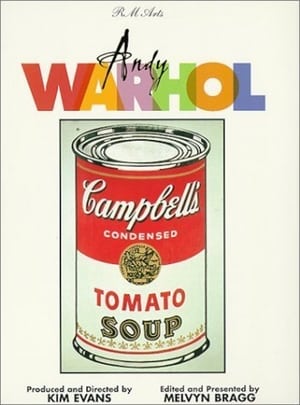
Andy Warhol
The first major profile of the American Pop Art cult leader after his death in 1987 covers the whole of his life and work through interviews, clips from his films, and conversations with his family and superstar friends. Andy Warhol, the son of poor Czech immigrants, grew up in the industrial slums of Pittsburgh while dreaming of Hollywood stars. He went on to become a star himself.
1987
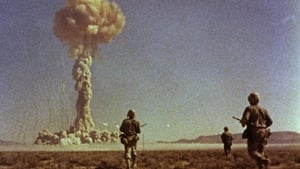
The Atomic Cafe
A disturbing collection of 1940s and 1950s United States government-issued propaganda films designed to reassure Americans that the atomic bomb was not a threat to their safety.
1982
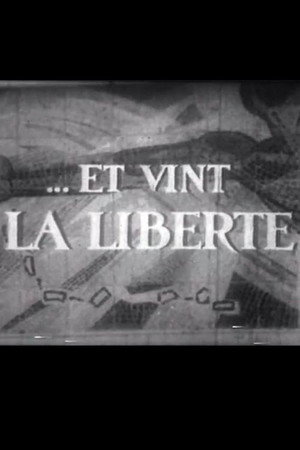
Et Vint La Liberté
A historical epic that chronicles the Guineans’ long struggle against French colonialism and for their country’s independence.
1969

We Settle the Borderlands
Propaganda film aimed at repopulating the Sudety, which fell into ruin after the Second World War and the subsequent expulsion of Germans from Czechoslovakia. The narrator describes the rebuilt infrastructure and is optimistic about the potential offered by the area to families from all over Czechoslovakia and the world.
1946

Victory in the West
A Nazi propaganda film about the lead up to World War II and Germany's success on the Western Front. Utilizes newsreel footage of battles and fell into disfavour with propaganda minister Goebbels because of it's lack of emphasis on Adolf Hitler.
1941