Watch The truth behind the gates of Auschwitz (1992) Online Free
David Cole Interviews Dr. Franciszek Piper, director of the Auschwitz Museum. Swimming pool, sports field, theater, hospital, camp-issued currency, identity tattoos. This documentary shows that not only was fraudulent Soviet evidence admitted as fact at Nuremberg, but also that survivors and experts can be wrong.
More Like This

Simon Schama: The Road to Auschwitz
In the most personal and unflinching film of his career, historian Simon Schama confronts the enormity of the Holocaust and the catastrophe experienced by its victims. In a journey that ends with his first visit to Auschwitz, Simon travels across the Continent to explore how the Holocaust was far more than a Nazi obsession that played out in gas chambers, but a European-wide crime of complicity. From bullets in the Lithuanian lands of his ancestors to bureaucracy in the Netherlands, he reveals how deep-rooted prejudice was weaponised to turn people against their Jewish neighbours. As a moving interview with a survivor reveals, the story of how ‘evil comes step by step’ remains powerfully relevant today.
2025

Auschwitz: Countdown To Liberation
An exceptional documentary film that chronicles the liberation of Auschwitz, commencing on the day of liberation and backtracking in time to narrate the tragedy of the Holocaust from four distinct perspectives: the prisoners, the liberators, the perpetrators, and the local residents.
2025

L'Histoire Vraie Du Tatoueur D'Auschwitz
2025
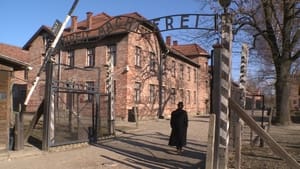
Requiem for Auschwitz - the film
13 years ago, director Bob Entrop made the film A piece of blue in the sky, the first film in the Netherlands that depicted the murder of almost 1 million Sinti and Roma during the Second World War. There is a taboo on what happened during the war, you don't talk about it with anyone and certainly not in front of a camera. Requiem for Auschwitz is a sequel, with the most valuable moments from the first film, supplemented with the grandchildren and the creation and performance of the 'Requiem for Auschwitz' by Sinti composer Roger Moreno Rathgeb by the Sinti and Roma Philharmonic from Frankfurt and a Jewish choir in the Berliner Dom in Berlin, during Holocaust Memorial Day. During his visit to Auschwitz in 2020 with four musicians from the Dutch Accompaniment Orchestra, Roger shows them the places that inspired him.
2022
1944: Should We Bomb Auschwitz?
In 1944, two prisoners miraculously escaped from Auschwitz. They told the world of the horror of the Holocaust and raised one of the greatest moral questions of the 20th century.
2019
Two Crowns
Recreation of facts and stories of both experts and people who met Maximilian Kolbe and were shocked by his words and actions.
2017
The Smuggler and Her Charges
A captivating and personal detective story that uncovers the truth behind the childhood of Michaël Prazan's father, who escaped from Nazi-occupied France in 1942 thanks to the efforts of a female smuggler with mysterious motivations.
2016
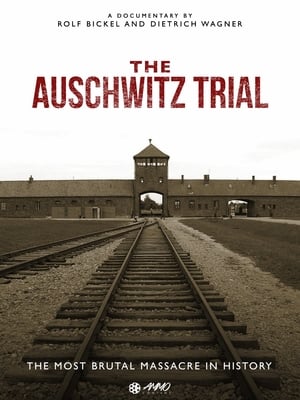
The Auschwitz Trial
The biggest trial of Nazi war crimes ever: 360 witnesses in 183 days of trial - a stunning and gripping portrayal of the most terrible massacre in history.
2013
My Good Fortune in Auschwitz
A film about friendship in difficult times, Auschwitz.
2012
Album(s) d'Auschwitz
Recently, two photo albums with photos from Auschwitz were found in 1944. One belongs to Officer Karl Höcker and the other prisoner Lili Jacob, who survived the concentration camp. The pictures taken during the same months show completely different worlds. A documentary that once again tells this important and awful part of Europe's history.
2012
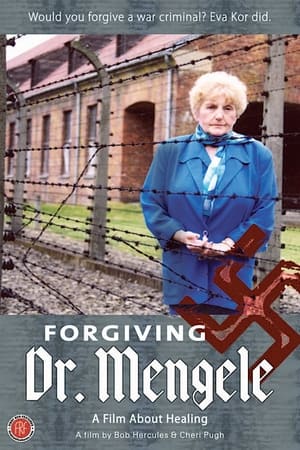
Forgiving Dr. Mengele
Eva Mozes Kor, who survived Josef Mengele's cruel twin experiments in the Auschwitz concentration camp, shocks other Holocaust survivors when she decides to forgive the perpetrators as a way of self-healing.
2006
The Girl from Auschwitz
A portrait of the legendary Swedish journalist and writer Cordelia Edvardson (1929-2012). She was only fourteen when she alone was brought to the concentration camp of Theresienstadt and later to the camp of Auschwitz.
2005
2 or 3 Things I Know About Him
What would your family reminiscences about dad sound like if he had been an early supporter of Hitler’s, a leader of the notorious SA and the Third Reich’s minister in charge of Slovakia, including its Final Solution? Executed as a war criminal in 1947, Hanns Ludin left behind a grieving widow and six young children, the youngest of whom became a filmmaker. It's a fascinating, maddening, sometimes even humorous look at what the director calls "a typical German story." (Film Forum)
2005
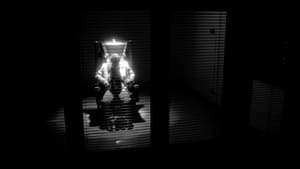
Mr. Death: The Rise and Fall of Fred A. Leuchter, Jr.
Documentary filmmaker Errol Morris investigates the case of a man who became an authority on capital punishment, but was discredited when he got involved on the wrong side of a court case. Leuchter, a meek man whose appearance belies his grim expertise, develops what he says is a more effective electric chair. Before long he's in demand from officials who want his opinions on other kinds of execution. But when called to aid the case of an accused Holocaust denier, Leuchter's problems begin.
1999
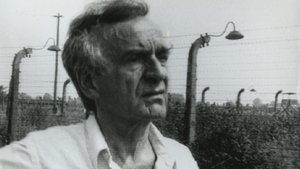
Elie Wiesel Goes Home
A documentary chronicling the adolescent years of Elie Wiesel and the history of his sufferings. Eliezer was fifteen when Fascism brutally altered his life forever. Fifty years later, he returns to Sighetu Marmatiei, the town where he was born, to walk the painful road of remembrance - but is it possible to speak of the unspeakable? Or does Auschwitz lie beyond the capacity of any human language - the place where words and stories run out?
1997
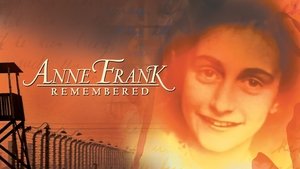
Anne Frank Remembered
Using previously unreleased archival material in addition to contemporary interviews, this Academy Award-winning documentary tells the story of the Frank family and presents the first fully-rounded portrait of their brash and free-spirited daughter Anne, perhaps the world's most famous victim of the Holocaust.
1995
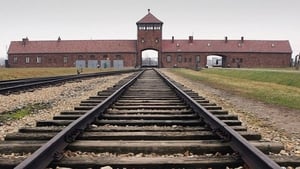
Verdict on Auschwitz
This documentary re-creates the momentous Frankfurt trial. Rolf Bickel and Dietrich Wagner build the film around taped testimony from more than 200 Auschwitz survivors. Twenty-two former members of Hitler's SS, many of whom had carved out comfortable lives for themselves in postwar West Germany, stood trial in 1963 before 360 witnesses who accused them of murdering millions.
1993
The Liberation of Auschwitz
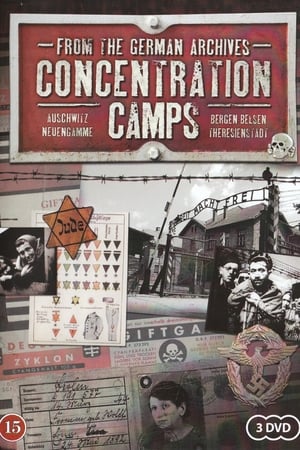
This chilling, vitally important documentary was produced to mark the 40th anniversary of the liberation of Auschwitz Concentration Camp. The film contains unedited, previously unavailable film footage of Auschwitz shot by the Soviet military forces between January 27 and February 28, 1945 and includes an interview with Alexander Voronsov, the cameraman who shot the footage. The horrifying images include: survivors; camp visit by Soviet investigation commission; criminal experiments; forced laborers; evacuation of ill and weak prisoners with the aid of Russian and Polish volunteers; aerial photos of the IG Farben Works in Monowitz; and pictures of local people cleaning up the camp under Soviet supervision. - Written by National Center for Jewish Film
1986

Schindler
The true story of German-Czech businessman Oskar Schindler (1908-74) as told by some of the Jews — more than a thousand people — whose lives he saved from extermination during World War II.
1983
Night and Fog
Filmmaker Alain Resnais documents the atrocities behind the walls of Hitler's concentration camps.
1956