Watch The Statue of Giordano Bruno (2005) Online Free
This film was made out of the capture of a live animation performance presented in Rome in January 2005 by Pierre Hébert and the musician Bob Ostertag. It is based on live action shooting done that same afternoon on the Campo dei Fiori where the philosopher Giordano Bruno was burned by the Inquisition in 1600. A commemorative statue was erected in the 19th century, that somberly dominate the market held everyday on the piazza. The film is about the resurgence of the past in this place where normal daily activities go on imperturbably. The capture of the performance was reworked, shortened and complemented with more studio performances.
More Like This
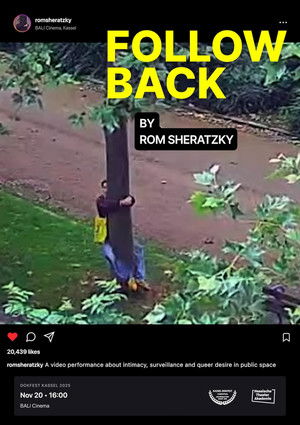
Follow Back
After discovering a stranger’s livestream, a month unfolds under his balcony, through watching and being watched.
2025
Bailey's Blues
In 1960s France, a jazz musician becomes the subject of an impromptu documentary.
2025
A Coyote Walks
A coyote walks through a distorted reality without color.
2025

Stone Wound
The marks of the violence of the Chilean state, against its own compatriots. Flicker Film. 35mm B & W Still Photography. Silent.
2025

Dancing not to be dead
Some spaces draw attention, as if they evoke something that’s about to happen. These are the places where we escape when we dream or die. The only thing that exists is time; we wait for the moment to arrive.
2024

Lumière, Le Cinéma!
In one of those wonderful coincidences of history, lumière, the French word for “light,” was also the last name of brothers Auguste and Louis, whose brilliant invention, the cinematograph, helped to inaugurate the most beloved art form of the last 130 years. Institute Lumière director Thierry Frémaux uses Lumière, Le Cinema! to guide the viewer through over a hundred shorts—some famous, some forgotten, some never before seen—directed by Lumière and company. In the process, Frémaux illuminates how the brothers employed the camera as a creative instrument as they (and their operators) mastered framing, staging, and subject selection for quotidian and exotic microdocumentaries as well as the first ever fictional motion pictures. The result is not only a glorious re(telling) of the genesis of cinema but a profound meditation on the beautiful world captured—and the mysterious world imagined—by the Lumières.
2024
The Afterlife
A young adult's first-hand account of "accidentally becoming human again" after, and with, trauma induced depression. Lo-fi, vulnerable, and uniquely youthful, "The Afterlife" is a melancholic affirmation of life after death.
2023

Piazza
2022
Corner
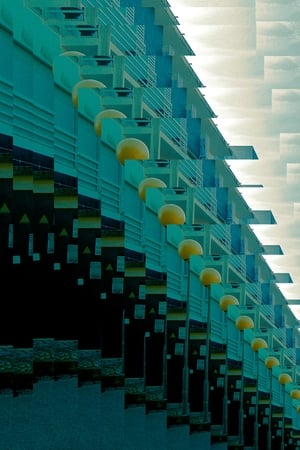
The corner of a street is matched and mixed with the chant of a bird recorded on that same street. A symbiotic relationship is triggered: the rapid and successively repetitive montage cuts between the image of the street and the corners of the video frame itself produce new textures and shapes in our brain, whilst the sound follows the same rhythmic movements by emphasizing different “corners” (frequencies) from the bird’s singing. The energetic potency stemming from the junction of these elements creates a new image that is almost tactitle, maleable and rippling. The result is a somewhat humorous operation of the portuguese word "corner" throughout the different stages of making the piece, finally unveiling a piercing physical and kinetic experience for all the corners of our eyes and ears.
2022

Grid
A ritual of grids, reflections and chasms; a complete state of entropy; a space that devours itself; a vertigo that destroys the gravity of the Earth; a trap that captures us inside the voids of the screen of light: «That blank arena wherein converge at once the hundred spaces» (Hollis Frampton).
2021
Fellinopolis
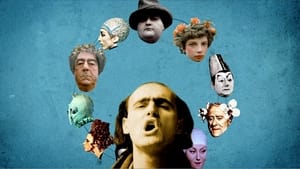
Ferruccio Castronuovo was the only authorized eye, between 1976 and 1986, to film the brilliant Italian filmmaker Federico Fellini (1920-1993) in his personal and creative intimacy, to capture the gears of his great circus, his fantastic lies and his crazy inventions.
2021
FUCK TV
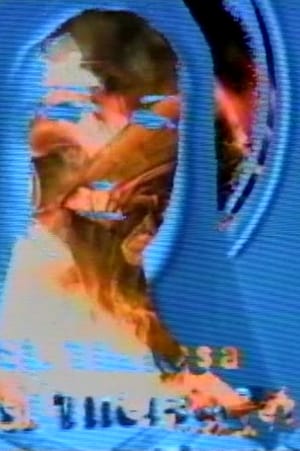
After concluding the now-legendary public access TV series, The Pain Factory, Michael Nine embarked on a new and more subversive public access endeavor: a collaboration with Scott Arford called Fuck TV. Whereas The Pain Factory predominantly revolved around experimental music performances, Fuck TV was a comprehensive and experiential audio-visual presentation. Aired to a passive and unsuspecting audience on San Francisco’s public access channel from 1997 to 1998, each episode of Fuck TV was dedicated to a specific topic, combining video collage and cut-up techniques set to a harsh electronic soundtrack. The resultant overload of processed imagery and visceral sound was unlike anything presented on television before or since. EPISODES: Yule Bible, Cults, Riots, Animals, Executions, Static, Media, Haterella (edited version), Self Annihilation Live, Electricity.
2019
Io sono nata viaggiando
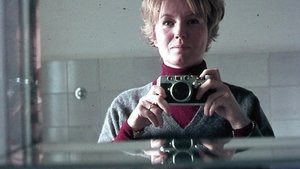
A journey back through Dacia Maraini's and her trips around the world with her close friends cinema director Pier Paolo Pasolini and opera singer Maria Callas. An in-depth story of this fascinating woman's life. Maraini's memories come alive through personal photographs taken on the road as well as her own Super 8 films shot almost thirty years ago.
2013
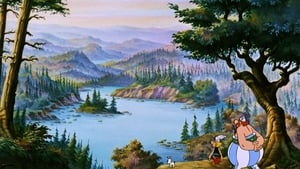
Asterix Conquers America
When marauding Romans capture - and catapult - their pal Getafix into lands unknown, the shrewd and cunning Asterix and his able sidekick Obelix spring into action! But their journey leads them to a strange and dangerous new world, where they must face a tribe of Indians, a stampeding herd of buffalo and a medicine man with designs on their magic potion!
1994

Douglas Gordon sings the best of Lou Reed & The Velvet Underground (For Bas Jan Ader)
In the present work, the artists appears lying on his back, his eyes mostly closed, dreamingly listening to a walkman that plays, a recording of 'The Best of Lou Reed and the Velvet Underground'. The artist can hear the music through his earphones, but as viewers we are only privy to the sound of his voice that whispers the melody. As we listen to the hypnotic interpretion of the familiar songs - as emblematic for pop music history as 'Psycho' is for film - we are forced to mentally 'reconstruct' the remaining orchestration, instrumentation and vocals. We must attempt to reassemble something we already know to be a fact by negotiating the sticky mess of interpretation, meaning, and memory.
1993
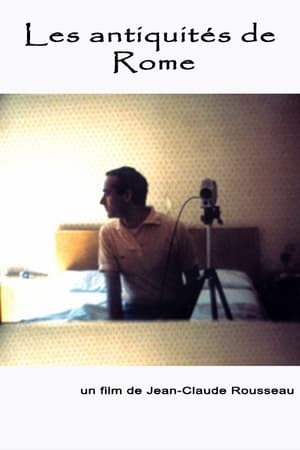
The Antiquities of Rome
A structuralist work composed of static, long-duration shots of Roman ruins and architectural details, all filmed on Super 8. The film operates without a traditional narrative or dialogue, relying on fixed compositions to document the interplay of light and shadow across ancient stone. By framing monuments through windows and doorways, Jean-Claude Rousseau explores the relationship between historical space and the act of observation.
1989

Asterix in Britain
One little ancient British village still holds out against the Roman invaders. Asterix and Obelix are invited to help. They must face fog, rain, warm beer and boiled boar with mint sauce, but they soon have Governor Encyclopaedius Britannicus's Romans declining and falling. Until a wild race for a barrel of magic potion lands them in the drink.
1986
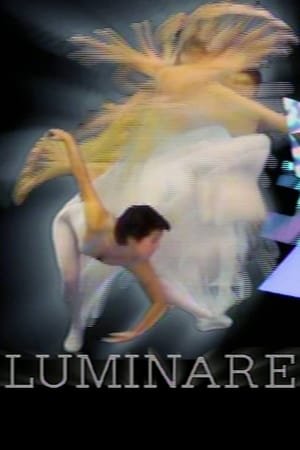
Luminare
Abstract video art by John Sanborn and Dean Winkler. Dedicated to Ed Emshwiller.
1986
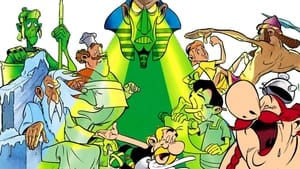
The Twelve Tasks of Asterix
Asterix and Obelix depart on an adventure to complete twelve impossible tasks to prove to Caesar that they are as strong as the Gods. You'll roar with laughter as they outwit, outrun, and generally outrage the very people who are trying to prove them "only human".
1976
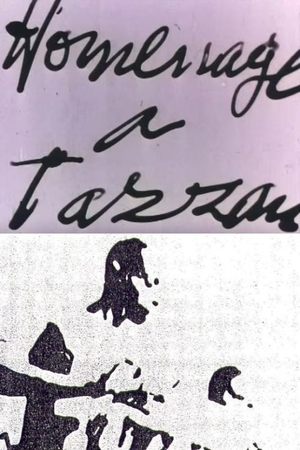
Homage to Tarzan
Avant-garde analog animation techniques in stark black and white dramatize the effect of white men’s violence on an African jungle.
1970