Watch The Shoemaker and the Hatter (1950) Online Free
Loading Cinehub...
The cartoon is one of the Marshall Plan's most popular films. A clash between a shoemaker and a hat maker illustrates the contrasts between protectionism and free trade. Preserved by the Academy Film Archive in 2003.
More Like This
The Cow Who Wanted To Be a Hamburger
A children's fable about the power of advertising, the meaning of life and ultimately the test of a mother's love. Preserved by the Academy Film Archive in 2016.
2010
Guard Dog
Why do dogs bark at such innocent creatures as pigeons and squirrels... what are they afraid of? This film answers that eternal question.
2004
Wat's Pig
In a Medieval castle, a marauder tries to kidnap the twin infant sons of the lord. He makes off with only one, whom he drops about a mile away. A pig rescues this baby, so one brother grows up high on the hog, the other down with the swine; one is lazy, his lost brother is industrious. Years later, when a neighboring prince declares war, the brother in the castle is too soft to fight. Through happenstance, the twins are united just before the final battle. Will the upper-class brother let his humble sibling lead the troops to certain defeat and death? Preserved by the Academy Film Archive.
1996
A Close Shave
Wallace's whirlwind romance with the proprietor of the local wool shop puts his head in a spin, and Gromit is framed for sheep-rustling in a fiendish criminal plot.
1996
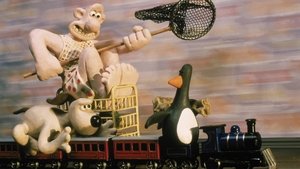
The Wrong Trousers
Wallace rents out Gromit's former bedroom to a penguin, who takes up an interest in the techno trousers created by Wallace. However, Gromit later learns that the penguin is a wanted criminal.
1993
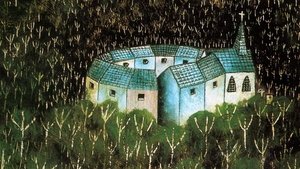
The Village
A village is ruled by the church, but is filled with hypocritical sinners who constantly spy on each other. Preserved by the Academy Film Archive in 2008.
1993
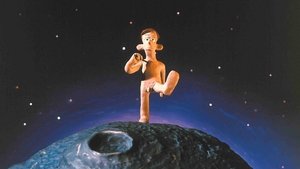
Adam
When The Hand of God creates Adam, he must learn the ways of the world, and can only hope for company.
1992
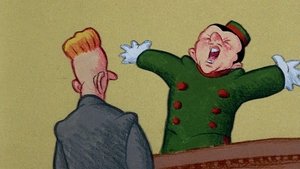
The Tune
Del is a song writer for the obnoxious Mr. Mega, and in love with Didi, Mega's secretary. His quest to write a hit tune brings him to the wacky world of Flooby Nooby, where he just might learn to write songs from the heart.
1992
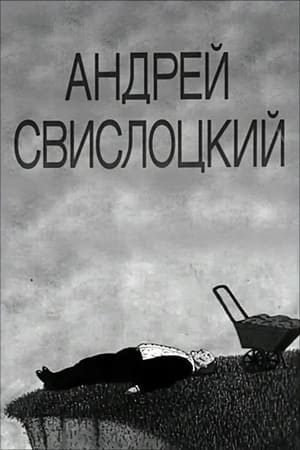
Andrey Svislotskiy
This animated short focuses on the lives of three eccentric people living on a farm in the Ukrainian countryside. Told in a non-linear, stream of consciousness style, the film depicts the deceitful relationship between a master and his two servants. Preserved by the Academy Film Archive in 2007.
1991
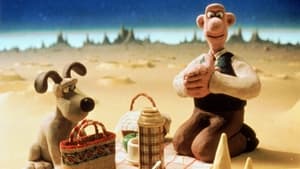
A Grand Day Out
Wallace and Gromit have run out of cheese, and this provides an excellent excuse for the duo to take their holiday to the moon, where, as everyone knows, there is ample cheese.
1990

Cinderella
“CINDERELLA is a musical treatment of the fairy tale. I have broken apart the story and set it as a mechanical game with a series of repetitions where CINDERELLA is projected back and forth like a ping-pong ball between the hearth and the castle. She never succeeds in satisfying the requirements of the ‘Cinderella Game’. The film was shot MOS, the dialogue is lip-synched, and along with the out-front score and effects track magnifies the film’s sense of alienation.” — E.B. 1984 - Preserved by the Academy Film Archive in 2017.
1986
Anijam
The bizarre adventures of the cartoon character Foska, drawn by 22 animators working in collaboration. Each animator worked on his or her own sequence only and did not know what action preceded or followed his or her sequence, except that the first drawing of a sequence is the last drawing from the previous sequence. Preserved by the Academy Film Archive in 2010.
1984

Asparagus
A symbolic reflection on issues of female sexuality, art and identity constructs.
1979
Closed Mondays
An intoxicated man trespasses into an art gallery after hours.
1974
Dear Janice
Beckett cycles through a limited number of drawings, but adds new information to each drawing every time we see it, giving the sense of a world that is infinitely rich and also obviously contained tightly within the edges of the paper. Preserved by the Academy Film Archive in partnership with iotaCenter and National Film Preservation Foundation in 2007.
1972
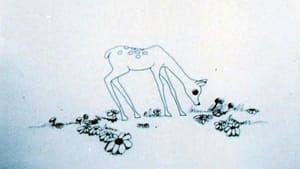
Bambi Meets Godzilla
A deer, disillusioned by the consumerism that defines his life. A lizard, ostracized from society, forever wandering. A chance meeting in the middle of a field. Who will survive? And who will transcend existence? Preserved by the Academy Film Archive in 2009.
1969
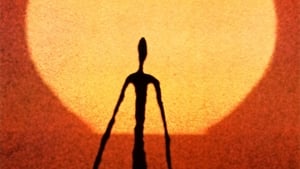
Why Man Creates
A 1968 animation/documentary that criticises the industrial system.
1968

Eye Myth
After the title, a white screen gives way to a series of frames suggestive of abstract art, usually with one or two colors dominating and rapid change in the images. Two figures emerge from this jungle of color: the first, a shirtless man, appears twice, coming into focus, then disappearing behind the bursts and patterns of color, then reappearing; the second figure appears later, in the right foreground. This figure suggests someone older, someone of substance. The myth? Preserved by the Academy Film Archive in 2012.
1967

Logos
Jane Conger Belson Shimane's first film, Logos, premiered in 1957 and was screened at festivals in North America, Europe, and Latin America. The animated film featured an electronic score by Henry Jacobs. Preserved by the Academy Film Archive in 2001.
1957
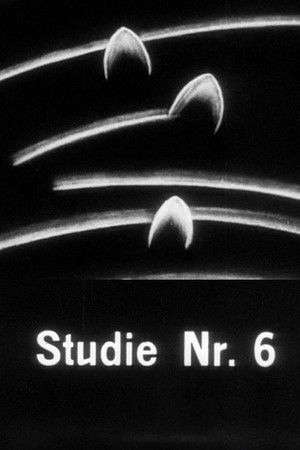
Study No. 6
The first Studies were synchronized with records (Fischinger made a total of 13 Studies all without sound). It was only with the introduction of sound, beginning with Study No 6 that the films did full justice to this musical principle. The play of the white lines, the arcs, and the upside-down U’s running hither and thither like ballet dancers was brought into perfect synchronization with the music, and thus the films offered an abstract illustration of the melodies. Study No 6 is certainly the best of his films in terms of forms. - Hans Scheugl and Ernst Schmidt, Jr. Preserved by the Academy Film Archive in 2001.
1930