Watch The Shock Doctrine (2007) Online Free
Drawing surprising connections between market methods and CIA torture techniques developed in the 1950s, the film explores how well-known events of the recent past have been theaters for the shock doctrine, from Pinochet's coup in Chile, to the Tiananmen Square Massacre, to the war in Iraq today.
Cast
Naomi Klein
More Like This
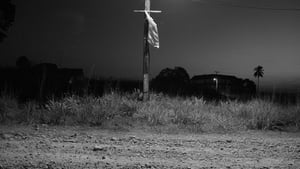
Fordlandia Malaise
Fordlandia Malaise is a film about the memory and the present of Fordlandia, the company town founded by Henry Ford in the Amazon rain forest in 1928. His aim was to break the British rubber monopoly and produce this material in Brazil for his car production in the United States. Today, the remains of construction testify to the scale of the failure of this neocolonialist endeavor that lasted less than a decade. Nowadays, Fordlandia is a space suspended between times, between the 20th and 21st centuries, between utopia and dystopia, between visibility and invisibility: architectural buildings of steel, glass, and masonry still remain in use while traces of indigenous life left no marks on the ground.
2025
El Guardián de Los Andes
2024

Made in Ethiopia
When a massive Chinese factory complex attempts a high-stakes expansion in rural Ethiopia, three women in search of prosperity have their faith in industrialization tested to the limit. Filmed over four years with singular access, Made in Ethiopia lifts the curtain on China’s historic but misunderstood impact on Africa, and explores contemporary Ethiopia at a moment of profound crisis. The film was awarded the Jury Special Mention at Tribeca Festival.
2024
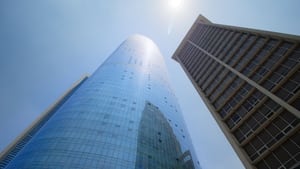
The Noise of Time
In the town of Xoco, the spirit of an old villager awakens in search of its lost home. Along its journey, the ghost discovers that the town still celebrates its most important festivities, but also learns that the construction of a new commercial complex called Mítikah will threaten the existence of both the traditions and the town itself.
2024
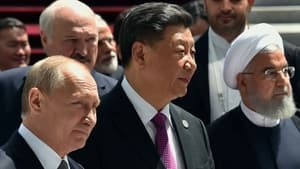
Russia, China, Iran: The Axis of Revenge
Russia, China and Iran: three former empires are determined to take their revenge and reassert their power after centuries of humiliation. Since the start of the war in Ukraine, they have never been so aligned on the international stage. Their common goal: to put an end to Western hegemony, restore their zone of influence and propose a new model of society. To achieve this, they are waging a hybrid war against the democracies: military, technological, economic, informational and ideological. Are they on the verge of joining forces to create a new world order?
2024
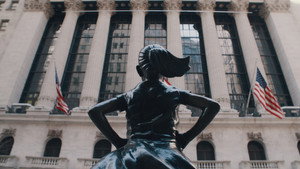
Age of Easy Money
Around the country and across the world, the threat of a recession is looming and economic uncertainty is rising as markets, businesses and individuals adjust to a new reality: the Federal Reserve is raising interest rates and pulling back on its epic monetary experiment that started with the Great Financial Crisis. From the award-winning team behind "The Facebook Dilemma" and "Amazon Empire," the two-hour documentary "Age of Easy Money" investigates how the Fed’s experiment has changed the American economy and what it means that the era may be over.
2023
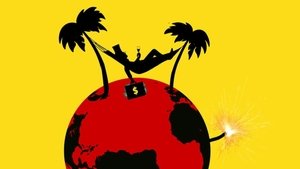
Tax Me If You Can
Welcome to the enchanted world of capital evasion. The keys to fortune: knowing how to hide, find accomplices and take advantage of all the flaws. The rest of us mere mortals are left with austerity policies and the joy of living in an increasingly unequal world... How far will predators go in this widespread plundering of our economies? How is the political staff complicit? How are we braking? Between Paris and Geneva, Washington and Luxembourg, from Société Générale to HSBC, via Mac Donald, Ikea and Google ... we will track down the circuits of tax evasion and decipher the mechanisms of tax fraud.
2022

Black Thoughts
A man that is a stranger, is an incredibly easy man to hate. However, walking in a stranger’s shoes, even for a short while, can transform a perceived adversary into an ally. Power is found in coming to know our neighbor’s hearts. For in the darkness of ignorance, enemies are made and wars are waged, but in the light of understanding, family extends beyond blood lines and legacies of hatred crumble.
2020

American Youth
An experimental collage of commercials, political advertising, news footage, and found video used to mark the rapid capitalization of young Americans after the collapse of the 60s/70s youth movements.
2019

White Snake
One day a young woman named Blanca is saved by Xuan, a snake catcher from a nearby village. As they set off an a journey to discover her real identity, the pair develop feelings for each other.
2019
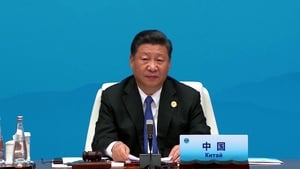
The World According to Xi Jinping
Under the leadership of Xi Jinping, China is on its way to becoming the leading world power of the 21st century. What goals is the mysterious autocrat, who was deeply influenced by Maoism in his youth, pursuing? What drives him? In terms of domestic policy, Xi is striving for the "perfect dictatorship"; in terms of foreign policy, he wants to rewrite the international rules.
2018
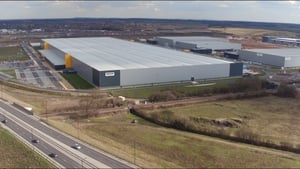
Der unaufhaltsame aufstieg von Amazon
Amazon has become one of the most powerful corporations in the world, and only the second company ever to be valued over US$1 trillion. This film investigates its strategies, inner workings and ideologies and asks whether the services that we have become so dependent on could eventually cost us our hard won freedoms, and how one of the world’s most trusted brands has influenced our individual behaviour, labour force and culture.
2018

Story of Iron Mic
Containing never-before-seen footage spanning 20 years, this monumental documentary tells the definitive story of the rise and fall of Chinese freestyle battle rap.
2017
Le Nouveau monde
2017
Mind the Gap
Why is the gap between the rich and the poor growing faster in New Zealand than in most other OECD countries? And why is inequality bad for all of us? Award winning documentary maker Bryan Bruce files his special report on what’s gone wrong with our economy and what we can do about it.
2013
La sale guerre des terres rares
2012
Don Roberto's Shade
In 1973 Roberto Saldivar was arrested and imprisoned in an old Salpetermine in northern Chile. The mine was used as concentrationcamp for political prisoners. 20 years later he returned to confront his memories. He has lived there since. Alone.
2007

Chile: Obstinate Memory
After decades of fascist rule in Chile, Patricio Guzmán returns to his country to screen his documentary The Battle of Chile.
1997
Debate 1984: Capitalism or Socialism - Which is the Moral System?
Seventeen hundred eager attendees braved a snowstorm to hear this extraordinary debate. Held at the University of Toronto in 1984 - when academics still believed that socialism was the wave of the future - this event kept the audience captivated for over 2 1/2 hours. The debate centered on moral fundamentals eliciting profoundly opposing views on issues from the nature of man to the justification of government. Don't miss this electrically charged confrontation.
1984

American Harvest
Shows the interdependence of all workers, jobs, and mechanization in the manufacturing process from raw materials to finished product, focusing on the car industry, and argues that this leads to greater personal independence and freedom.
1951