Watch The Scorpions - A Home Movie (2007) Online Free
The Scorpions were a Serbian paramilitary unit that gained notoriety for their involvement in war crimes during the Yugoslav Wars of the 1990s. By using the statements of former members of the Scorpions unit, and the materials recorded by the unit itself in the course of its campaignes, this film demonstrates the functioning of a typical combat unit organized by the security service to do dirty jobs in the Balkan wars. Including their treatment of Bosnian Serbs; from refusing them water to the stomach-wrenching murders of six Bosnian Muslim men, some of whom were minors, in Srebrenica in July 1995. Archival footage used in this film includes materials of Humanitarian Law Center, International Criminal Tribunal for Former Yugoslavia.
Cast
Slobodan Medić, Aleksandar Medić, Pera Petrašević, Goran Stoparić
More Like This
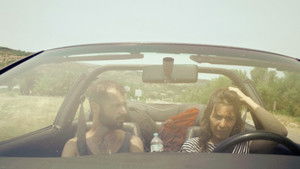
Abysses and Wonders
Christine’s father died when she was still a small child, and she remained in the care of her sadistic mother, who beat her and abused her psychologically. Christine is still convinced that her mother hid a farewell letter from her beloved father. Jean’s father committed suicide several years ago, and left behind a lengthy letter, but Jean never found the courage to read it. Together, Christine and Jean embark on a unique road trip across the French countryside to visit Christine’s mother, and try to confront the past.
2026
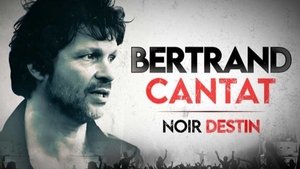
Bertrand Cantat : Noir Destin
In 2003, actress Marie Trintignant died after being beaten by her partner Bertrand Cantat. The singer was sentenced to eight years in prison. Once released, Cantat attempted to return to the spotlight. It was an almost impossible comeback, especially since his first wife, Kristina Rady, committed suicide under mysterious circumstances. Who is Bertrand Cantat really? And how does he live today?
2025
Au nom de mon frère : les derniers jours de Samuel Paty
The documentary, devoted to the last days of the professor who was tragically beheaded by an Islamist terrorist. This film highlights the failings of the state and the national education system in this deeply disturbing case.
2024
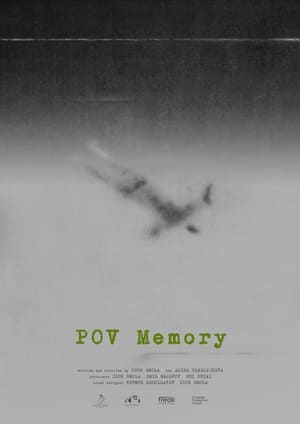
POV Memory
Tracking the evolution from 16mm and VHS to modern tech and thermal imaging, we shadow an army man. He treasures trophies, a family photo, boot camp moments. Yet, CCTV captures his crime, etched in digital memory.
2023

Liturgy of Anti-Tank Obstacles
Reality in Ukraine was divided into two periods - before the war and after. Every citizen tries to be useful in this national resistance. Ukrainians change their professions and adapt to the needs of wartime. In art workshops, sculptors make anti-tank obstacles. Silent figures of Ukrainian figures, angels, Cossacks and multiple copies of Jesus Christ, like a terracotta army, froze in anticipation of new creations. Masters weld metal defenses for the Armed Forces of Ukraine.
2022
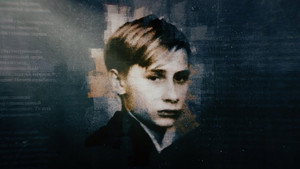
Putin's Obsession: The Fight For Ukraine
A profile of Putin, exploring his complicated relationship with Ukraine. Why does this neighbouring nation threaten his power and identity?
2022
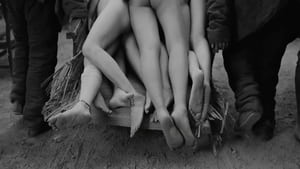
City of Life and Death
In 1937, during the height of the Second Sino-Japanese War, the Imperial Japanese Army has just captured Nanjing, then-capital of the Republic of China. What followed was known as the Nanking Massacre, or the Rape of Nanking, a six week period wherein tens of thousands of Chinese soldiers and civilians were killed.
2009

Visions of Violence
This visceral cinematic snapshot is an inventive commentary on the pleasures and dangers of wielding a camera. Using different video and film formats, the director tries to record life as it is, unpredictable and at times dangerous.
2007
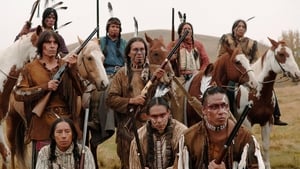
Bury My Heart at Wounded Knee
Beginning just after the bloody Sioux victory over General Custer at Little Big Horn, the story is told through two unique perspectives: Charles Eastman, a young, white-educated Sioux doctor held up as living proof of the alleged success of assimilation, and Sitting Bull the proud Lakota chief whose tribe won the American Indians’ last major victory at Little Big Horn.
2007
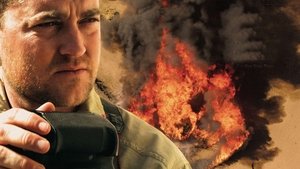
The Devil Came on Horseback
While serving with the African Union, former Marine Capt. Brian Steidle documents the brutal ethnic cleansing occuring in Darfur. Determined that the Western public should know about the atrocities he is witnessing, Steidle contacts New York Times reporter Nicholas Kristof, who publishes some of Steidle's photographic evidence.
2007
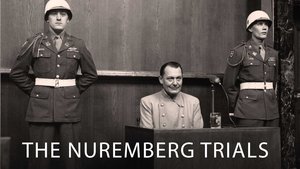
The Nuremberg Trials
One journalist described it as a chance "to see justice catch up with evil." On November 20, 1945, the twenty-two surviving representatives of the Nazi elite stood before an international military tribunal at the Palace of Justice in Nuremberg, Germany; they were charged with the systematic murder of millions of people. The ensuing trial pitted U.S. chief prosecutor and Supreme Court judge Robert Jackson against Hermann Göring, the former head of the Nazi air force, whom Adolf Hitler had once named to be his successor. Jackson hoped that the trial would make a statement that crimes against humanity would never again go unpunished. Proving the guilt of the defendants, however, was more difficult than Jackson anticipated. This American Experience production draws upon rare archival material and eyewitness accounts to recreate the dramatic tribunal that defines trial procedure for state criminals to this day.
2006
The Great Raid
As World War II rages, the elite Sixth Ranger Battalion is given a mission of heroic proportions: push 30 miles behind enemy lines and liberate over 500 American prisoners of war.
2005
Why We Fight
Is American foreign policy dominated by the idea of military supremacy? Has the military become too important in American life? Jarecki's shrewd and intelligent polemic would seem to give an affirmative answer to each of these questions.
2005
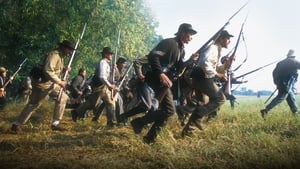
Gods and Generals
Follows the personal and professional life of Thomas 'Stonewall' Jackson, a brilliant if eccentric Confederate general, from the outbreak of the American Civil War until its halfway point.
2003
War Photographer
Documentary about war photographer James Nachtwey, considered by many the greatest war photographer ever.
2001

Conspiracy
At the Wannsee Conference on January 20, 1942, senior Nazi officials meet to determine the manner in which the so-called "Final Solution to the Jewish Question" can be best implemented.
2001
Andersonville
This lengthy docudrama records the harrowing conditions at the Confederacy's most notorious prisoner-of-war camp. The drama unfolds through the eyes of a company of Union soldiers captured at the Battle of Cold Harbor, VA, in June 1864, and shipped to the camp in southern Georgia. A private, Josiah Day, and his sergeant try to hold their company together in the face of squalid living conditions, inhumane punishments, and a gang of predatory fellow prisoners called the Raiders.
1996
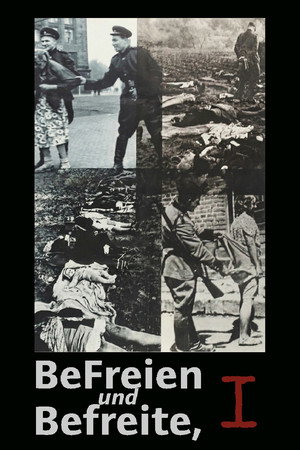
Liberators Take Liberties, part 1
Based on years of research into the mass rapes committed by the Red Army at the end of the Second World War. In the first part of the documentary Helke Sander interviews multiple German women who were raped in Berlin by Soviet soldiers in May 1945. Most women never spoke of their experience to anyone, after 46 years of silence they talk for the first time publicly about their violent experiences that have left such a mark.
1992
Merry Christmas, Mr. Lawrence
Island of Java, 1942, during World War II. British Major Jack Celliers arrives at a Japanese prison camp, run by the strict Captain Yonoi. Colonel John Lawrence, who has a profound knowledge of Japanese culture, and Sergeant Hara, brutal and simpleton, will witness the struggle of wills between two men from very different backgrounds who are tragically destined to clash.
1983
Breaker Morant
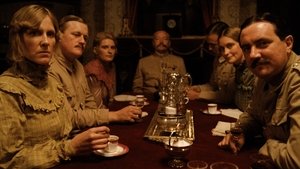
During the Boer War, three Australian lieutenants are on trial for shooting Boer prisoners. Though they acted under orders, they are being used as scapegoats by the General Staff, who hopes to distance themselves from the irregular practices of the war. The trial does not progress as smoothly as expected by the General Staff, as the defence puts up a strong fight in the courtroom.
1980