Watch The Pruitt-Igoe Myth (2012) Online Free
Destroyed in a dramatic and highly-publicized implosion, the Pruitt-Igoe public housing complex has become a widespread symbol of failure amongst architects, politicians and policy makers. The Pruitt-Igoe Myth explores the social, economic and legislative issues that led to the decline of conventional public housing in America, and the city centers in which they resided, while tracing the personal and poignant narratives of several of the project's residents. In the post-War years, the American city changed in ways that made it unrecognizable from a generation earlier, privileging some and leaving others in its wake. The next time the city changes, remember Pruitt-Igoe.
More Like This
Katedrála zázrakov
2023
Preschool to Prison
Preschool to Prison is a compelling examination of how the United States public school system is built and operated like prisons. Zero-tolerance policies are used to justify suspension and arrests that set up a pathway to send children of color and children with special needs from school to prison. Children are being suspended, restrained, dragged, physically manhandled, and subsequently arrested for minor offenses such as throwing candy on a school bus. These personal accounts from people affected by the school-to-prison pipeline give riveting tales about the generational impact on society.
2023
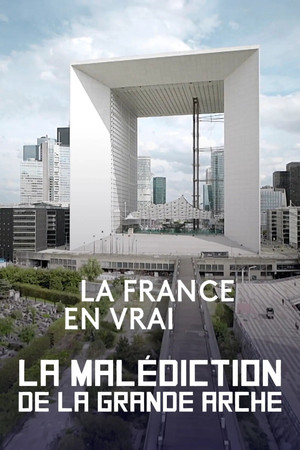
La Malédiction de la Grande Arche
2023
Fading City
A docu-art film about Kyiv and the contemporary problems of the capital. The film raises the issue of the dilapidated state of Kyiv's old buildings and the search for effective mechanisms to preserve the city's architectural heritage.
2020
Where to with History?
Dresden is famous for its attempt to meticulously reconstruct its once bombed-out historical center and bring the colorful baroque settings of the 18th century back to life. It’s infamous for the right-wing-surge that has since 2015 swept the city and made it a center of far-right activity in Germany and Europe. This film is an exploration of where the two intersect.
2020
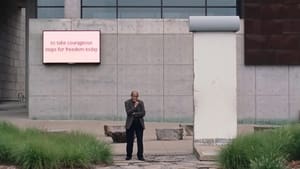
The American Sector
A documentary about the concrete sections of the Berlin Wall that have been acquired by institutions or individuals since 1989 and are now scattered across the USA. Cherished or abandoned, they have become silent witnesses to recent history.
2020

West Estate
West Estate spotlights the severe housing problems in Hong Kong, taking the spirit of resistance outside of the protest. The damaged walls in the cage-like tenements reflect the many forms of social injustice as well as Hongkongers’ widespread sense of rootlessness. Connecting three stories from different households like puzzle pieces, the film depicts people’s despair over issues of family, sexuality, love, and freedom.
2020
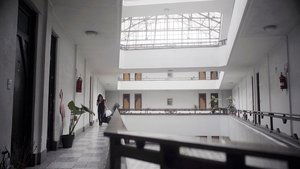
The Hermits
In the midst of the chaos of México City, a group of eight bachelor millennials who call themselves ´The Hermits´, open the doors to their tiny apartments in the historic Ermita Building, in the yet-to-be gentrified neighborhood of Tacubaya, and share their life experiences in a time when precarity changes the way in which we love, feel and relate to each other. As we explore the homes of these eight neighbors, we also witness their personalities intersect in a Whatsapp chat, a virtual space that functions as a supporting system that helps them face the adversities that living alone in this city brings.
2019
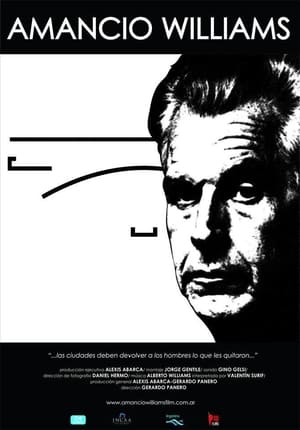
Amancio Williams
A biography documentary of the Argentine modernist architect Amancio Williams.
2013
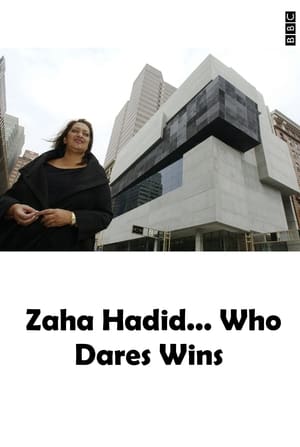
Zaha Hadid... Who Dares Wins
Alan Yentob profiles the most successful female architect there has ever been, the late Zaha Hadid, who designed buildings around the globe from Austria to Azerbaijan.
2013

Ôrí
A look at the Brazilian black movement between 1977 and 1988, going by the relationship between Brazil and Africa.
1989
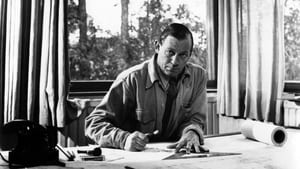
Alvar Aalto: Technology and Nature
The Finnish architect Alvar Aalto (1898–1976) is one of the great figures of modern architecture, ranked alongside Gropius, Le Corbusier and Mies van der Rohe. This film analyses Aalto’s uniquely successful resolution of the demands and possibilities created by new technology and construction materials with the need to make his buildings sympathetic both to their users and to their natural surroundings. His inventive use of timber in particular represents both a reference to the forest landscape of Finland and a building material that is ‘warm’ and extremely adaptable. Filmed in Finland, Italy, Germany and the USA, this documentary shows how the Finnish natural environment and art traditions were essential elements in Aalto’s pioneering harmonization of technology and nature.
1987

The History of White People in America: Volume II
In this daring follow-up to The History of White People in America, comedian Martin Mull takes us on an in-depth look at such topics as White Religion, White Stress, White Politics, and White Crime.
1986
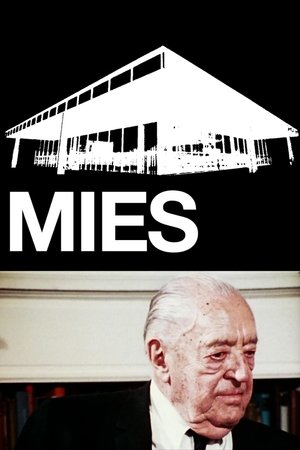
Mies
No understanding of the modern movement in architecture is possible without knowledge of its master builder, Mies van der Rohe. Together with documentation of his life, this film shows all his major buildings, as well as rare film footage of Mies explaining his philosophy. Phyllis Lambert relates her choice of Mies as the architect for the Seagram building. Mies's achievements and continuing influence are debated by architects Robert A.M. Stern, Robert Venturi, and Philip Johnson, by former students and by architectural historians. Mies is seen in rare documentary footage.
1986
Inquiry: The Great British Housing Disaster
David Jones investigates how 1960s council housing came to be built so poorly that thousands later needed to be demolished.
1984

Brasilia, Contradictions of a New City
In 1967, de Andrade was invited by the Italian company Olivetti to produce a documentary on the new Brazilian capital city of Brasília. Constructed during the latter half of the 1950s and founded in 1960, the city was part of an effort to populate Brazil’s vast interior region and was to be the embodiment of democratic urban planning, free from the class divisions and inequalities that characterize so many metropolises. Unsurprisingly, Brasília, Contradições de uma Cidade Nova (Brasília, Contradictions of a New City, 1968) revealed Brasília to be utopic only for the wealthy, replicating the same social problems present in every Brazilian city. (Senses of Cinema)
1968
Cronache dell'eternità
1967
Gaudi, Catalunya
In 1959 Hiroshi Teshigahara shot the following 16 mm footage of he and his father’s first trip to Barcelona and the outlying Catalonian countryside, including a visit to the home of Salvador Dali in Port Lligat. The footage was recorded without sound.
1959
Underwater Warrior
Based upon the life of Commander Francic D. Fane (USNR), UnderWater Warrior follows the evolution of the US Navy's Underwater Demolition Unit from its inception near the end of World War II through its acceptance and finally successful utilization in Korea. Landmark underwater camera work makes Underwater Warrior a milestone in cinematic history.
1958
Staré Valašsko
A short film about traditional crafts and culture that can still be found in the Wallachian mountains today.
1956