Watch The Path of Soul (2026) Online Free
Shifting his lens from Cantonese opera to Japanese Noh drama, documentary filmmaker Cheuk Cheung continues his exploration of complex gender issues ingrained in traditional theatres. For seven centuries, only the male body has been granted the privilege to inhabit this highly stylised art form that embraces spirituality in subtle movements. The film traces the journey of third-generation Noh performer Uzawa Hikaru, a young woman who makes her presence in the male-dominated space; yet behind the mask lies a daughter yearning to seek a resolution beyond her mother’s path – a quest to fuse body and soul in pursuit of the profoundly mysterious aesthetic.
Cast
Hikaru Uzawa, Hisa Uzawa
More Like This

Mama Micra
The mother of animation director Rebecca Blöcher didn’t want to live an ordinary life. She wanted “something more,” she explains in this stop-motion film. The people around her didn’t understand—in a letter written in 1968, a girlfriend criticizes her for going out on her own and making men jealous, while advising her to dress in a more “feminine” way and to join a cooking course. Blöcher’s mother brushed aside the advice. Years later still, she divorced her husband and stepped into the big wide world.
2024

The Other Days
The moment the children left, the wind still blew across the rice fields, the river still flowed and time still passed. The parents continued their daily lives.
2024
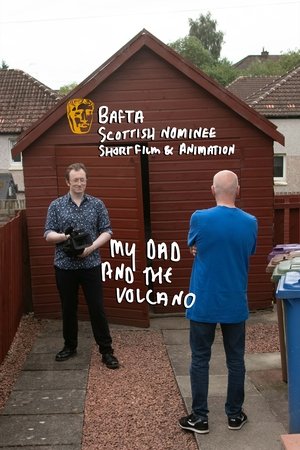
My Dad and the Volcano
Gavin built a giant volcano sculpture that's now in his dad's shed. Gavin seeks his dad's understanding but he's uninterested in modern art and refuses to participate in the documentary.
2024
All the Beauty and the Bloodshed
The life of internationally renowned artist and activist Nan Goldin is told through her slideshows, intimate interviews, ground-breaking photography, and rare footage of her personal fight to hold the Sackler family accountable for the overdose crisis.
2022
About the Memoirs of a House
The life of a couple is observed through the home they have left behind.
2022
Was uns bindet
A documentary about the parents of director Ivette Löcker, who have been living apart in their shared home for 20 years.
2017
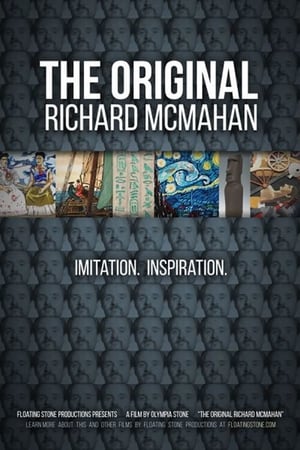
The Original Richard McMahan
The multi-talented outsider artist Richard McMahan is on a quest to painstakingly re-create thousands of famous and not-so-famous paintings and artifacts–in miniature.
2016
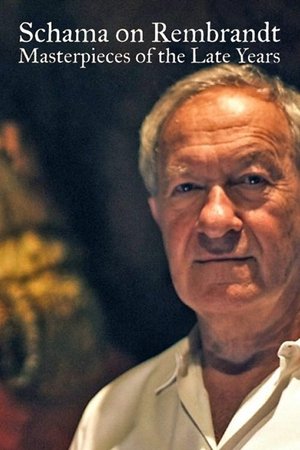
Schama on Rembrandt: Masterpieces of the Late Years
Simon Schama explains the style, theme and concept of Rembrandt's late masterpieces.
2014
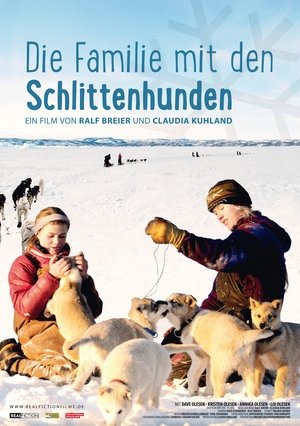
Not Without My Dogs
Out of love for Huskies, nature and cold winters Dave and Kristen Olesen moved from Minnesota to the North West Territories in Canada 25 years ago to create their own little universe on the magnificent East arm of Great Slave Lake. With their two daughters Annika 15 and Liv 12 and their 37 dogs, the Olesens enjoy a unique lifestyle in the wide open wilderness far away from civilization. One winter they all leave their self-built homestead with ten dogs on a two and a half thousand mile family expedition allowing Annika to run the Junior Iditarod in Alaska. As unexpected obstacles all along the trip culminate in three heavily injured dogs the whole endeavor is at risk. Optimism, love and loyalty prevail on this exciting epic family voyage.
2013
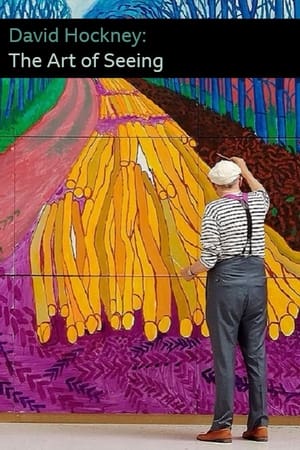
David Hockney: The Art of Seeing
Andrew Marr interviews David Hockney about his exhibition A Bigger Picture at the Royal Academy, made up of works depicting the landscape of his native Yorkshire.
2012
In the Land That Is Like You
In the Land That Is Like You is a progress on the tracks of my lost past, with the contact of my mother, my grandmother and the man who I love, in a country which escapes from me and retains me, Lebanon.
2009
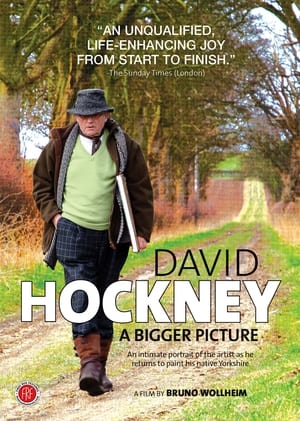
David Hockney: A Bigger Picture
Filmed over three years, the documentary is an unprecedented record of a major artist at work. It captures David Hockney's return to England after 25 years in California. As he approaches the age of 70, he decides to re-invent his painting from scratch, working through the seasons and in all weathers out in the Yorkshire countryside - ending up with the largest picture ever made outdoors. It is at once the story of a homecoming and an intimate portrait of what inspires and motivates today's greatest living British-born artist as time runs out. Winner of Best Essay award at the International Festival for Films on Art in Montreal and nominated Best Arts Documentary by the Grierson and International Emmy Awards. Premiered on BBC1, the documentary appears in a special extended 60' version.
2009
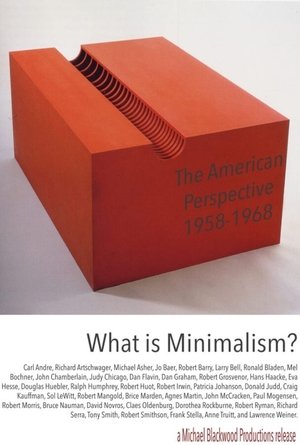
What is Minimalism? : The American Perspective 1958-1968
Featuring notable Minimalist artists such as Bride Marden, Claes Oldenburg, and Donald Judd, What is Minimalism: The American Perspective 1958-1968 explores the movement during an explorative exhibit at the Museum of Contemporary Arts in Los Angeles. Exhibition curator, Ann Goldstein, walks us through multiple rooms of the exhibit and offers her insight on Minimalism and its role in our society, stating that "It marked a fundamental, and critical and pivotal and irrevocable change in the course of art history," (Ann Goldstein). This film observes and analyzes the compelling creative choices behind some of the featured artists most applauded works of art.
2004
The World of Lygia Clark
Artistic experimental documentary short that explores the universe of Brazilian artist Lygia Clark. Sensorial experiences, the perception of the body, forms and tactile sensations are mixed and reflect the human race as part of the cosmos, getting lost to find itself. Art, stripped of its virtuous image, as an action of the common human being, the expression of living things, runs from the mechanical repetition of movements and attitudes.
1973
Someone who takes care of me
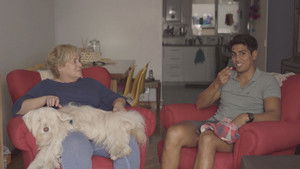
In Argentina, almost all adopted children are under 5 years of old. Luis and Valeria open the doors of their home and tell us their family story. A true story full of obstacles, fears and love about paths that connect and people who meet by chance.

Capturing the Friedmans
An Oscar nominated documentary about a middle-class American family who is torn apart when the father Arnold and son Jesse are accused of sexually abusing numerous children. Director Jarecki interviews people from different sides of this tragic story and raises the question of whether they were rightfully tried when they claim they were innocent and there was never any evidence against them.
2003
Traces: The Kabul Museum 1988
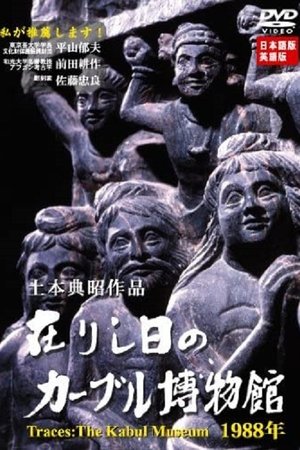
The Kabul National Museum, once known as the "face of Afghanistan," was destroyed in 1993. We filmed the most important cultural treasures of the still-intact museum in 1988: ancient Greco-Roman art and antiquitied of Hellenistic civilization, as well as Buddhist sculpture that was said to have mythology--the art of Gandhara, Bamiyan, and Shotorak among them. After the fall of the Democratic Republic of Afghanistan in 1992, some seventy percent of the contents of the museum was destroyed, stolen, or smuggled overseas to Japan and other countries. The movement to return these items is also touched upon. The footage in this video represents that only film documentation of the Kabul Museum ever made.
2003
Colours of Absence
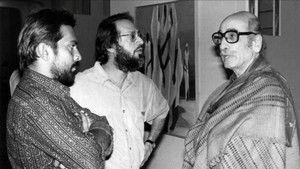
The film documents the life and art of painter Jehangir Sabavala, capturing the intricate relationship between the artist’s vision and his environment. Khopkar describes the challenges of conveying Sabavala’s creative spirit through film, emphasizing the need to engage with the subtleties of colour, light, and composition.
1993
yaya/ayat
yaya/ayat explores identities, being lost in translation and distance. But at its core it's about the filmmaker longing for a relationship with her geographically distant grandma and her journey to Greece to find her. This is an experimental documentary about how being a part of any diaspora shapes a person's identity.
Daughters
In hopes of building a closer relationship, a girl sits down with her mother, seeking to hear her experiences and aspirations growing up. What starts as a revisit of her mother’s past turns into a revelation about love and the weight of unspoken needs.