Watch In the Land That Is Like You (2009) Online Free
In the Land That Is Like You is a progress on the tracks of my lost past, with the contact of my mother, my grandmother and the man who I love, in a country which escapes from me and retains me, Lebanon.
Cast
Maya Abdul-Malak
More Like This
Daughters
In hopes of building a closer relationship, a girl sits down with her mother, seeking to hear her experiences and aspirations growing up. What starts as a revisit of her mother’s past turns into a revelation about love and the weight of unspoken needs.
A Castle in Spain
Everyday a father works hard to preserve the fragmentary present. He creates a world of images, a memory room where he meets his daughter. But it is difficult, the pictures are torn and forgotten and the fragmentary landscapes are constantly changing.
2025
Gunnar's Last Project
At 85, Icelandic design icon Gunnar Magnússon begins a final project with help from his daughter Tinna. As his health suddenly fails, she is left to complete the work herself, turning her father’s last creation into a daughter’s final gesture of love.
2025
To Die For Palestine
A French nurse and an Italian photographer devote their lives to the Palestinian cause but make the ultimate sacrifice. This is a story about two Europeans who devoted their lives to the Palestinian cause and paid the ultimate price.
2025

Mama Micra
The mother of animation director Rebecca Blöcher didn’t want to live an ordinary life. She wanted “something more,” she explains in this stop-motion film. The people around her didn’t understand—in a letter written in 1968, a girlfriend criticizes her for going out on her own and making men jealous, while advising her to dress in a more “feminine” way and to join a cooking course. Blöcher’s mother brushed aside the advice. Years later still, she divorced her husband and stepped into the big wide world.
2024

The Dawn is Too Far: Stories of Iranian-American Life
The Dawn is Too Far: Stories of Iranian-American Life poetically narrates the story of a community of Iranian Americans who have made the San Francisco Bay Area their home over the past five decades. The film explores Iranian immigration through turbulent histories of dissent, revolution, war, and separation, and the reinvention of identity in a new land and culture. The Dawn is Too Far highlights how Iranian students, activists, and artists have navigated displacement while drawing on and influencing Bay Area culture. This community offers a more nuanced story of the Iranian diaspora—the ways that this community enriches the region where they live, work, and build families. The Dawn is Too Far undermines the tired and overplayed news headlines that are dominated by narratives of enmity and mistrust between the government of Iran and the U.S., to offer a more humane understanding of the how people's lives and the sacrifices they make are part of the larger story of immigration.
2024

About the Memoirs of a House
The life of a couple is observed through the home they have left behind.
2022
Human with three legs
Two bored mans talking about an interesting topic while everyone is condolences for a family who mourns the death of a loved one.
2022

Mama Rosa
Rosa is from Croatia and lives in Switzerland, with her husband who depends on her care. She takes care of everything. Her children have grown up and want to leave home. Rosa stays behind alone.
2019
Buzz One Four
Buzz One Four chronicles the ill-fated flight of a Cold War B-52 Stratofortress loaded with two 3-4-megaton nuclear bombs that crashed 90 miles from Washington DC in 1961. Information suggests that detonation came closer than official reports indicated. The full details of the crash have remained classified and otherwise repressed by the Air Force, but the filmmaker, Portlander Matt McCormick, grew up with this story because the pilot was his grandfather. As McCormick recounts the history of the era, aspects of this crash, and other little-know nuclear-weapons accidents, he leaves us wondering if the U.S. was in greater danger of nuking itself than of being attacked by the Russians.
2017
My Child
What happens when your child comes out to you? In this feature documentary, parents of lesbian, gay, bisexual and trans-gender individuals in Turkey intimately share their experiences with the viewer, as they redefine what it means to be parents in this conservative society.
2013
W milczeniu
Until now, they have stood on the sidelines. They have not appeared before the cameras. They have not taken part in public discussion. It is mainly to them that the documentary film by the well-known journalist Ewa Ewart was devoted. It shows the face of the Smolensk catastrophe through the eyes of the victims' families. April 10, 2010 went down in the memory of Poles as a day of national drama. But for the characters in the film, it was the day of their greatest personal drama. Along with the presidential couple, their loved ones passed away in shocking circumstances. For most, the time passing since the Smolensk catastrophe does not bring relief. Ewa Ewart and her film crew accompany the families at various stages of their struggle with difficult emotions. The film is in the process of being made and will include sequences and stills that have not been used anywhere before.
2011
Blood and Water
When the 2004 tsunami hit the coast of Sri Lanka, 65-year-old Anton Ambrose's wife and daughter were killed. "In five minutes," he says, "I lost everything." A year later, Anton returns to Sri Lanka. With him is his nephew, award-winning filmmaker Rohan Fernando. A Tamil, Anton moved to California in the 1970s and became a very successful gynecologist. His daughter, Orlantha, made the opposite journey, returning to Sri Lanka where she ran a non-profit group that gave underprivileged children free violin lessons. Blood and Water is the story of one man's search for meaning in the face of overwhelming loss, but it is also filled with improbable characters, unintentional comedy and situational ironies.
2007
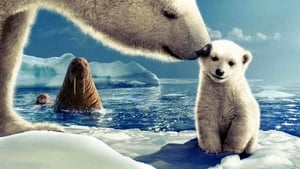
Arctic Tale
Arctic Tale is a 2007 documentary film from the National Geographic Society about the life cycle of a walrus and her calf, and a polar bear and her cubs, in a similar vein to the 2005 hit production March of the Penguins, also from National Geographic.
2007

Sieben Mulden und eine Leiche
Thomas Haemmerli is about to celebrate his fortieth birthday when he learns of his mother's death. A further shock follows when he and his brother Erik discover her apartment, which is filthy and full to bursting with junk. It takes the brothers an entire month to clean out the place. Among the chaos, they find films going back to the 1930s, photos and other memorabilia.
2007
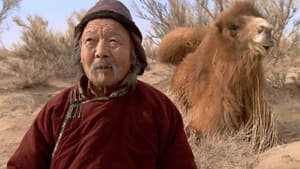
The Story of the Weeping Camel
When a Mongolian nomadic family's newest camel colt is rejected by its mother, a musician is needed for a ritual to change her mind.
2004

Capturing the Friedmans
An Oscar nominated documentary about a middle-class American family who is torn apart when the father Arnold and son Jesse are accused of sexually abusing numerous children. Director Jarecki interviews people from different sides of this tragic story and raises the question of whether they were rightfully tried when they claim they were innocent and there was never any evidence against them.
2003
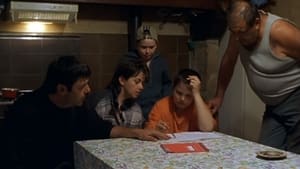
To Be and to Have
The documentary's title translates as "to be and to have", the two auxiliary verbs in the French language. It is about a primary school in the commune of Saint-Étienne-sur-Usson, Puy-de-Dôme, France, the population of which is just over 200. The school has one small class of mixed ages (from four to twelve years), with a dedicated teacher, Georges Lopez, who shows patience and respect for the children as we follow their story through a single school year.
2002
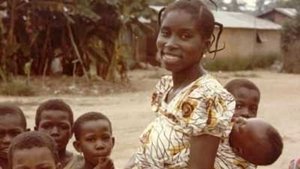
Ôrí
A look at the Brazilian black movement between 1977 and 1988, going by the relationship between Brazil and Africa.
1989
Return Time And Again
The Rezai's are keeping pigeons on their terrace in Berlin. After having their doubts in the beginning, the five sons are also taking care of the birds. The relationship to the animals reflects their feelings on family and loyalty, and also reminds them of their own childhood and the migration from Afghanistan.