Watch The Natural Son (1959) Online Free
Chor Yuen started his directorial career with a bang. From its very first image, The Natural Son establishes Chor as a filmmaker of stylistic flourish, which would be sustained in various forms throughout his long tenure. Adapted from '30 cents' pulp fiction, it is a Kong Ngee melodrama made in the studio's mould, with Westernised characters and trendy middle-class lifestyles. Yet, Chor's first film is not exempt from the social urgency that characterises the Cantonese cinema of his father, Cheung Wood-yau. The film cloaks its entertainment in a moral deliberation on blood ties, its story about the raising of a bastard child a head-on challenge of archaic family values. An ostentatious start for a colourful and eventful career.
Cast
Patsy Ka Ling, Nam Hung, Patrick Tse Yin, Kong Yat-fan, Keung Chung-Ping, Wong Cho-San, Lee Yuet-Ching, Yeung Yip-Wang, Ma Siu-Ying
More Like This

Winnie-the-Pooh
Adapted word-for-word from A.A. Milne's masterpiece, Winnie-the-Pooh helps his friends Eeyore, Piglet, Owl, and Christopher Robin in their 100-Acre-Wood home.
2023

Edgar Allen Poe's Tell-Tale Heart
A young woman under suspicion of murder must face the police and choose between proving her innocence or her sanity.
2022

On the Move
A poor taxi driver offered a chance for a better financial future must weigh up the cost of walking away from what he most values. // In a world first omnibus collaboration between emerging Asian movie powerhouses, China, Korea and Australia, comes the classic adaptation of Loa She’s The Rickshaw Boy. Set in three locations, across three countries each thirty minute chapter tells the story of one man’s struggle for survival amidst the age of disruptive technology and explores the intimate relationship that has come to exist between man and machine and the evolution of that relationship.
2018

Luz, Câmera, 50 Anos: Presença de Anita - O Filme
Adapted from the series aired in 2001. Looking for inspiration during the holidays, Nando sees Anita as the ideal character for his novel. She lives in a townhouse where a passionate crime happened in the past. Intense, Anita seduces Nando and awakens to
2015

The Wall
An adaptation of the J.P. Sartre story "Le Mur". What goes on in his mind and what happens outside when he has left only few more hours left to live. The existential dilemmas of a prisoner condemned to death from a repressive regime for his participation in a resistance movement and his friendship with the leader of this resistance. When all seems lost and he has already given up the most unlikely coincidence changes the course of events and his life.
2009
For Love Alone
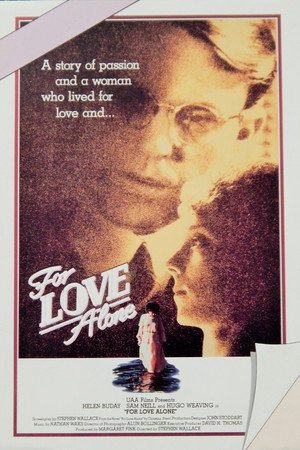
Teresa is a spirited young girl chafing under the oppressive attitudes of 1930s society, and her father in particular. She fancies her poverty-stricken Latin tutor Johnathan Crow, without realising he merely considers her a pleasant diversion and nothing more, and eventually follows him from Sydney to London. En route she meets the gentle banker James Quick. Whilst navigating her relationships in London, including with a political poet bound for the Spanish Civil War, she experiences a transformation in her understanding of love. Based upon Christina Stead's best-selling Australian novel.
1986

Daisy Miller
Despite mixed emotions, Frederick Winterbourne tries to figure out the bright and bubbly Daisy Miller, only to be helped and hindered by false judgments from their fellow friends.
1974
Maigret at Bay
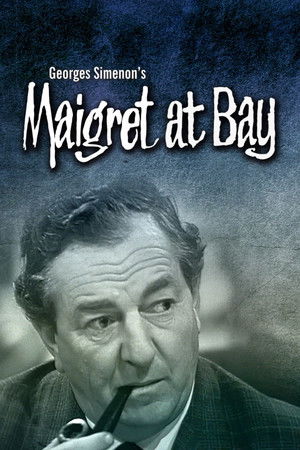
Inspector Maigret responds to a call from a young woman in the middle of the night, but he then finds himself accused of raping her. He is forced to clear his name, and search for what had really taken place that night.
1969
The Witty Bus Girl
Industrialist Tam Kar-cheung knowingly puts the lives of his workers at risk so as to line his pocket with insurance payments. The chivalrous Bus Money gets into fisticuffs with Tam's chauffeur, Tam Biu, who bears a grudge against the assailant. When Money catches wind of Kar-cheung's vicious plot to set fire to a squatter area to clear the path for a property development project, she moves in and watches vigilantly for signs of arson. Soon, she saves Ah-hau, Biu's girlfriend and a young victim of drug rape, from her suicidal attempt by drowning. Money pursues fragments of clues which lead her to the victim's boss, Taipan Cheung who sucks up to his master Kar-cheung by drawing his prey to her trap. Money then organises squatter residences into fire brigade to guard against arson attacks and exposes Kar-cheung's evil. Realising he has been exploited for his blind loyalty, Biu teams up with Money to dispense justice.
1966
The Girl in the Bus
Bus Money dons various disguises on public buses to protect the defenceless from the bullies and receives heroic praise. Money meets Tai Ngau, a righteous journalist, when they bear witness to the callous response of Manager Mo to the death of his servant Ah-kwai. Tai writes to redress grievances of the deceased. When visiting the family of orphans, he chances on his kindred spirit giving the eldest daughter Ah-yin a gift of gold. Money exploits the weakness of Mo and her connection with his son Sze-fu to swindle a fortune out of the lewd man for the benefits of the fatherless children. Her rage grows learning that Mo's friend Fong Hak-sang has pulled off a lucrative fraud on returned overseas Chinese and forces Ah-yin to pledge herself in paying off her father's debts. Money, who has all kinds of tricks up her sleeve, teams up with Tai and gives Mo and Fong their comeuppance before setting off on her next mission.
1965

Mama, I Need You!
After finishing the course of junior high school, Kazuo comes up to Tokyo, leaving his mother alone in the unproductive northern district. He finds a job in a small laundry in downtown Tokyo and works hard till late at night. At a nearby restaurant a brother and sister are working, and Kazuo becomes friendly with the girl, Yoneko. Love blossoms between the two. However, Yoneko's brother objects to his sister marrying Kazuo.
1962
Human Relationships
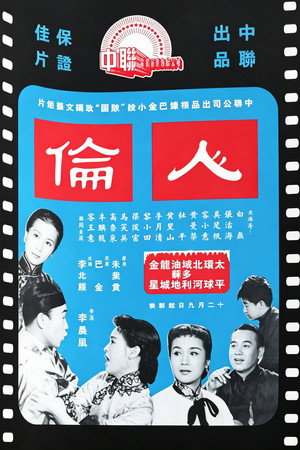
Lee Sun-fung is renowned for adapting literary classics for the silver screen. To commemorate the seventh anniversary of the Union Film Enterprise known for producing quality films and co-founded by Lee, Human Relationships is adapted from writer Ba Jin's novel into film. The Yiu family moves into a manor. Mrs Yiu, while frustrated by the way her step-son is spoiled by her husband and mother-in-law, develops a friendship with a kid (Michael Lai) who steals flowers from the mansion's garden. She later learns that he is the son of the place's former owner whose downfall at middle age is the result of being spoiled when young. Lai was only a child but gained a foothold among seasoned veterans like Cheung Wood-yau, Ng Cho-fan and Pak Yin.
1959
Jons und Erdme
Adaptation of Hermann Sudermann's novel about the troubled relationship between the strong willed Erdme and her irascible husband Jons in the Lithunian moors.
1959
A Lovely Girl's Lovely Dreams
Songstress Mui Yee-wah falls head over heels for painter Wai Tik-fung despite their age difference. Because Wai is a married man, Mui's mother is against the match. Mui falls ill from grief. Rich heir Siu Kar-wai seizes the chance to successfully propose to Mui. However, Siu is unable to let go of Mui's past. In a fit of anger, he fires a deadly shot at Wai.
1958
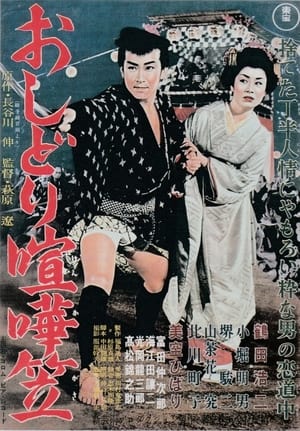
Oshidori kenkagasa
1957

Autumn
Hak-ming heads the Ko Family, but he and his brothers, Hak-ting and Hak-on, and the second wife of the late Master Ko quarrel. Young Cousin Mui, who has tuberculosis, is forced by to marry an older woman. Kok-sun is guilty of being unable to stop the marriage. Sun and maid Chui-wan are wary of their feelings for each other due to class difference. Cousin Mui dies of illness. Hak-ting has his eyes on Wan. His wife, Wong, complains to their daughter, Shuk-ching, who cannot take it and commits suicide. Wong blames herself for her death. Undergone these tragedies, Cousin Kam's mother let Kam have a modern wedding with Kok-man. When Ming is ill, Ting and On want to sell the ancestral home. Hak-ming dies of angst. When the fifth uncle of Sun forces Wan to be his concubine, Wan tries to kill herself but is intercepted by Sun. Pressurised by people of the house over the issue of inheritance, Sun protests by declaring his love for Wan and leaves the family, with his mother, brother Man and Wan.
1954
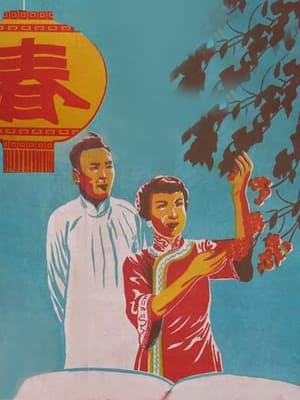
Spring
Ko Suk-ying is saddened over her arranged marriage as manipulated by her father Hak-ming. Ko Kok-sun's Cousin Chow Wai's spends the Mid-Autumn Festival before her marriage with the Kos. She has been in love with Sun. Sun finds out about her love for him when she is about to be married off, he is too weak to oppose to Wai's betrothal to another man. Sun's son, Hoi-sun, falls ill. Fearing the displeasure of his elders, Sun dares not consult a western doctor. Meanwhile, another dispute arises among members of the family over the ancestral land. When accused of being incompetent in his management, Sun takes the blame silently. Wai dies of grief while Hoi-sun becomes a victim of mistreatment. Sun is devastated at this double blow. Hak-ming instructs Sun to arrange for Ying's wedding. Knowing the kind of man Ying's fiancee is, Sun is reluctant. Not wanting to follow in Wai's footsteps, Ying fights for her own rights, and backed by an enlightened Sun, she leaves for a new start.
1953
Family
"Family" (1953), which launched the Union Film legacy, "Spring" (1953) and "Autumn" (1954) are adaptations of Ba Jin's highly regarded novel "Torrent Trilogy". In "Family", director Ng Wui skilfully condenses the voluminous first part of the novel into an emotionally powerful and intellectually focused story of youngsters struggling to survive oppression and repression in a feudalistic family. This well-received film quickly established the company's reputation.
1953

Little Women
Four sisters come of age in America in the aftermath of the Civil War.
1933

María
First film adaptation of Maria by Jorge Isaacs, which is currently missing. Made in Mexico
1919