Watch The Witty Bus Girl (1966) Online Free
Industrialist Tam Kar-cheung knowingly puts the lives of his workers at risk so as to line his pocket with insurance payments. The chivalrous Bus Money gets into fisticuffs with Tam's chauffeur, Tam Biu, who bears a grudge against the assailant. When Money catches wind of Kar-cheung's vicious plot to set fire to a squatter area to clear the path for a property development project, she moves in and watches vigilantly for signs of arson. Soon, she saves Ah-hau, Biu's girlfriend and a young victim of drug rape, from her suicidal attempt by drowning. Money pursues fragments of clues which lead her to the victim's boss, Taipan Cheung who sucks up to his master Kar-cheung by drawing his prey to her trap. Money then organises squatter residences into fire brigade to guard against arson attacks and exposes Kar-cheung's evil. Realising he has been exploited for his blind loyalty, Biu teams up with Money to dispense justice.
Cast
Pak Yan, Sheung Kwun Kwan Wai, Keung Chung-Ping, Kong Hon, Lo Tun, Ng Sau-fong, Ng Tung, Siu Kam, Leung Ming, Lui Sek-kwai
More Like This

The Ballad of Suzanne Césaire
An actress, three months post-partum, reads through fragments of the archive of Suzanne Césaire as she prepares to perform excerpts of the writer's work.
2025

Birth of Melos
A new bold interpretation of the plot of the literary masterpiece "Running Melos", transferred to our days! A high-tension literary comedy from the popular actor Yuta Koseki and director Ryutaro Nakagawa!
2023

Luz, Câmera, 50 Anos: Presença de Anita - O Filme
Adapted from the series aired in 2001. Looking for inspiration during the holidays, Nando sees Anita as the ideal character for his novel. She lives in a townhouse where a passionate crime happened in the past. Intense, Anita seduces Nando and awakens to
2015

Pola X
A writer leaves his upper-class life and journeys with a woman claiming to be his sister, and her two friends.
1999
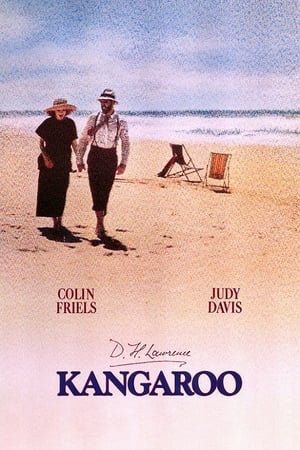
Kangaroo
A mild-mannered English conscientious objector moves to what he feels will be the relative calm of Australia after World War I, but gets caught in the middle of violent battles between the rising trade unions and fascist groups.
1986
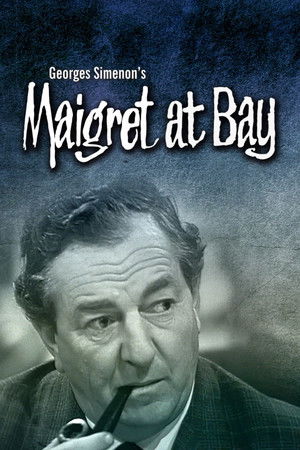
Maigret at Bay
Inspector Maigret responds to a call from a young woman in the middle of the night, but he then finds himself accused of raping her. He is forced to clear his name, and search for what had really taken place that night.
1969
The Lucky Dragon
Rich heir Lee Man, passionately in love with Pak Siu-ping, leaves the family defiantly after a dispute with his father Cheung-fat over an arranged marriage. Man walks into the barber shop owned by his splitting image Chiu Tak, throwing his wife Cheng Ying, friends and patrons into confusion. Believing that Chiu has strayed, the infuriated wife leaves home. Abducted to the nuptial hall, Chiu shuns the arranged bride, waiting and lurking for his escapade. The puzzle is solved when the two men finally meet face-to-face. Chiu and his wife rekindle their romance after Chiu's feigned death, plotted by Man to put their love through the ultimate test. Cheung-fat, who witnesses Pak's outpour of affection over the presumed death of Man, gives his blessing to the lovers. The barber shop enjoys a booming business with the capital brought in by Man.
1964
Torrents of Spring
Sojourning in Macau, Su Erning by chance helps Pan Meiniang resuscitate his younger brother and fends off the thug. In her admiration, Pan calls off the engagement arranged by her mother to exchange vows with Su despite having known him for only three days. To raise the money for the wedding, Su plans to sell his family yacht to the rich wife of his classmate Lu Zuhua in Hong Kong and promises to buy Pan a pearl necklace. The promiscuous Mrs Lu seduces Su on the yacht and then dumps him. 18 years later, Pan's daughter is getting married. Su prepares a wedding gift—a stolen pearl necklace—for the bride but is too ashamed to show himself.
1960
A Lovely Girl's Lovely Dreams
Songstress Mui Yee-wah falls head over heels for painter Wai Tik-fung despite their age difference. Because Wai is a married man, Mui's mother is against the match. Mui falls ill from grief. Rich heir Siu Kar-wai seizes the chance to successfully propose to Mui. However, Siu is unable to let go of Mui's past. In a fit of anger, he fires a deadly shot at Wai.
1958
Wuthering Heights
Young orphan Heathcliff is adopted by the wealthy Earnshaw family and moves into their estate, Wuthering Heights. Soon, the new resident falls for his compassionate foster sister, Cathy. The two share a remarkable bond that seems unbreakable until Cathy, feeling the pressure of social convention, suppresses her feelings and marries Edgar Linton, a man of means who befits her stature. Heathcliff vows to win her back. [Originally aired on CBS's DuPont Show of the Month.]
1958
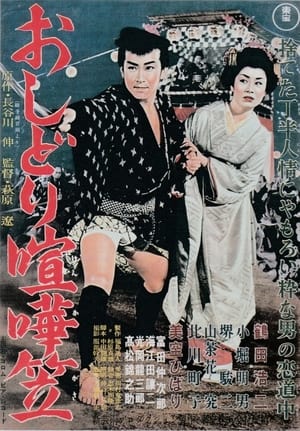
Oshidori kenkagasa
1957
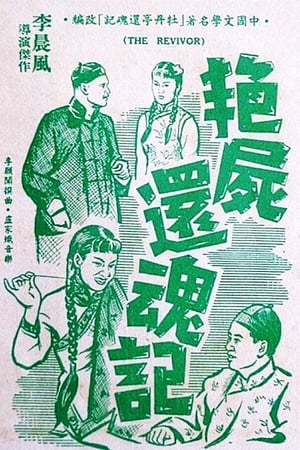
Beauty Raised from the Dead
Lau Mung-mui chances on To Lai-leung and their encounter transcends to a rendezvous in their dreams. They admire each other, but they do not know each other's names and addresses. They keep on thinking of each other and decide to take each other as their future husband and wife. Mui's father wants his son to get married, but he pays no attention to his father's wishes. Mui leaves home to look for Leung. Leung's father forces his daughter to marry her rich and powerful cousin. Leung becomes despondent and dies, following an arranged marriage with her cousin. Mui sought everywhere for Leung for three years, but to no avail. He locates the home of Leung, but the household has moved out. The house is guarded by an old servant. Mui, chasing Leung's spirit, has a brief romance with her. Acknowledging that their union will be hindered by their incompatibility as a mortal and a spirit, Leung reincarnates as a mortal so that their love may be rekindled.
1956
The Inspector General
Nikolai Gogol's The Inspector General is a satire play well-known around the world. In the period between the end of World War II and the 1960s, the play was adapted in Hong Kong cinema a total of six times. Director Huang Yu alone adapted it twice, as a Republic era story and a period comedy, respectively. The 1955 Republic era-set film is more faithful to its source material, following a spoiled rich brat who is mistaken as a government inspector in a small town and ends up being wined and dined by a corrupted local official. The film pokes fun at the ugliness of bureaucracy in old society, calling back to renowned Qing Dynasty novel Officialdom Unmasked while keeping the original play's artistic style.
1955
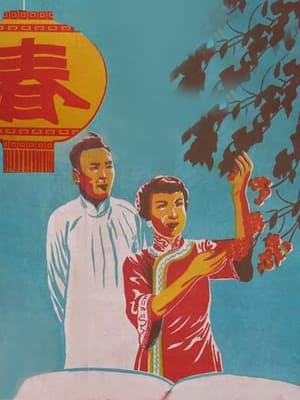
Spring
Ko Suk-ying is saddened over her arranged marriage as manipulated by her father Hak-ming. Ko Kok-sun's Cousin Chow Wai's spends the Mid-Autumn Festival before her marriage with the Kos. She has been in love with Sun. Sun finds out about her love for him when she is about to be married off, he is too weak to oppose to Wai's betrothal to another man. Sun's son, Hoi-sun, falls ill. Fearing the displeasure of his elders, Sun dares not consult a western doctor. Meanwhile, another dispute arises among members of the family over the ancestral land. When accused of being incompetent in his management, Sun takes the blame silently. Wai dies of grief while Hoi-sun becomes a victim of mistreatment. Sun is devastated at this double blow. Hak-ming instructs Sun to arrange for Ying's wedding. Knowing the kind of man Ying's fiancee is, Sun is reluctant. Not wanting to follow in Wai's footsteps, Ying fights for her own rights, and backed by an enlightened Sun, she leaves for a new start.
1953
Family
"Family" (1953), which launched the Union Film legacy, "Spring" (1953) and "Autumn" (1954) are adaptations of Ba Jin's highly regarded novel "Torrent Trilogy". In "Family", director Ng Wui skilfully condenses the voluminous first part of the novel into an emotionally powerful and intellectually focused story of youngsters struggling to survive oppression and repression in a feudalistic family. This well-received film quickly established the company's reputation.
1953
Stella Dallas
A working-class woman is willing to do whatever it takes to give her daughter a socially promising future.
1937

We're Not Dressing
Beautiful high society type Doris Worthington is entertaining guests on her yacht in the Pacific when it hits a reef and sinks. She makes her way to an island with the help of singing sailor Stephen Jones. Her friend Edith, Uncle Hubert, and Princes Michael and Alexander make it to the same island but all prove to be useless in the art of survival. The sailor is the only one with the practical knowhow to survive but Doris and the others snub his leadership offer. That is until he starts a clam bake and wafts the fumes in their starving faces. The group gradually gives into his leadership, the only question now is if Doris will give into his charms.
1934

Little Women
Four sisters come of age in America in the aftermath of the Civil War.
1933

Oliver Twist
When 9-year-old orphan Oliver Twist dares to ask his cruel taskmaster, Mr. Bumble, for a second serving of gruel, he's hired out as an apprentice. Escaping that dismal fate, young Oliver falls in with the street urchin known as the Artful Dodger and his criminal mentor, Fagin. When kindly Mr. Brownlow takes Oliver in, Fagin's evil henchman Bill Sikes plots to kidnap the boy.
1933

The Idle Rich
Millionaire William van Luyn falls in love with his secretary Joan Thayer and marries her. Her family, part of "the great middle class" (as blowhard nephew Henry keeps reminding us), is happy for Joan, but reluctant to take charity from Will. He moves in with them, and they keep resisting, until one day he takes drastic action.
1929