Watch The Last Days of Shishmaref (2008) Online Free
Loading Cinehub...
Shishmaref is a community of about 600 people, located on an island just off the west coast of Alaska. The effects of global warming threaten the very existence of these people- so much that the entire population needs to be relocated off the island within 10 years. They have become the first tangible victims of the worldwide climate changes. The project exists of several components; exhibition, book, film, website, and educational program. In the documentary Jan Louter depicts the impending end of the traditional lifestyle on the island of Shishmaref trough the lives of three Inupiat families. Despite the alarming situation, the film has not become a political manifesto. The Last Days of Shishmaref is a moving film about identity, transience, mortality, and the clash between different eras and cultures.
More Like This
Antarctica - Domain One
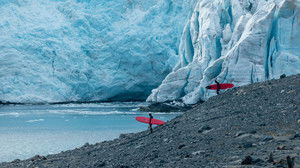
Vast, wild, yet extremely fragile. The coldest place on our planet is also one of the most affected by global warming and needs to be protected. The expedition focuses on exploring, documenting, and surfing in the South Shetland Islands and the Antarctic Peninsula, in the area known as Domain 1, which is being pushed for Marine Protected Area (MPA) status. Protected areas are very important for mitigating climate change and, in this case, also for regulating human activities such as concentrated fishing. This film helps us understand the importance of this area and the threats affecting it.
2025
Coal
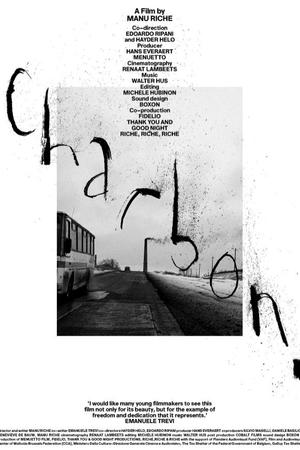
CHARBON depicts how Europe was built on fossil fuels over the past 100 years. And how it was torn apart by wars that were the result of these same fossil fuels. During 3 trips to Ukraine, Italy and Iraq, filmmaker Manu Riche explains how he and his French-German family are inseparably connected to the fate of the Iraqi filmmaker and refugee Hayder Helo.
2025
Greenland
2024
Ungezähmt - Im Fluss des Lebens
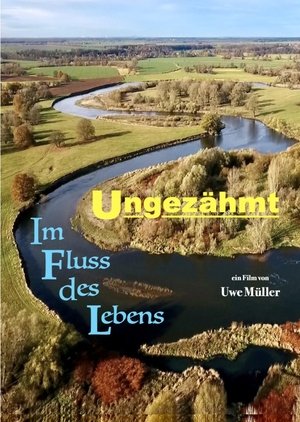
We get to know a few inhabitants of central European rivers.
2024

Jamna - The River Story
The river Yamuna, known to the locals as 'Jamna', the lifeline of Delhi, is going through a major crisis due to pollution, mismanagement and sheer ignorance. A documentary crew tries to make sense of the situation by talking to different stakeholders and Shyam - a boatman who relies on the river for his livelihood.
2023
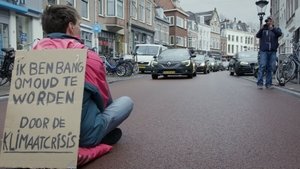
Klimaatrebellen: tussen hoop en wanhoop
A growing group of Dutch people in their twenties see the earth becoming less livable. They join the climate group Extinction Rebellion and campaign to fight the climate crisis. There is little they shy away from in their struggle: nightly campaigns, high-altitude actions, and even arrests or a criminal record. Everything for a better planet.
2022
You Have Four Years
On the 22nd of May 2021, around 100 Animal Rebels shut-down all four McDonald's distribution centers across the UK. Shutting down their factories for a total of 96 hours and disrupting over 1300 of McDonald's restaurants across the country.
2021
The Flood
The decision to move to Holland doesn't sound like a wise idea. Why move to a country that could be flooded at any moment? For the last 25 years, the political climate has shifted. The public debate on migration has become harsher, more heated, and polarized. What would have been considered right-wing xenophobia back then, is now considered mainstream. Populists simplify complex realities into good and evil, victims and perpetrators: ‘us’ versus ‘them’. Their rhetoric often consists of dehumanizing words and metaphors. One of these is ‘water’. In reality, water is not an immediate threat to the average Dutch person; but it is a huge threat to the thousands trying to reach the Netherlands. People trying to survive the Mediterranean Sea in rubber boats. Trying to survive winter on the Aegean coast in primitive tents. To them, water really is deadly.
2021

The Cost of Cobalt
In the cobalt mining areas of Katanga in the Democratic Republic of the Congo (DRC), babies are being born with horrific birth defects. Scientists and doctors are finding increasing evidence of environmental pollution from industrial mining which, they believe, may be the cause of a range of malformations from cleft palate to some so serious the baby is stillborn. More than 60% of the world’s reserves of cobalt are in the DRC and this mineral is essential for the production of electric car batteries, which may be the key to reducing carbon emissions and to slowing climate change. In The Cost of Cobalt we meet the doctors treating the children affected and the scientists who are measuring the pollution. Cobalt may be part of the global solution to climate change, but is it right that Congo’s next generation pay the price with their health? Many are hoping that the more the world understands their plight, the more pressure will be put on the industry here to clean up its act.
2021

David Attenborough: A Life on Our Planet
The story of life on our planet by the man who has seen more of the natural world than any other. In more than 90 years, Attenborough has visited every continent on the globe, exploring the wild places of our planet and documenting the living world in all its variety and wonder. Addressing the biggest challenges facing life on our planet, the film offers a powerful message of hope for future generations.
2020
Aggregate States of Matters
Aggregate States of Matters highlights the ambiguous relationship between humans and nature. For her new 35mm film shot in Peru, Rosa Barba worked with communities that are affected by the melting of a glacier and geological time becoming exposed. Barba shows the slow disappearance of the glacier and the perception of this fact within the Quechuan population in the Andes. While exploring different local myths, she outlines the possibility of translating ancient knowledge into the present time.
2019
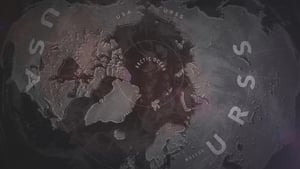
Espions pour la planète
In the aftermath of the Cold War, Russian and American intelligence agencies, once enemies, joined forces and pooled their data to serve the planet, threatened by global warming. The story of a remarkable odyssey.
2016
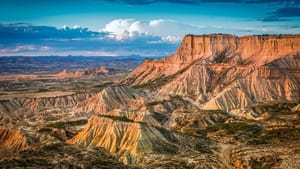
Europe‘s Largest Desert
Near the cold Pyrenees of Iberia, surrounded by ancient and dark green forests, lies a strange land where the rain is scarce and the wind is always blowing. The soil is poor, there are no trees and the landscape resembles the moon. Is this what the future of desertification will look like? Incredible creatures with surprising behavior live in this strange landscape. The documentary explores a place with very dry skin but a wet hidden heart where even waterfowl or amphibians can live. Living in such conditions is not easy and only the toughest animals will survive.
2016

River of Gold
Narrated by Academy Award winners Sissy Spacek and Herbie Hancock, River of Gold is the disturbing account of a clandestine journey into Peru's Amazon rainforest to uncover the savage unraveling of pristine jungle. What will be the fate of this critical region of priceless biodiversity as these extraordinarily beautiful forests are turned into a hellish wasteland?
2016
Mass Extinction: Life at the Brink
It's death on an unimaginable scale, when a majority of Earth's species quickly die out. It's called "mass extinction," and it's happened at least five times before. Cataclysms, such as supervolcanoes or asteroids, are thought to cause these events, but some experts believe a manmade mass extinction could be next. Is our planet in trouble? And if so, is there anything we can do to stop the next catastrophic annihilation? Experts are traveling the world, performing groundbreaking scientific detective work to answer these very questions.
2014
Merchants of Doubt
Spin doctors spread misinformation and confusion among American citizens to delay progress on such important issues as global climate change.
2014
Alaska Far Away
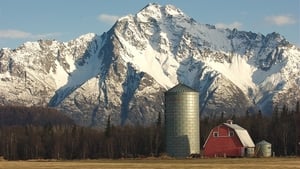
'Alaska Far Away' tells the story of the Matanuska Colonization Project of 1935, a creative and controversial New Deal program that relocated 202 families devastated by the Great Depression, taking them from the upper Midwest to the Matanuska Valley in Alaska to start an experimental farming colony. It generated a whirlwind of publicity and controversy at the time, not only as a federally-funded social experiment, but also as one of the last pioneer movements in America. The Matanuska Colony isn't just a fascinating footnote to the history of Alaska. It encompasses the despair of the Depression, the creative energy of the New Deal, the adventure of pioneering in Alaska, and the best and worst of our government and ordinary citizens in facing those extraordinary challenges.
2008
Alaska's Great Wilderness Denali: The Living Edens
Travel to Alaska's great wilderness, a place of incomparable beauty and power where you will witness close-up the amazing cycles of life in one of the last pristine corners of our planet Earth. Soar over Mt. McKinley, the tallest people in North America, crown jewel of the vast Alaska range, piercing clouds nearly four miles high. Explore the vibrant territory beneath this stunningly beautiful mountain. Watch caribou roam the plains, listen to the haunting howl of the wolf, witness the flight of the majestic golden eagle, meet a mother grizzly and her two cubs as they emerge from winter's hibernation. You'll be swept up in the drama and beauty of this unique wilderness and you'll enjoy for many years to come its unforgettable scenery.
1997

The Russia We Lost
The sequel of feature-publicistic film «You Can’t Live Like That». Showing the countrymen charmless and sometimes scaring life picture of once great power with pain and anger, the author tries to uncover the reason of the country’s and nation’s tragedy.
1992
City by the Sea, or how to survive in Venice
Yannick Bellon's documentary paints a portrait of a city torn between the problem of unsanitary housing, pollution corroding walls and statues, and the recurring and increasing floods—all consequences of human activity. Faced with job shortages and rampant speculation, the overarching question arises of how industries can coexist with the city of Venice. Allowing them to develop risks destroying it; driving them out risks turning it into a museum, causing its inhabitants, and thus its soul, to leave.
1970