Watch The Kalash of the Hindu Kush (2020) Online Free
In the remote valleys of the Hindu Kush live the Kalash people, the smallest ethnic minority in Pakistan. With a distinct culture and polytheistic religion, they are said to be descendants of Alexander the Great’s troops. But modern life is reaching their valleys and their culture and way of live is under threat.
More Like This

Big Water Theory
Follow French kayak superstar Nouria Newman and two childhood friends, as they navigate one of the world's most challenging sections of whitewater: the Rondu Gorge of the Indus River, in Pakistan. Documenting Nouria's attempt at completing the first integral descent of the Rondu Gorge by a woman, Big Water Theory is a compelling exploration of human spirit and the relentless pursuit of adventure. It offers a powerful and inspiring, yet highly detailed and informative look at the world of extreme kayaking. Set against the stunning backdrop of the Karakoram mountains, the film highlights the irreversible nature of the sport, with heart pounding descents that test the kayakers' psychological and physical limits.
2024

In Zainab's Heaven
A Hazara film director follows a gravestone maker, a water girl and a man who buried his limb, as their daily lives unfold in a graveyard.
2023
Anwar
Alex Txikon, internationally renowned mountaineer, is launching a new winter expedition in 2021 to Manaslu (Nepal). It is the first non-polluting ascent, powered by solar panels. With this sustainable system, which reduces the energy footprint in accordance with the Paris Agreements, the EKI Foundation is beginning its work of solidarity. Alex is going to learn about the work developed by the Foundation in Sierra Leone, where they provide solar energy systems that enable energy autonomy in schools and hospitals. Txikon proposes to replicate this idea in a very special school in the Diamer Valley in Pakistan, the Günter Mountain School, uniting two different but at the same time equal cultures.
2022
Sadpara The Mountaineer
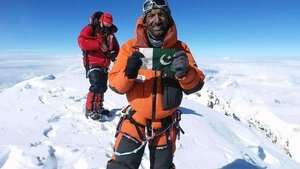
The film is based on the expedition of mountaineer Muhammad Ali Sadpara to K2 in Pakistan, which cost him his life in 2021 at the age of 45. The film opens with him passing the bottleneck with his companions, successfully climbing it, and then returning when he is caught in an avalanche or storm and ultimately loses his life. As his life fades from memory, the film shifts to flashbacks as he recalls the events of his life.
2021
Ishq e Qalandar - The Beautiful Sindh
Ishq e Qalandar - The Beautiful Sindh is a travel film that takes viewers through one of the most ancient civilizations on Earth called Sindh. Shezan Saleem Jo-G takes a journey of self-realization, the discovery of his roots, and building a connection with people and spirituality in Sindh.
2020
How Gay Is Pakistan?
A documentary which explores the lives of gay people and the challenges they face in Pakistan, a country whose laws explicitly outlaw homosexuality.
2015

Drone
DRONE is a documentary about the covert CIA drone war. Through voices on both sides of this new technology, DRONE reveals crucial information about the drone war in Pakistan and offers unique insights into the nature of drone warfare.
2014
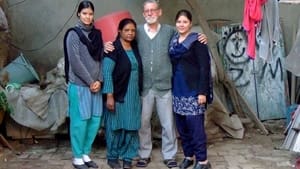
Displaced Perssons
Per Persson left Sweden 40 years ago. In Pakistan he fell in love and became the father of two daughters. Trouble starts when the girls grow up and the family decides to emigrate to Sweden. When they end up living in a caravan outside Hässleholm, all their expectations are dashed.
2013
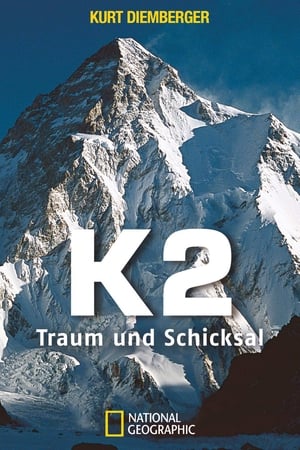
K2, Traum und Schicksal
Documentary about K2 tragedy of 1986. On August 4, 1986, Diemberger and Julie Tullis reached the summit of K2 very late in the day. Shortly after starting their descent, Tullis fell and dragged Diemberger down with her. Fortunately, they somehow stopped from going over the edge and spent the night above 8,000 metres. They managed to reach Camp IV the next day, where they were forced to share a tent with six other climbers after their tent had collapsed from hurricane force winds. Tullis died later that night, possibly from high altitude cerebral edema (HACE), and only one other climber, Austrian Willi Bauer, survived the descent with Diemberger. Both climbers suffered severe frostbite during the descent and had to have amputations.
2013
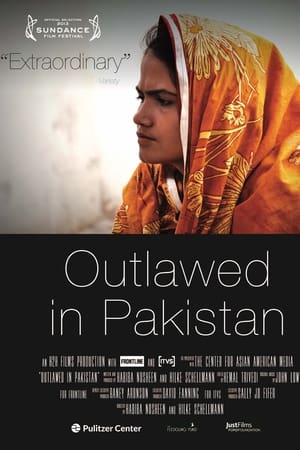
Outlawed in Pakistan
Outlawed in Pakistan tells the story of Kainat Soomro as she takes her rape case to Pakistan's deeply flawed court system in hopes of getting justice. The 13-year-old Kainat accuses four men of gang rape and shortly after is ordered to be killed by her village elders. Spanning over five years, the story is told through the perspective of Kainat and the four men accused of her rape.
2013
Apö Karim, Ambassadeur de l'Himalaya
2012
Saving Face
Every year hundreds of people - mostly women - are attacked with acid in Pakistan. Follow several of these survivors, their fight for justice, and a Pakistani plastic surgeon who has returned to his homeland to help them restore their faces and their lives.
2012
A Message from the East
The story of Muhammad Iqbal, a turn of the century poet/philosopher from South Asia. Through Iqbal's work we open a dialog between the East and West, refute the notion of a class of civilizations and discover our shared humanity.
2009
Snow Leopard: Beyond the Myth
BBC The Natural World. In 2004, a team from the Planet Earth series captured the first ever film of a wild snow leopard in the mountains of Pakistan. For Nisar Malik, who led the expedition, these images sparked a passion that compelled him to return. With cameraman Mark Smith, he spent two years documenting the snow leopard's daily life, finally lifting the veil on the most elusive of all cats.
2008
Bhutto: Daughter of Power
Touted as a symbol of modernity and democracy, Benazir Bhutto became synonymous with corruption and bad governance. In this unique film, Bhutto speaks frankly about the paradoxes of her life. Mixing private archive with insights from friends and family, this is the definitive documentary on the Bhutto dynasty.
2005
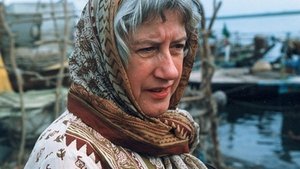
A Calling to Care
A Calling to Care is the inspiring story of 55 year-old Grace Stanley, a Canadian nurse who left her home and prestigious career behind to answer a calling halfway around the world in Karachi, Pakistan. Teaching nursing to local women in a strict Muslim culture that forbids them to even to touch men is a formidable task. However, Grace challenges her own values and belief systems to find common ground with her students, helping them to excel and feel respect for themselves in a culture that doesn't respect them. Whether it is getting her hands painted with henna, swimming fully-clothed in the ocean, or marching bravely with them on International Women's Day, Grace bonds with her students in a very special way, and ultimately discovers how the West can learn a lot more from the Third World than she ever thought.
2001
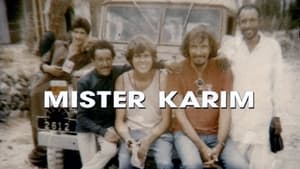
Mister Karim
1997
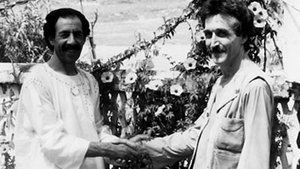
Amir: An Afghan Refugee Musician's Life in Peshawar, Pakistan
Amir, shot during the height of the Afghan civil war in the 1980s, investigates and portrays the life of Afghan refugees living in and around the city of Peshawar in northern Pakistan through the experiences of the musician Amir. The aspirations of Afghan refugees are expressed through their political songs dealing with the civil war in Afghanistan, with exile, with Afghan nationalism and with the Islamic revolution. In highly charged and tragic circumstances, music can be used in very direct ways, both to promote solidarity and as an agent of catharsis.
1985
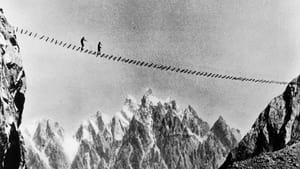
In the Shadow of Karakorum
In 1954, a German-Austrian expedition led by Mathias Rebitsch set off for the difficult-to-access Karakoram Mountains, geographically north of the Himalayas. They come across the Hunza, a people who live in the valley of the same name and believe they are descended from the soldiers of Alexander the Great. The documentary conveys impressions of the poor life of the Hunza people, the harvest, a court hearing, festivals and the children's everyday school life. Finally, the expedition sets off again and sets up its main camp on the moraine ridge of a glacier, where they measure the glacier and the earth's magnetic field. Finally, some men from the research community set off for a sub-peak of Batura.
1955
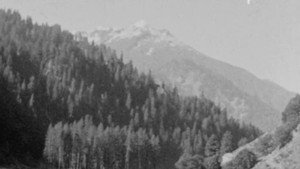
Kagan Valley
Amateur travelogue of the Kagan Valley and Darband, Pakistan.
1931