Watch Kagan Valley (1931) Online Free
More Like This
Ganga & Me
'Ganga & Me' is a Documentary Film by the award winning film director Sunil Babbar. The 42 minutes film depicts the spiritual and emotional bond of a Hindu with the mother Ganga. Shot at the beautiful locales of Haridwar, Rishikesh and Varanasi, the film takes you on a spiritual journey in India. The language of the film is English. The movie is streaming globally on Fawesome TV and Relay.
2025

Vetal Nagri
In India, in the region of Gujarat, a man whose face is never shown travels through the large city of Vadodara by night and distributes a mysterious illustrated newspaper. It provokes an irresistable desire in all the street merchants and craftsmen to tell stories of ghosts and ghouls.
2018

Ask the Sexpert
A sex columnist gains popularity even while a ban on comprehensive sex education in schools is adopted by approximately a third of India’s states.
2017

A Suitable Girl
A Suitable Girl follows three young women in India struggling to maintain their identities and follow their dreams amid intense pressure to get married. The film examines the women's complex relationship with marriage, family, and society.
2017

A Crow Has Been Calling for a Whole Day
Originally created as an installation for the third Shenzhen Independent Animation Biennale this film is a gripping diary and travelogue of a trip the filmmaker made through India. She tries to grasp India’s love and thoughts, the sentiments and everyday conditions and the experience of disease and death.
2016
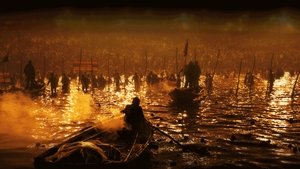
Fascinating India
"Fascinating India" spreads an impressive panorama of India’s historical and contemporary world. The film presents the most important cities, royal residences and temple precincts. It follows the trail of different religious denominations, which have influenced India up to the present day. Simon Busch and Alexander Sass travelled for months through the north of the Indian subcontinent to discover what is hidden under India’s exotic and enigmatic surface, and to show what is rarely revealed to foreigners. The film deals with daily life in India. In Varanasi, people burn their dead to ashes. At the Kumbh Mela, the biggest religious gathering of the world, 35 million pilgrims bathe in holy River Ganges. This is the first time India is presented in such an alluring and engaging fashion on screen.
2014
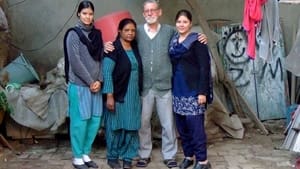
Displaced Perssons
Per Persson left Sweden 40 years ago. In Pakistan he fell in love and became the father of two daughters. Trouble starts when the girls grow up and the family decides to emigrate to Sweden. When they end up living in a caravan outside Hässleholm, all their expectations are dashed.
2013

Mr. Smith Goes to Tokyo
When Tomoko finds some messages for a 'Mr Smith' on a lost mobile phone, she finds herself on an 'Alice in Wonderland' journey through Tokyo's boulevards and back alleys. From the tyranny of symmetry in soaring office blocks - to buildings that look like space-ships, this creative documentary shows us the city's soul.
2009
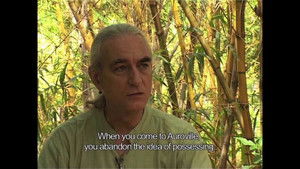
Auroville: L'esquisse d'un monde
2009
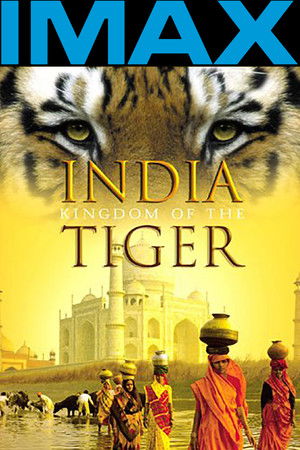
India: Kingdom of the Tiger
Journey across India, a breath taking land shaped by a myriad of cultures, customs and traditions. Come face to face with the Bengal Tiger and explore the work of this majestic creature with stunning clarity. Soar over blue-hazed Himalayan peaks and sweep down towards the thundering Indian Ocean as we celebrate the power and beauty of India's greatest ambassador - the mighty Bengal Tiger.
2002
Monsoon
In the last week of May, the whole of India prays for the onset of the monsoon. Without its life-giving rains, the nation would become a land of dry wells and deserts. Writer Alexander Frater awaits the 'burst' at the southernmost tip of India, then travels with it on its dramatic journey north, witnessing the monsoon's towering influence on every aspect of Indian life.
1991
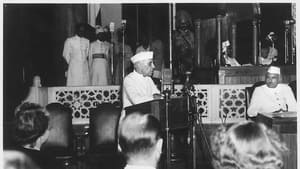
Nehru
Divided into three parts — The Awakening, The Struggle, and Freedom — this is a biographical film on Pandit Jawaharlal Nehru, the first Prime Minister of independent India. Relying on Nehru's writings and speeches, the film traces the evolution of Nehru from his birth through his life. It also deals with the effect of history on Nehru and in turn his impact on the world.
1984
An Indian Day
Traveling the length and breadth of the country, S. Sukhdev constructs, a panoramic, non-narrated study of Indian life in the late 1960s. Shot across villages, deserts, countryside, and cities, the film observes daily labor, leisure, and movement without commentary, allowing humor, contradiction, and social texture to emerge organically. The result is a sensory encounter with India poised between inherited tradition and accelerating modernity.
1968
Indian Youth: An Exploration
A documentary on the life of the youth in post-Independence India.
1968

Veteran Car Rally, Brighton
Vintage vehicles on parade in this amateur film record of the longest-running motor event in the world.
1964
Portrait of a City
A documentary portrait of Calcutta
1961
A Visit to Los Angeles
To popularize the idea of automobile travel, Ford Motor Company produced Ford Educational Weekly, a film magazine distributed free to theaters. One 1916 series featured "Visits to American Cities." In this episode, Los Angeles is featured at the very beginning of the boom created by oil, movies and aircraft. On the occasion of its centennial in 1953, Ford donated its film to the National Archives and Records Service; this copy derives from a fine grain master printed from the Archive's preservation negative. Music by Frederick Hodges.
1916
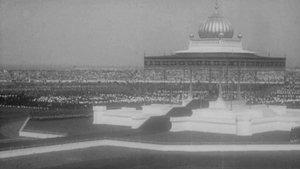
Delhi Durbar and Coronation
Jaw-dropping pomp and pageantry at the 1911 Delhi Durbar
1912
[AN EASTERN RIVIERA]
Original archive catalogue record indicates "maybe be taken from the 1909 film From Portofino to Nervi" but the festival notes indicate the Pasquali & Co intertitles so date unknown. Fragmentary footage of the Ligurian coast between Nervi and Portofino, beginning with two women on a terrace and moving through sites on the Riviera di Levante. A sequence shows Recco, devastated by WWII bombing, with a clear view of the railway viaduct. In Nervi, we see the port, Anita Garibaldi promenade, and Gropallo Tower, followed by nitrate-damaged scenes including Bogliasco bridge, a painter on the cliffs, and farmers loading hay. The film ends with a sunset over the sea. Produced by Pasquali & Co. this print features English intertitles and was part of the Dawson City nitrate find in 1978. A duplicate negative and this print were made in 1980.
1900
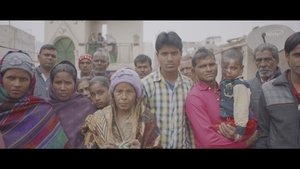
Leher - The Wave of Empowerment
A visual journey into the personal life and battles of a group of acid attack survivors in Delhi and suburbs against stigmas and prejudices in the Indian society