Watch The Hanbok on the Court (2020) Online Free
More Like This

Horoomon
One woman. One racist lie. One lawsuit that shook Japan. Korean Japanese entrepreneur Shin Sugok takes on major media in this electro-shock legal thriller about refusing to be silenced.
2025
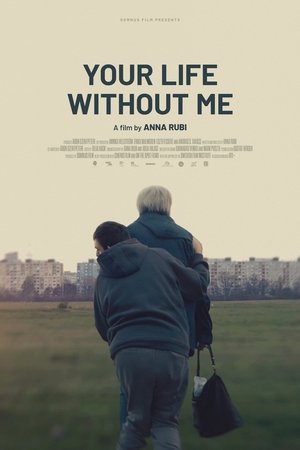
Your Life Without Me
Magdi, a strong-willed, but lonely caregiver faces a daunting reality as she grows older: If she were to pass away, her disabled adult son, Feri would be left to the inhumane conditions of the Hungarian state care system, and would quickly follow her. Determined to secure a future for Feri, Magdi unites with a group of mothers who are in the same situation and they take legal action against the state. “Your Life Without Me” is a story of the strength and sacrifices of these women who find their own voice through the common fight and their community.
2024

Arirang Rhapsody
The protagonists of the film are the Zainichi Korean women living in Kawasaki. They were tossed about by the war, and after many trips to and fro across the sea in search of a place to live, they finally arrived in Kawasaki, where they have lived modestly and vigorously.
2024
The Family of One Hundred Years
In Kawasaki, Japan, 1st to 3rd generation of Korean-Japanese and Americans share their daily lives and wish for a symbiotic society. The inter-Korean summit in 2000 brought reconciliation and hope to the divided Korean community. Meanwhile, hundreds of hateful demonstrators are approaching Sakuramoto, the Korean residence, amid deepening tensions between Japan and Korea in 2016.
2021
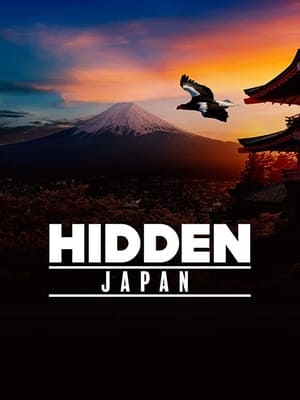
Hidden Japan
The culture of Japan is incredible, from bloom festivals to ultra-modern cities. But there are also more than 130 mammals and 600 bird species dwelling in Japan’s 6852 islands. This island chain is long enough to span climate zones, providing a huge range of habitat.
2020
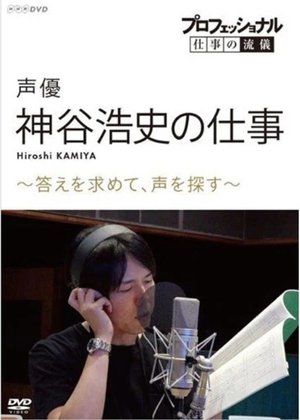
Professional Work Style: The Work of Voice Actor Hiroshi Kamiya ~ Searching for an Answer, Looking for a Voice ~
An NHK documentary that introduces top professionals who are active in the line. In this work, it adheres to Hiroshi Kamiya, who has had an overwhelming presence in the voice actor industry, for five months. We approach his days of struggle in a harsh world.
2019

A Night at the Garden
Archival footage of an American Nazi rally that attracted 20,000 people at Madison Square Garden in 1939, shortly before the beginning of World War II.
2017
After Chosun
Imman Kim wants to reconcile with his parents, who emigrated to Osaka after April 3 Jeju Uprising. Cheolwoong Park has supported his younger sister during his entire life, blaming his father who moved to Tokyo to avoid guilt-by association. Soonam Park has devoted her life to human rights movement for a second-generation Korean-Japanese and her daughter Mayi Park who also lives as a Korean-Japanese. This film tell us about meaning of a nation through their life stories.
2017
The Venerable W.
A view of the religious tensions between Muslims and Buddhist through the portrait of the Buddhist monk Ashin Wirathu, leader of anti-Muslim movement in Myanmar.
2017

One for All, All for One
Osaka Korean High School has provided education for the past six decades to the children of pro-North Korean residents in Japan. This school is located only about 20 minutes away from Hanazono Stadium, the mecca of Japan’s high school rugby, but it was not until 1994, 18 years after the foundation of a rugby team at the high school, that the Japanese education ministry approved the team’s entry into the official league. Since then, the team has run in the national league as a representative of the Osaka area and been considered a front-runner ever since. The team has strong players and passionate supporters, but it faces difficulties just before winning the league.
2014
OJ: Trial of the Century
OJ: TRIAL OF THE CENTURY, premiered on June 12, 2014 and it chronicles the twists and turns of the OJ Simpson murder trial and allows viewers to relive every moment of the investigation first-hand.
2014
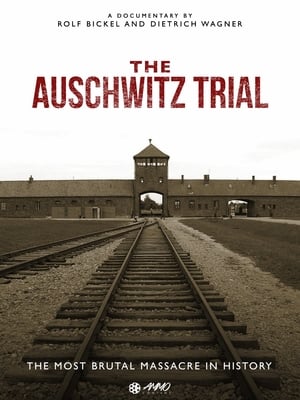
The Auschwitz Trial
The biggest trial of Nazi war crimes ever: 360 witnesses in 183 days of trial - a stunning and gripping portrayal of the most terrible massacre in history.
2013
The Devil and the Death Penalty
This documentary recounts the dysfunctional state of the death penalty in the state of California by revisiting the crimes, arrest, trials and appeals of Lawrence Bittaker, a convicted serial killer who has been on death row at San Quentin since 1981.
2012

Hackers Wanted
Hackers Wanted explores the origins and nature of hackers and hacking by following the adventures of Adrian Lamo, and contrasting his story with that of controversial figures throughout history.
2009
Dear Pyongyang
Dear Pyongyang is a documentary film by Zainichi Korean director Yang Yong-hi (Korean: 양영희, Hanja: 梁英姬) about her own family. It was shot in Osaka Japan (Yang's hometown) and Pyongyang, North Korea, In the 1970s, Yang's father, an ardent communist and leader of the pro-North movement in Japan, sent his three sons from Japan to North Korea under a repatriation campaign sponsored by ethnic activist organisation and de facto North Korean embassy Chongryon; as the only daughter, Yang herself remained in Japan. However, as the economic situation in the North deteriorated, the brothers became increasingly dependent for survival on the care packages sent by their parents. The film shows Yang's visits to her brothers in Pyongyang, as well as conversations with her father about his ideological faith and his regrets over breaking up his family.
2006

White Terror
A video about Neo-Nazis originating in Sweden provides the starting point of an investigation of extremists' networks in Europe, Russia, and North America. Their propaganda is a message of hatred, war, and segregation.
2005

Reclaiming Our Names
Matsuda Shunji, a freshman of Amagasaki High School in Osaka faces a difficult decision regarding the revelation of his Korean name, Lee Jun-Chi. The teenager is aware of the difficulties of living in Japan with a Korean name, and so dreads the day when he is supposed to make this decision. He ultimately meets a loneliness whereby we are left to witness the outcome of his dilemma.
1998
Little Injustices: Laura Nader Looks at the Law
Anthropologist Laura Nader's first field trip to a Zapotec Indian village in Oaxaca, Mexico, in the late 1950s, led her to study problem-solving in the local courts. There, "little injustices" were the meat of everyday courtroom life.
1981
Juvenile Court
"Juvenile Court" shows the complex variety of cases before the Memphis Juvenile Court: foster home placement, drug abuse, armed robbery, child abuse, and sexual offenses. The sequences illustrate such issues as community protection vs. the desire for rehabilitation, the range and the limits of the choices available to the court, the psychology of the offender, and the constitutional and procedural questions involved in administering a juvenile court.
1973

Basic Court Procedures
The film "Basic Court Procedures" explains the workings of the American legal system through a play written and performed by a group of students. It starts with a discussion among the characters about a fictional case involving a person named Lefty James accused of robbing a bank. The characters, playing various roles in the court, illustrate how a trial proceeds, from selecting a jury to presenting evidence and witness testimonies. The film covers direct and circumstantial evidence, the roles of different court officials, and the importance of proper legal procedures to ensure justice. It demonstrates the processes of objection, cross-examination, and the concept of appealing a verdict. Through the narrative, the film educates viewers on the fundamental principles of the court system, emphasizing the court's role in upholding justice and individual rights in a democratic society.
1949