Watch The Genius of Turner: Painting the Industrial Revolution (2013) Online Free
A film that looks at the genius of JMW Turner in a new light. There is more to Turner than his sublime landscapes - he also painted machines, science, technology and industry. Turner's life spans the Industrial Revolution, he witnessed it as it unfolded and he painted it. In the process he created a whole new kind of art. The programme examines nine key Turner paintings and shows how we should re-think them in the light of the scientific and Industrial Revolution. Includes interviews with historian Simon Schama and artist Tracey Emin.
Cast
Simon Schama
More Like This

Becoming Madonna
Madonna's rise to fame from 1978 to 1992, exploring her personal life, controversies, and the challenges she faced during that period.
2024
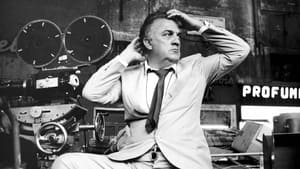
Fellini, confidences retrouvées
Federico Fellini died on October 31st, 1993. Thirty years later, he is still considered as one of the most irreverant moviemaker in the history of cinema. Through a long-previously-unseen interview, directed by Jean-Christophe Rosé in 1981, through extracts of his films and through behind-the-scenes, this documentary draws an intimate portrait of Fellini by himself.
2023
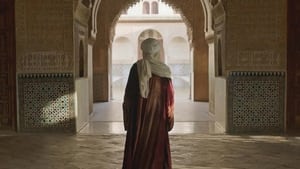
The Builders of the Alhambra
Kingdom of Granada, al-Andalus, 14th century. After recognizing that his land, always under siege, is hopelessly doomed to be conquered, Sultan Yusuf I undertakes the construction of a magnificent fortress with the purpose of turning it into the landmark of his civilization and his history, a glorious monument that will survive the oblivion of the coming centuries: the Alhambra.
2022
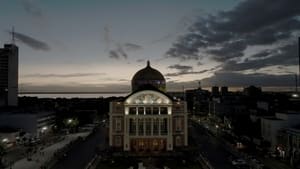
Teatro Amazonas: The Art of Sound and Nature
The history of the Teatro Amazonas in Manaus, an opera house located in the middle of the Amazon rainforest, whose construction, between 1884 and 1896, depended on the labor exploitation of the local indigenous populations, provides an insight into the cultural, social and political situation in Brazil.
2022
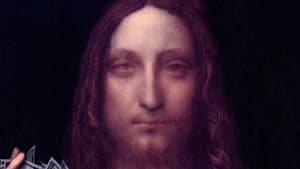
The Savior for Sale
In November 15, 2017, the painting Salvator Mundi, attributed to Italian artist Leonardo da Vinci (1452-1519), was sold for an unprecedented $450 million. An examination of the dirty secrets of the art world and the surprising story of how a work of art is capable of upsetting both personal and geopolitical interests.
2021

The Story Won't Die
THE STORY WON’T DIE, from Award-winning filmmaker David Henry Gerson, is an inspiring, timely look at a young generation of Syrian artists who use their work to protest and process what is currently the world’s largest and longest ongoing displacement of people since WWII. The film is produced by Sundance Award-winner Odessa Rae (Navalny). Rapper Abu Hajar, together with other creative personalities of the Syrian uprising, a post-Rock musician (Anas Maghrebi), members of the first all-female Syrian rock band (Bahila Hijazi + Lynn Mayya), break-dancer (Bboy Shadow), choreographer (Medhat Aldaabal), and visual artists (Tammam Azzam, Omar Imam + Diala Brisly), use their art to rise in revolution and endure in exile in this new documentary reflecting on a battle for peace, justice and freedom of expression. It is an uplifting and humanizing look at what it means to be a refugee in today’s world and offers inspiring and hopeful vantages on a creative response to the chaos of war.
2021
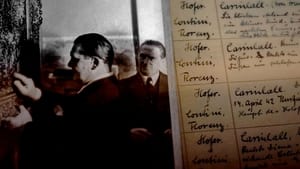
Goering's Catalogue: A Collection of Art and Blood
For more than a decade, Reichsmarschall Hermann Goering, Adolf Hitler's right-hand man during the infamous Third Reich, assembled a collection of thousands of works of art that were meticulously catalogued.
2021
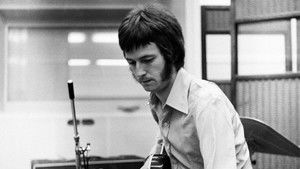
Eric Clapton: Life in 12 Bars
An unflinching and deeply personal journey into the life and work of guitarist Eric Clapton told through his own words and songs.
2018

The Artist’s Garden: American Impressionism
Taking its lead from French artists like Renoir and Monet, the American impressionist movement followed its own path which over a forty-year period reveals as much about America as a nation as it does about its art as a creative power-house. It’s a story closely tied to a love of gardens and a desire to preserve nature in a rapidly urbanizing nation. Travelling to studios, gardens and iconic locations throughout the United States, UK and France, this mesmerising film is a feast for the eyes. The Artist’s Garden: American Impressionism features the sell-out exhibition The Artist’s Garden: American Impressionism and the Garden Movement, 1887–1920 that began at the Pennsylvania Academy of the Fine Arts and ended at the Florence Griswold Museum, Old Lyme, Connecticut.
2017
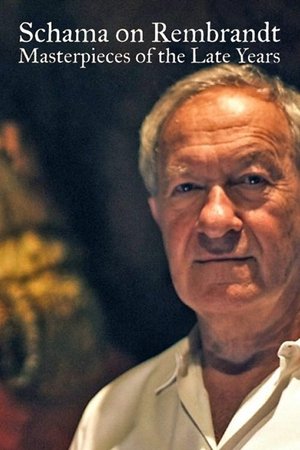
Schama on Rembrandt: Masterpieces of the Late Years
Simon Schama explains the style, theme and concept of Rembrandt's late masterpieces.
2014
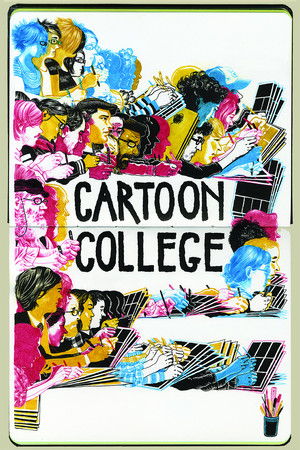
Cartoon College
Every fall, The Center for Cartoon Studies invites 20 aspiring cartoonists to White River Junction, Vermont for a no-holds-barred education in comics. Those who complete the two-year program earn a Master of Fine Arts degree and are ready to face the hardship of a career in one of the world's most drudgery-inducing art forms. This is their story.
2012
Picturing the Presidents
We go behind the scenes and into the minds of artists as they capture, commemorate, and, at times, condemn our presidents.
2009
The Wedding at Cana
A short film by Peter Greenaway. It depicts the painting The Wedding Feast at Cana by Paolo Veronese, through mixed media and shows different perspectives.
2009

Mona Lisa Smile
Katherine Watson is a recent UCLA graduate hired to teach art history at the prestigious all-female Wellesley College, in 1953. Determined to confront the outdated mores of society and the institution that embraces them, Katherine inspires her traditional students, including Betty and Joan, to challenge the lives they are expected to lead.
2003
Chihwaseon
Jang Seung-eop, also known as "Chihwaseon," drinks and paints all day. Through Mae-hyang, he learns the meaning of fate, sees art beyond even the smallest things, and sets out for the path he seeks.
2002
Eating Sea Urchins
A surrealist home movie, filmed by Luis Buñuel in Cadaqués in 1930, focusing on Salvador Dalí's father and his wife.
2000
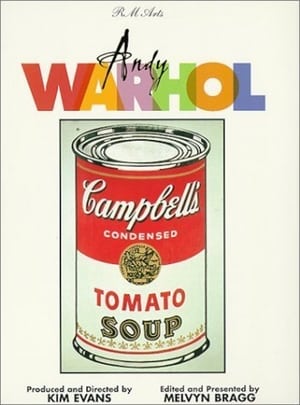
Andy Warhol
The first major profile of the American Pop Art cult leader after his death in 1987 covers the whole of his life and work through interviews, clips from his films, and conversations with his family and superstar friends. Andy Warhol, the son of poor Czech immigrants, grew up in the industrial slums of Pittsburgh while dreaming of Hollywood stars. He went on to become a star himself.
1987

A Passage to India
Cultural mistrust and false accusations doom a friendship in British colonial India between an Indian doctor, an Englishwoman engaged to marry a city magistrate, and an English educator.
1984
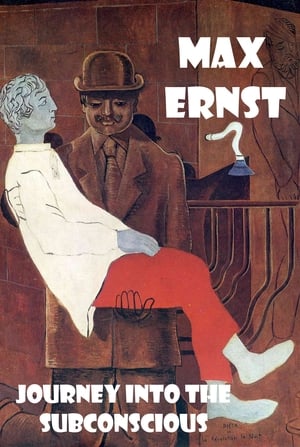
Max Ernst: Journey into the Subconscious
The inner world of the great painter Max Ernst is the subject of this film. One of the principal founders of Surrealism, Max Ernst explores the nature of materials and the emotional significance of shapes to combine with his collages and netherworld canvases. The director and Ernst together use the film creatively as a medium to explain the artist's own development.
1964
Painter With No Colors
A talented artist creates a portrait of someone he has never seen before.