Watch The Experimental Eskimos (2009) Online Free
In the early 1960s the Canadian government conducted an experiment in social engineering. Three young Inuit boys were separated from their families in the Arctic and were sent to Ottawa, the nation's capital, to live with white families and to be educated in white schools. The consequences the experiment would have on the boys, their identity and culture was brushed aside. The bureaucrats did not anticipate the outcome. The three grow up to be political activists and leaders - often at odds with the government that brought them south. They establish aboriginal rights in Canada and are instrumental in the creation of Nunavut, the world's largest self-governed aboriginal territory. But it all comes at a tremendous personal cost. Peter Ittinuar, Zebedee Nungak, and Eric Tagoona recount their stories, achievements and challenges in this film about an attempt at assimilation, empowerment, and the triumph of the human spirit.
Cast
Peter Ittinuar, Zebedee Nungak, Eric Tagoona
More Like This
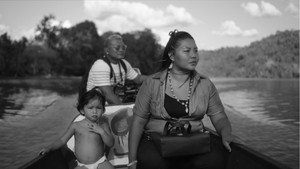
Parasisi
On the border of Surinam and French Guyana, indigenous Wayana territory is overrun by intruders. Illegal gold miners poison the river, missionaries repress indigenous identity, and even doctors with the best intentions leave marks that are often silently violent. The Wayana call these intruders Parasisi.
2026
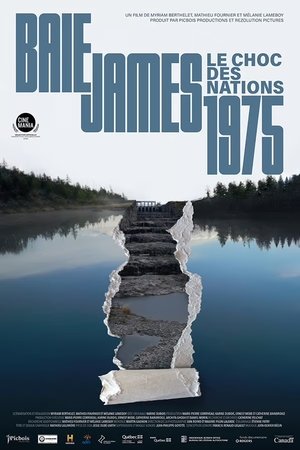
James Bay 1975: The Shock of Two Nations
A dive into the origins of two revolutions: the rapid expansion of Hydro-Québec with the construction of the La Grande hydroelectric power plant, a project championed by Premier Robert Bourassa, and the awakening of Indigenous nations. A clash of civilizations where two worldviews collide. Quebec, buoyed by the momentum of the Quiet Revolution, takes control of its destiny. Meanwhile, in the North, young Inuit and Cree rise up for the first time to protect what is most precious to them: their land and their culture. At the heart of the conflict is the James Bay construction site, the largest of its kind in North America.
2025
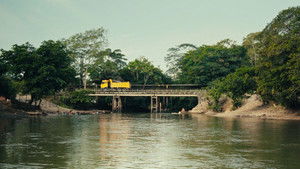
buen vivir – ñutse canseye
Oil extraction in the Amazon region is contaminating the land and water of a natural paradise. A slow process that threatens the health and traditional culture of local communities. Thirteen women raise their voices against the destruction of their land. Through protests and silent resistance, they confront an opaque global power structure.
2025
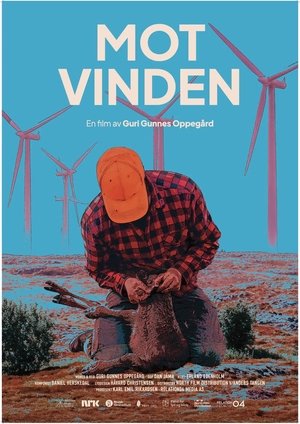
Mot vinden
2025
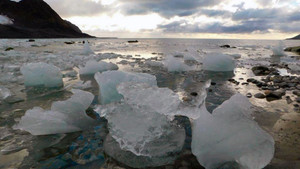
Greenland
2024
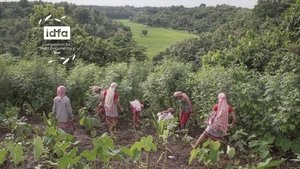
Echoes Within
“Can I be nostalgic about something I’ve never experienced?” asks debut filmmaker Pranami Koch. She has in mind her grandmother, a person she never knew who belonged to the Koches, a people in India with their own culture and traditions. In her search for connection and identity, Pranami travels to the countryside and immerses herself in the Koch community.
2024
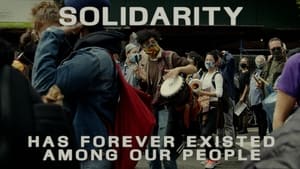
People Unite!
In the face of AAPI violence, an intergenerational coalition of Black, Indigenous, Latinx, Asian, People of Color organizers come together to organize a march across historic Washington Heights and Harlem, as a continuation of the historic and radical Black and Asian solidarity tradition.
2022
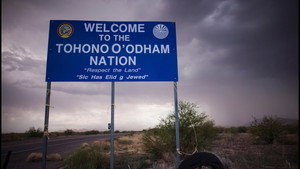
Border Nation
Ofelia Rivas (Tohono O’odham) was born and raised just north of the US-Mexico border, the traditional territory of the Tohono O’odham. Today, tribal members live on both sides. From threats of new border infrastructure to stricter entry laws, can Ofelia and her people’s traditional way of life survive?
2020
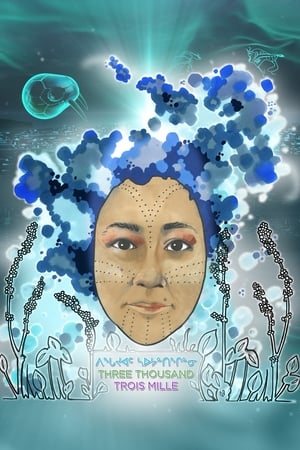
Three Thousand
Inuit artist Asinnajaq plunges us into a sublime imaginary universe—14 minutes of luminescent, archive-inspired cinema that recast the present, past and future of her people in a radiant new light. Diving into the NFB’s vast archive, she parses the complicated cinematic representation of the Inuit, harvesting fleeting truths and fortuitous accidents from a range of sources—newsreels, propaganda, ethnographic docs, and work by Indigenous filmmakers. Embedding historic footage into original animation, she conjures up a vision of hope and beautiful possibility.
2017
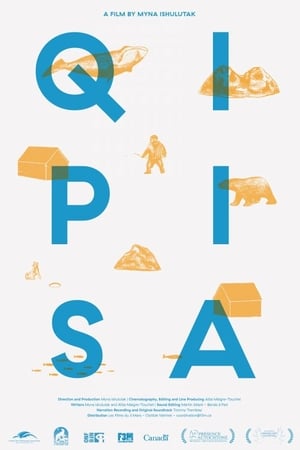
Qipisa
The director goes back to her roots in Pangnirtung, amongst her family and community. It leads her to another journey: to Qipisa, the outpost camp from where they were uprooted.
2017

Living with Giants
Living with Giants delves into the imaginative world of Paulusie Kasudluak, a young Inuk facing responsibilities as he transitions into adulthood. The film portrays his thoughts, his dreams, and his beliefs, and allows for an intimate immersion into his life. Paulusie is a caring son to his ailing father and a good boyfriend. But what begins as the story of an innocent teenager quickly becomes the struggle of a young man coping with the guilt of having made a huge mistake. Tragically, Paulusie takes the most dramatic decision and takes his own life. Living with Giants remains a poetic journey of resilience that echoes issues that are far greater than Paulusie's personal story.
2016
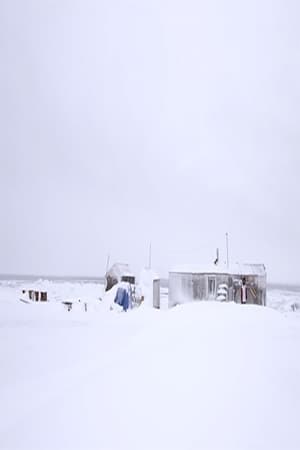
Nowhere Land
Documentary about filmmaker Bonnie Ammaaq's memories of life on Baffin Island, where her family moved for eleven years during her childhood from the hamlet of Igloolik to return to the traditional Inuit way of life.
2015
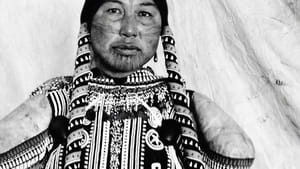
Tunniit: Retracing the Lines of Inuit Tattoos
Inuit traditional face tattoos have been forbidden for a century, and almost forgotten. Director Alethea Arnaquq-Baril, together with long-time friend and activist Aaju Peter, is determined to uncover the mystery and meaning behind this beautiful ancient tradition. Together they embark on an adventure through Arctic communities, speaking with elders and recording the stories of a once popularized female artform. Central to the film is Arnaquq-Baril’s personal debate over whether or not to get tattood herself. With candour and humour, she welcomes us into her world, to experience firsthand the complex emotions that accompany her struggle. Past meets present in this intimate account of one woman’s journey towards self-empowerment and cultural understanding.
2011
Eskimos und die Zivilisation
Short film about inuits
1989
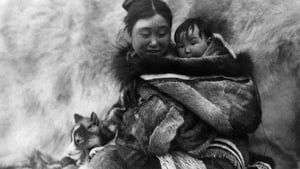
Nanook Revisited
Filmmakers revisit Inukjuak, the Inuit village where Robert J. Flaherty filmed Nanook of the North in the early twentieth century, and examine the realities behind the ground-breaking documentary.
1988
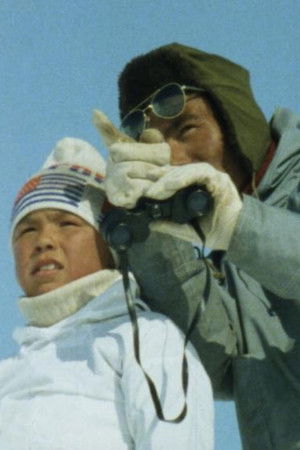
Kaali Goes for Seal Hunting
One day in the lives of an average Greenlandic family, which happens to be of great importance for 8-year old Kali - he's about to catch his first prey with the harpoon. The whole family is looking forward for the huge step in boy's maturation.
1985
Potlatch...a strict law bids us dance
Presents the history of the conflict between the Canadian government and the Kwakiutl Indians of the Northwest Pacific over the ritual of the Potlatch. Archival photographs and films, wax roll sound recordings, police reports, the original potlatch files, and correspondence of agents form the basis of the reconstruction of period events, while the film centres on a Potlatch given today by the Cranmer family of Alert Bay.
1975
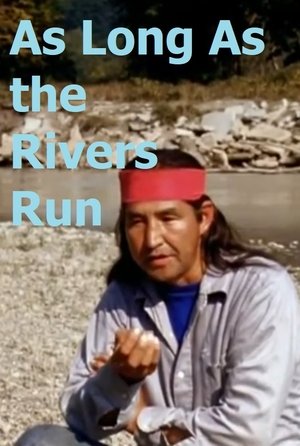
As Long as the Rivers Run
Examines the violence and civil disobedience leading up to the hallmark decision in U.S. v. Washington, with particular reference to the Nisqually Indians of Frank's Landing in Washington.
1971
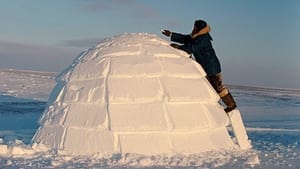
How to Build an Igloo
This classic short film shows how to make an igloo using only snow and a knife. Two Inuit men in Canada’s Far North choose the site, cut and place snow blocks and create an entrance--a shelter completed in one-and-a-half hours. The commentary explains that the interior warmth and the wind outside cement the snow blocks firmly together. As the short winter day darkens, the two builders move their caribou sleeping robes and extra skins indoors, confident of spending a snug night in the midst of the Arctic cold!
1949
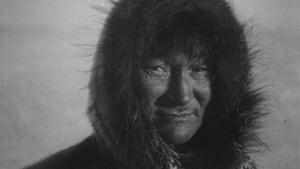
Nanook of the North
This pioneering documentary film depicts the lives of the indigenous Inuit people of Canada's northern Quebec region. Although the production contains some fictional elements, it vividly shows how its resourceful subjects survive in such a harsh climate, revealing how they construct their igloo homes and find food by hunting and fishing. The film also captures the beautiful, if unforgiving, frozen landscape of the Great White North, far removed from conventional civilization.
1922