Watch The Disappeared (2008) Online Free
Loading Cinehub...
"The Disappeared" relives the horrors of Argentina's Dirty War (1976-83) through the experience of Horacio Pietragalla, a young man raised by the maid of the officer who kidnapped him after the military brutally murdered his parents. The film follows Horacio as he reconstructs the cause for which his real parents gave their lives, and, through this search, reclaims his true identity. This personal journey internalizes the tragedy that ravaged the country for seven years and exposes polarized views on state-driven terrorism in groundbreaking interviews with top military officials, concentration camp victims, human rights activists, journalists who covered the events, and members of Horacio's surrogate and biological families.
Cast
Néstor Kirchner, Estela de Carlotto, Andrew Graham Yooll, Robert Cox, Martín Malharro
More Like This
Breaking the Silence: The Maria Soledad Case
In '90s Argentina, the murder of a high school student sparks widespread protests. Retold by her loved ones, this documentary shows their fight for justice.
2024
Je vais tuer Hitler
One day, in Savigny, an 18-year-old boy left his house in the middle of the war, saying: "I'm leaving, I'm going to kill Hitler." His name was Joseph, he was Jewish, he was my great-uncle. He disappeared during the night of the Occupation, and his existence became a family secret. He disappeared from history, the small as well as the big: he is not on any deportation list, and the only archive where he appears is a family photo of him as a child. It disappeared like a stone at the bottom of the water, instead of going up in smoke in the sky of Poland. What did he become? And why didn't anyone mention his name anymore?
2023
Archivos VIH/sida: historias y voces de una pandemia
2021
It Rains
Is that what mass graves are like, one body on top of the other and nothing else? Through the rain, Oliver sends signals to his mother to help her unearth the truth.
2021
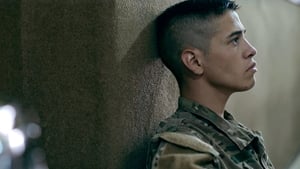
Soldier
A young man decides to join the army. He becomes the drummer in the military band, and his everyday life is now a combination of military training and music. What does the Argentine Army do these days, more than thirty years after the dictatorship? What does it mean to be a soldier in a country without wars?
2017
Todxs somos López. Donde empieza la vida y termina la muerte
A chronicle on the days without Jorge Julio López, key witness and complainant on the first trial on genocide in Argentina, dated in 2006. López, who had survived through concentration camps on the late seventies argentinian dictatorship, disappeared for the second time the day the court decision meant to condemn his kidnappers was about to be read.
2017
1986. The story behind the Cup
Anecdotes and testimonials about the performance of Argentina in the 1986 FIFA World Cup. The whole story behind the Cup.
2016
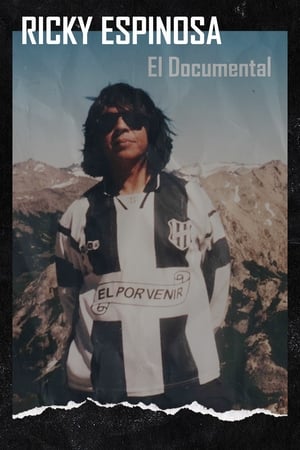
Ricky Espinosa: El Documental
Ricky Espinosa: The Documentary is a self-managed and independent project created by Juan Pablo Duarte in Buenos Aires, Argentina. It explores the life of Ricky Espinosa as an artist—his beginnings, his career, and his discography—featuring previously unreleased archival material and exclusive interviews.
2015
Messi
His teachers, coaches, childhood friends and Barça teammates, together with journalists, writers and prominent figures from the history of football, come together in a restaurant to analyze and pick apart Messi's personality both on and off the field, and to look back at some of the most significant moments in his life. Viewed from Álex de la Iglesia's unique perspective, Messi recreates the player's childhood and teenage years, from his very first steps, with a football always at his feet, through to the decision to leave Rosario for Barcelona, the separation from his family, and the role played in his career by individuals such as Ronaldinho, Rijkaard, Rexach and Guardiola.
2014
Trabantem až na konec světa
The third installment in Dan Přibáň's series of travel documentaries describes the author's journey with his friends across South America in vehicles that are often notorious but cult in their own way. The charming dynamics of the group on screen are further enhanced by the high-quality craftsmanship.
2014

Digging out the truth
In February of 1976, eight people, two of them children, were killed in the region of Smara (Western Sahara). Their bodies had never been found, the causes of their death was never explained, and, in some cases, not even confirmed whether they were still alive or not. However, 37 years later, a group of experts from the Society of Science Aranzadi, Hegoa Institute and the University of the Basque Country, called by the Association of the Families of Sahrawi Prisoners and Disappeared (AFAPREDESA) and by the relatives, has found the remains of those people. This finding confirms what families and witnesses have claimed for years, the truth.
2013
Jessico, Una Historia de Rock en Tiempos Convulsos
2012
Falklands' Most Daring Raid
Documentary film about the then longest range bombing mission in history, which changed the outcome of the Falklands War.
2012
Dear Matthew
The story of Tim Reilly (84) whose son Matthew disappeared in1999. All that remains of him today are his paintings, which his father, Tim, curates.
2010
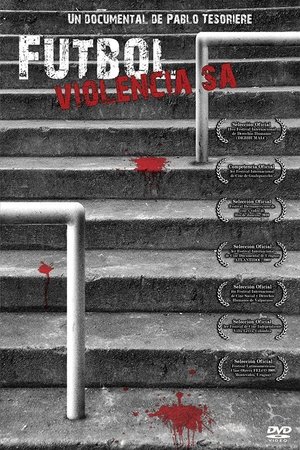
Fútbol Violencia S.A.
2009
My Enemy's Enemy
Reveals an alternate history of the post-war world. This is a version of history where, in contrast to what we are all told, fascist ideology prevailed. The story of Klaus Barbie, Nazi torturer, American spy, tool of repressive right-wing regimes, is symbolic of the real relationship that the "Western" governments had with fascism and makes us see the world as it is today - and the politicians that inhabit it - in a different way.
2007
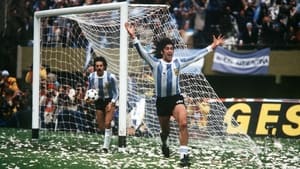
'78 Cup - The Power of Football
Documentary about the Football World Cup held in Argentina in 1978, focusing on the competition and behind the scenes of the most important soccer competition in the world. Two versions of the 1978 official film exist, the first "Copa 78 - O Poder do Futebol" was made by Brazilian directors Maurício Sherman and Victor di Mello in 1979 but was later withdrawn by FIFA because of its controversial content. The film includes an interview with Rodolfo Galimberti, one of the leaders of the Montoneros guerrilla group and also made accusations that the Argentinian competition organisation committee had deliberately hindered Brazilian chances of success by tampering with the pitch at Mar del Plata.
1979
Secrets of the Bermuda Triangle
Part documentary/part dramatization, this film details several of the highest-profile unsolved cases of disappearances, mysterious changes in personality and other strange occurrences related to the Bermuda Triangle.
1978
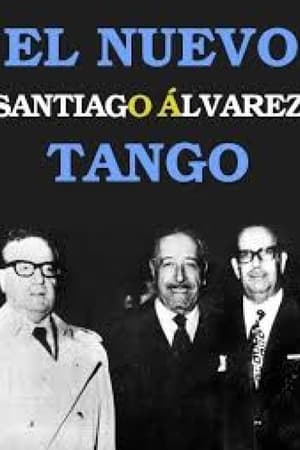
The New Tango
The New Tango (El Nuevo Tango) was not shown in Argentina for a long time as it deals with the ascent of Argentinean president Hector Campora in May 1973, and features Cuban and Chilean presidents, Osvaldo Dorticos and Salvador Allende. A million people gathered on the Plaza de Mayo to acclaim the new President. One of Cámpora's first presidential actions was a granting of amnesty to political prisoners who where jailed during the dictatorship. On 28 May Argentina restored diplomatic relations with Cuba, which then received Argentine aid - such as food and industrial products - to break the United States embargo against Cuba.
1973

Childhoods without Borders: Voices in Motion
"Childhoods without Borders: Voices in Motion" is a documentary in which migrant boys and girls narrate the experiences and challenges they have faced in search of a better life.