Watch The Deonzo Brothers (1901) Online Free
The famous acrobats in the above title appear in a marvellous acrobatic act. There are three barrels arranged on the stage. The boys, blindfolded, stand on opposite sides of the stage, and jump from one barrel into the other until they both land in the same barrel at the same time. They then jump backwards onto the stage over the two barrels. One table is then mounted upon another and the center barrel is placed on top. The brothers still blindfolded jump one each into a barrel and from them to the first to the second table and from the second table into the barrel on top of the second table. They then jump backwards onto the stage. This is pronounced by show people to be the most marvellous acrobatic feat that has ever been introduced. (Edison Catalog)
More Like This
Popsong
The world appears black on black until it separates from itself, looks at itself, includes itself, and sees colour.
2016
Buster Keaton: The Genius Destroyed by Hollywood
In 1926, Buster Keaton was at the peak of his glory and wealth. By 1933, he had reached rock bottom. How, in the space of a few years, did this uncontested genius of silent films, go from the status of being a widely-worshipped star to an alcoholic and solitary fallen idol? With a spotlight on the 7 years during which his life changed, using extracts of Keaton’s films as magnifying mirrors, the documentary recounts the dramatic life of this creative genius and the Hollywood studios.
2016
Gula
2008
Grand Canyon Adventure: River at Risk
A documentary about a 15-day river-rafting trip on the Colorado River aimed at highlighting water conservation issues.
2008
The Dawn of Sound: How Movies Learned to Talk
Film historians, and survivors from the nearly 30-year struggle to bring sound to motion pictures take the audience from the early failed attempts by scientists and inventors, to the triumph of the talkies.
2007
Hurricane on the Bayou
The film "Hurricane on the Bayou" is about the wetlands of Louisiana before and after Hurricane Katrina.
2006
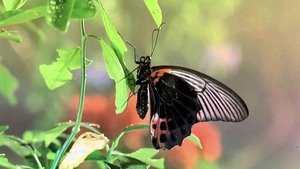
Bugs!
Explore the extraordinary hidden world of insects, where a leaf weighs more than a car, rain drops feel like exploding hand grenades and a blade of grass soars like a skyscraper. Shot on location in the Borneo rainforest, Bugs! brings the beautiful and dangerous universe of its tiny stars up close and personal with cutting-edge technology that magnifies them up to 250,000 times their normal size.
2003
Los 5 Faust de F. W. Murnau
2002
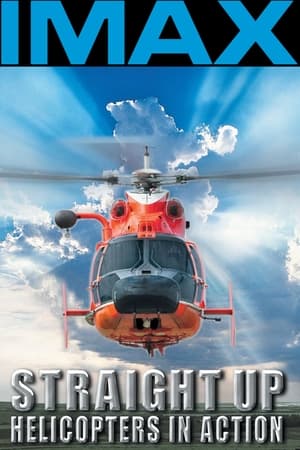
Straight Up: Helicopters in Action
Straight Up: Helicopters in Action will take audiences on a series of aerial adventures. Fly along with skilled helicopter crews as they carry out sea and mountain rescues, apprehend drug smugglers, repair high voltage lines, save endangered animals, deliver humanitarian aid, and undertake a reconnaissance mission. Learn how helicopters are flown.
2002
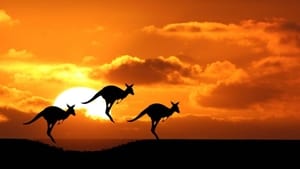
Australia: Land Beyond Time
Australia: Land Beyond Time takes viewers on a breathtaking journey back in time to witness the birth and evolution of a mysterious land that harbors remnants of Earth's earliest life and many of it's strangest creatures that exist nowhere else on the planet.
2002
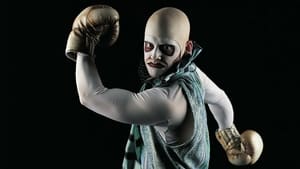
Cirque du Soleil: Quidam
A young girl has already seen everything there is to see and her world has lost all meaning. Her anger shatters her world and she finds herself in the universe of QUIDAM, where she is joined by a playful companion, as well as another mysterious character who attempts to seduce her with the marvelous, the unsettling and the terrifying.
1999
Wolves
A look at the great wolf debate with comments and views from people on both sides. It also contains footage of Natives dressing up & doing tribal dances. The link between wolves, bison, and Native Americans; as well as white man's reasoning behind their determination to eliminate bison and wolves from the landscape.
1999
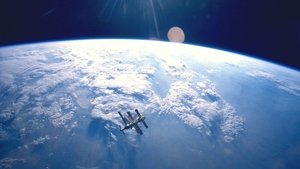
Mission to Mir
This film shows how far we have come since the cold-war days of the 50s and 60s. Back then the Russians were our "enemies". And to them the Americans were their "enemies" who couldn't be trusted. Somewhere in all this a young girl in Oklahoma named Shannon set her sights on becoming one of those space explorers, even though she was told "girls can't do that." But she did.
1997
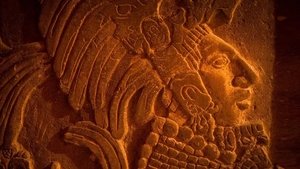
Mystery of the Maya
Filmed in IMAX, a young Mayan boy who lives close to the ruins becomes acquainted with an archaeologist (Guerra) and asks her to tell him about his ancestors. The crew travelled to over 15 locations in Mexico and Guatemala, including Tulum and Chichén Itzá.
1995
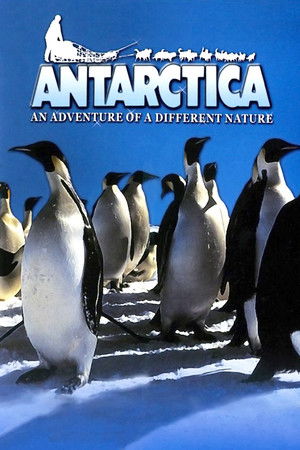
Antarctica: An Adventure of a Different Nature
This large format film explores the last great wilderness on earth. It takes you to the coldest, driest, windiest continent, Antarctica. The film explores the life in Antarctica, both for the animals that live their and the scientist that work there.
1991
Wolf Hunt
An early silent film, made before intertites became common (which is why very early silent films are narrated, at best). This was filmed in 1907 but released in 1908. It was made at the request of Teddy Roosevelt, who saw coyotes being caught in Oklahoma *by hand*, and folks back east didn't believe him. While this movie is called "The Wolf Hunt", it was actually coyotes being caught, not wolves.
1908

Train Entering Hove Station
Most movie fans know that the first filmmakers liked to shoot trains entering stations. This example by Sussex film pioneer George Albert Smith illustrates why. The train's rush towards the audience brings movement and visual drama. The flurry of human activity offers plenty for the audience to engage with - who are these people and where are they going? And the time pressure exerted by the fact that the train must soon depart adds narrative tension - will everyone get on and off in time?
1897
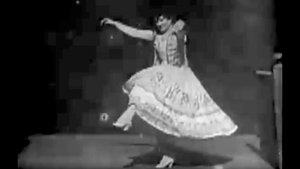
Carmencita
The first woman to appear in front of an Edison motion picture camera and possibly the first woman to appear in a motion picture within the United States. In the film, Carmencita is recorded going through a routine she had been performing at Koster & Bial's in New York since February 1890.
1894
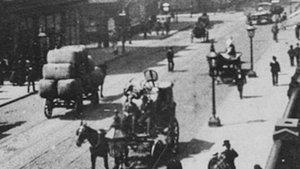
Traffic Crossing Leeds Bridge
A film by Louis Aimé Augustin Le Prince, shot in late October 1888, showing pedestrians and carriages crossing Leeds Bridge.
1888
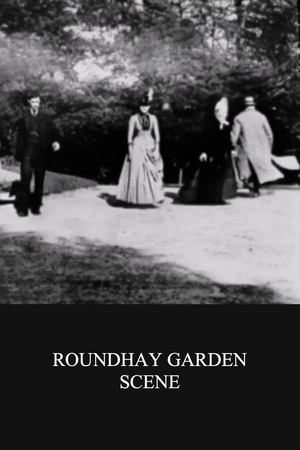
Roundhay Garden Scene
The earliest surviving motion-picture film, and believed to be one of the very first moving images ever created, was shot by Louis Aimé Augustin Le Prince using the LPCCP Type-1 MkII single-lens camera. It was taken on paper-based photographic film in the garden of Oakwood Grange, the Whitley family house in Roundhay, Leeds, West Riding of Yorkshire (UK), on 14 October 1888. The film shows Adolphe Le Prince (Le Prince’s son), Mrs. Sarah Whitley (Le Prince’s mother-in-law), Joseph Whitley, and Miss Harriet Hartley walking around in circles, laughing to themselves, and staying within the area framed by the camera. Roundhay Garden Scene is often associated with a recording speed of around 12 frames per second and runs for about 2 to 3 seconds.
1888