Watch The Computers (2014) Online Free
Six young women programmed the world's first all-electronic programmable computer, ENIAC, as part of a secret US WWII project. They changed the world, but were never introduced and never received credit. These pioneers deserve to be known and celebrated: Betty Snyder Holberton, Jean Jennings Barik, Kay McNulty Mauchly Antonelli, Marlyn Wescoff Meltzer, Ruth Lichterman Teitelbaum, and Frances Bilas Spence.
Cast
Julia Flucht
More Like This
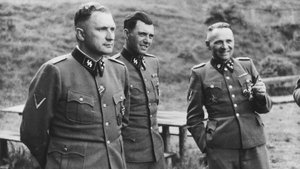
Bullets And Blueberries
The Holocaust began with the indiscriminate mass shootings by the Einsatzgruppen in the bloodlands of Eastern Europe and was perfected in the gas chambers at Auschwitz. “Bullets And Blueberries” explores the motives, methods and madness of the perpetrators, using never-before-seen images captured by the killers themselves — images that fully capture the banality of evil.
2025
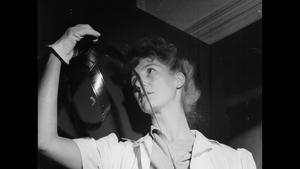
A Return to Memory
When Canada entered World War II, the National Film Board suddenly had an urgent new mission—and hundreds of women stepped forward, helping to create Canadian cinema as we now know it.
2024

The Final Days of Adolf Hitler
2024
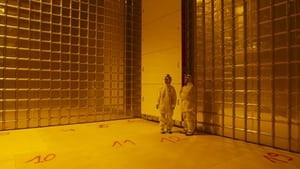
Way Beyond
The Future Circular Collider is the machine of the future. Thanks to it, we will finally be able to go back in time to the origin of our universe. But which way do we go to set up the largest scientific instrument of all time? Between metaphysics and underground tunnels, a story of the preparations or how men are ready to move mountains for more knowledge.
2022
A Compassionate Spy
Physicist Ted Hall is recruited to join the Manhattan Project as a teenager and goes to Los Alamos with no idea what he'll be working on. When he learns the true nature of the weapon being designed, he fears the post-war risk of a nuclear holocaust and begins to pass significant information to the Soviet Union.
2022

Concert for the Battle of El Tala
This is a film with music. Or about the music and texts that accompany, in a poetic way, a decisive battle between Unitarian and Federalists. The vicissitudes of the birth of a nation based on the play written by Mariano Llinás and Gabriel Chwojnik, whose images achieve some hypnotic strength.
2021

Handbook of Movie Theaters' History
Handbook of Movie Theaters' History is a documentary about the history, the development in the present days and the future of movie theaters in the city of Turin, Italy. It mixes the documentary language with comedy and fiction, and is enriched by interviews to some of the most important voices of Turin cinematography. The film follows the evolution of movie theaters by enlightening its main milestones: the pre-cinema experiences in the late 19th Century, the colossals and the movie cathedrals of the silent era, the arthouse theaters, the National Museum of Cinema, the Torino Film Festival, the movie theaters system today and the main hypothesis about its future. The mission of Handbook of Movie Theaters' History is to explore and give back to the audience a deep reflection about the identity and the value of movie theater, in its social and anthropological role and as a mass media, and to analyze the experience of the viewer.
2021
Eindelijk Vrij! De Bevrijding van Maastricht Gefilmd
Documentary about the liberation of Maastricht.
2019
Five Came Back
The extraordinary story of how Hollywood changed World War II – and how World War II changed Hollywood, through the interwoven experiences of five legendary filmmakers who went to war to serve their country and bring the truth to the American people: John Ford, William Wyler, John Huston, Frank Capra, and George Stevens. Based on Mark Harris’ best-selling book, “Five Came Back: A Story of Hollywood and the Second World War.”
2017

The MovieLand Movie
I go to Movieland at least once a week, every week, for the last five years to sink some quarters into the games and the Movieland movie is an accumulation of the friends, lights, textures, and narratives that I have experienced in that time. I love Movieland!
2017

The Polio Crusade
The film interweaves the personal accounts of polio survivors with the story of an ardent crusader who tirelessly fought on their behalf while scientists raced to eradicate this dreaded disease. Based in part on the Pulitzer Prize-winning book Polio: An American Story by David Oshinsky, Features interviews with historians, scientists, polio survivors, and the only surviving scientist from the core research team that developed the Salk vaccine, Julius Youngner.
2009
Modus Operandi
Between 1942 and 1944 some 24,916 Jews were deported from Belgium to Auschwitz. The roundups and deportations were organized and carried out by the Nazis with the - not always conscious - cooperation of Belgian authorities. The attitude of the authorities here varied from outright resistance to voluntary or unwitting collaboration.
2008

Zeitgeist: The Movie
A documentary examining possible historical and modern conspiracies surrounding Christianity, the 9/11 terrorist attacks, and the Federal Reserve bank.
2007
Kizu: The Untold Story of Unit 731
Documentary about Japan's Unit 731 of World War II.
2004
Pyramid
Of the Seven Wonders of the Ancient World, the Pyramid is the only one to survive. Many believe that even with our 21st-century technology, we could not build anything like it today. Based on the most up-to-date research and the latest archaeological discoveries, here is how the Pyramid came to be.
2002
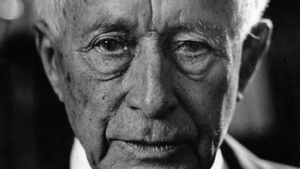
102 Years in the Heart of Europe: A Portrait of Ernst Jünger
102 Years in the Heart of Europe: A Portrait of Ernst Jünger (Swedish: 102 år i hjärtat av Europa) is a Swedish documentary film from 1998 directed by Jesper Wachtmeister. It consists of an interview by the journalist Björn Cederberg with the German writer, philosopher and war veteran Ernst Jünger (1895-1998). Jünger talks about his life, his authorship, his interests and ideas. The actor Mikael Persbrandt reads passages from some of Jünger's works, such as Storm of Steel, The Worker, On the Marble Cliffs and The Glass Bees.
1998
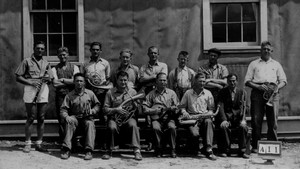
Barbed Wire and Mandolins
Upon Canada's entry into World War II, the RCMP rounded up thousands of people it considered fascist sympathizers. Among them, 700 Italian-Canadians were held for up to three years in internment camps. None were ever charged with a criminal offence.
1997

Łódź Ghetto
The Polish city of Łódź was under Nazi occupation for nearly the entirety of WWII. The segregation of the Jewish population into the ghetto, and the subsequent horrors are vividly chronicled via newsreels and photographs. The narration is taken almost entirely from journals and diaries of those who lived–and died–through the course of the occupation, with the number of different narrators diminishing as the film progresses, symbolic of the death of each narrator.
1989
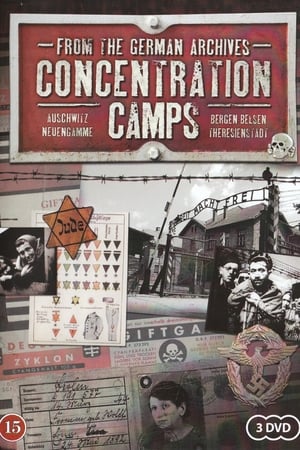
The Liberation of Auschwitz
This chilling, vitally important documentary was produced to mark the 40th anniversary of the liberation of Auschwitz Concentration Camp. The film contains unedited, previously unavailable film footage of Auschwitz shot by the Soviet military forces between January 27 and February 28, 1945 and includes an interview with Alexander Voronsov, the cameraman who shot the footage. The horrifying images include: survivors; camp visit by Soviet investigation commission; criminal experiments; forced laborers; evacuation of ill and weak prisoners with the aid of Russian and Polish volunteers; aerial photos of the IG Farben Works in Monowitz; and pictures of local people cleaning up the camp under Soviet supervision. - Written by National Center for Jewish Film
1986
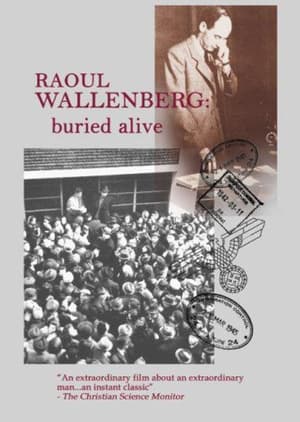
Raoul Wallenberg: Buried Alive
A profile of Swedish diplomat Raoul Wallenberg, the film covers his role in saving the lives of Jewish refugees from the Holocaust, as well as exploring the evidence that he may still have been alive in a Soviet gulag as late as the early 1980s.
1983