Watch The Chiptune Story (2018) Online Free
The ChipTune Story focuses on 8-bit music and the C64 SID chip. Featuring interviews with games 8-bit music composers Rob Hubbard, Chris Huelsbeck, Ben Daglish, Mark Knight. We look at the history of ChipTune from 8-bit to 16-bit sampling.
Cast
Ben Daglish, Rob Hubbard, Chris Hülsbeck, Mark Knight, Chris Abbott
More Like This
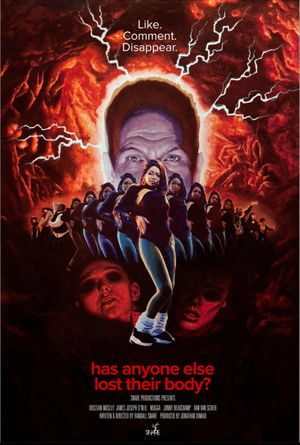
Has Anyone Else Lost Their Body?
A reluctant influencer’s first viral dance video overflows with comments from people claiming to lose their bodies after watching it.
2026
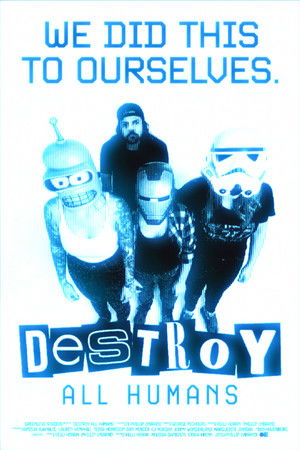
Destroy All Humans
Destroy All Humans is a documentary exploring AI’s rise in art and media through an existential, experimental lens. At its center is HOVERBORG, a fictional band whose AI-generated music sparked questions about creativity and authenticity. Through interviews with musicians, artists, and media professionals, the film reflects on the unsettling shift toward hyperpersonalized media and asks: In a world shaped by algorithms, will we still recognize ourselves in the art we consume?
2025

ME
A musical odyssey about generational trauma and the retreat of humanity into itself.
2024

Terror Mandelão
Terror Mandelão addresses sound, technology, and the job market in the universe of baile funk in São Paulo's favelas. The film follows the journey of DJ K, one of the main DJs of Baile do Helipa, the street party of Heliópolis favela, and his friend Zero K, who got his first hit after 10 years as MC. Combining documentary, fictional elements, and visual experimentation, it portrays the ups and downs faced by young artists on the outskirts.
2024

The Cloud Under the Sea
Lurking under the sea is a global web of fibre optic telecommunication cables, the plumbing of the internet. It's how we talk, text and stream, connecting billions of people. These cables are also the frontline of a tech war.
2023
Stamps Back
The story of the birth of the Hungarian home computer scene back in the '80s behind the Iron Curtain. Smuggled in C64s, cracked games, swappers, diskmags, hacked phone lines to American BBS servers, demoscene, copy parties.
2022

Le 3615 ne répond plus
The adventure of the minitel, a small cubic terminal with a folding keyboard that began in the 1970s in the labs of France Telecom, is closely linked to Alsace. Alsatians had then in hand the future tools of interactive communication. What remains today of all those minitel years? Like a nocturnal and intimate road-movie, this documentary went to meet the last people who are still interested in the minitel, this strange beige box of access to telematic services, corny today, but pioneers at the end of the last century.
2022

Lotus: A New Dawn
This short documentary follows the fortunes of iconic car manufacturer Lotus. Once famous for its championship-winning race cars and iconic sports cars, Lotus has struggled to remain in profit. A new investor and managing director set out to build the first new Lotus road cars in over a decade: their final petrol-powered car Emira and their first pure electric British hypercar, the 2000bhp Evija.
2021
Fake: Searching for Truth in the Age of Misinformation
A new, original documentary from Connecticut Public, Fake: Searching for Truth in the Age of Misinformation, takes on this topic, just in time for the 2020 election season. Viewers will learn how and why misinformation spreads, and how to be a smarter information consumer in our increasingly digital world.
2020

The Social Dilemma
This documentary-drama hybrid explores the dangerous human impact of social networking, with tech experts sounding the alarm on their own creations.
2020
The Commodore Story
The story of the Commodore PET, VIC-20, C64 and Amiga from engineers, games developers and how Commodore influenced the first 8-bit generation users.
2018
Guardians of the New World
Guardians of the New World introduces us to the world of hacker culture. Emerging from the 70’s counterculture around conceptions of personal freedom, decentralisation of power and sharing, hacking really came to prominence with the emergence of the Internet as a ubiquitous public forum from the late 90’s onwards.
2017
Nokia Mobile: We Were Connecting People
Once upon a time there was a large Finnish company called Nokia that manufactured the world’s best and most innovative mobile phones. Nokia’s annual budget was larger than that of the Government of Finland and their phones spread everywhere and changed the whole culture of communication. But then something changed. Film portrays the rise and fall of Nokia and the Finnish mobile phone industry. Nokia engineers, designers and managers tell their story about the creation, success and downfall of the Finnish mobile phone.
2017

Nothing to Hide
NOTHING TO HIDE is an independent documentary dealing with surveillance and its acceptance by the general public through the "I have nothing to hide" argument. The documentary was produced and directed by a pair of Berlin-based journalists, Mihaela Gladovic and Marc Meillassoux. It was crowdfunded by over 400 backers. NOTHING TO HIDE questions the growing, puzzling and passive public acceptance of massive corporate and governmental incursions into individual and group privacy and rights. After the emotion initially triggered by the Snowden revelations, it seems that the general public has finally accepted to live in a monitored digital world.
2017

1997: The Birth of the Camera Phone
On June 11th, 1997, Philippe Kahn created the first camera phone solution to share pictures instantly on public networks. The impetus for this invention was the birth of Kahn's daughter, when he jerry-rigged a mobile phone with a digital camera and sent photos in real time. In 2016 Time Magazine included Kahn's first camera phone photo in their list of the 100 most influential photos of all time.
2017

Hackers Wanted
Hackers Wanted explores the origins and nature of hackers and hacking by following the adventures of Adrian Lamo, and contrasting his story with that of controversial figures throughout history.
2009
In the Realm of the Hackers
In The Realm of the Hackers is a documentary about the prominent hacker community, centered in Melbourne, Australia in the late 80's to early 1990. The storyline is centered around the Australian teenagers going by the hacker names "Electron" and "Phoenix", who were members of an elite computer hacking group called The Realm and hacked into some of the most secure computer networks in the world, including those of the US Naval Research Laboratory, Lawrence Livermore National Laboratory, a government lab charged with the security of the US nuclear stockpile, and NASA.
2003
The KGB, the Computer and Me
In 1986, astronomer turned computer scientist Clifford Stoll had just started working on a computer system at the Lawrence Berkeley Laboratory when he noticed a 75-cent discrepancy between the charges printed by two accounting programs responsible for charging people for machine use. Intrigued, he deduced that the system was being hacked, and he determined to find the culprit. This is the re-enactment of how he tracked down KGB cracker Markus Hess through the Ethernet to Hannover, Germany.
1990
Illustrated conversation with Professor Lars Kristiansson
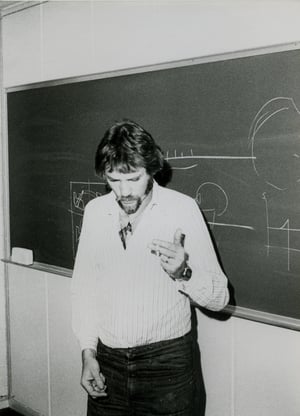
Based on the conversations Jösta Hagelbäck and Erik Ostlund had with Lars Kristiansson, a professor of information theory with data communication at Chalmers University in Gothenburg, Sweden. The talks took place at the difficult cancer sufferer Kristiansson's sick-bed and dealt with his insights in computer technology, his hopes and fears for the new technology, the role of religion, the history of mathematics, reasoning about algebra, analytic geometry and the fourth dimension, along with cultural outlooks over the Western society's lack of mysticism and spiritual values.
1985
Telezonia
Four children want to invite their friends to a picnic, but they don't know how to use the telephone. Suddenly, the room goes dark and the phone becomes large enough for them to climb into. They walk through a tunnel and meet a man named Telly, who takes them into the world of Telezonia, where they are shown various kinds of telephones. They meet several costumed characters, such as Question Mark, who teaches them how to answer the phone; Q and Z, who show them how to use the phone book; and Exclamation Point, who teaches them how to place a call. By the time they leave Telezonia, they are full-fledged telephone users.
1974