Watch Nothing to Hide (2017) Online Free
NOTHING TO HIDE is an independent documentary dealing with surveillance and its acceptance by the general public through the "I have nothing to hide" argument. The documentary was produced and directed by a pair of Berlin-based journalists, Mihaela Gladovic and Marc Meillassoux. It was crowdfunded by over 400 backers. NOTHING TO HIDE questions the growing, puzzling and passive public acceptance of massive corporate and governmental incursions into individual and group privacy and rights. After the emotion initially triggered by the Snowden revelations, it seems that the general public has finally accepted to live in a monitored digital world.
More Like This

behind the scenes
An experimental documentary/animation hybrid exploring likeness scanning, AI, and what that means for identity.
2024

AI Evolution
Take a journey through the ever-changing landscape of artificial intelligence with this doc exploring the challenges and opportunities ahead.
2024
Intercept: A Century of Signals Intelligence
A thought provoking documentary feature film providing a comprehensive exploration of the evolution of signals intelligence over the past century. Whether you're intrigued by the secretive world of intelligence agencies or concerned about the implications of digital surveillance, this film will leave you with a deeper understanding of the role signals intelligence plays in society.
2023
The Eternal Memory
Augusto and Paulina have been together for 25 years. Eight years ago, he was diagnosed with Alzheimer's disease. Both fear the day he no longer recognizes her.
2023

From Tesla to SpaceX, the World According to Elon Musk
In just a few years, Elon Musk has become one of the most influential and wealthy men on the planet. Although the Tesla brand has revolutionized the image of the electric car, Elon Musk remains a great innovator in the business world. For him, there are no limits: satellites, houses, urban tunnels... But what attracts Elon Musk the most is space, which remains his favorite playground. Recently, he developed reusable rockets that have transformed space travel.
2022
F@ck This Job
In 2008, Natasha, a newly rich woman, decides to open an independent TV station in Russia and builds an open-minded team of outcasts. By 2020, Natasha has lost everything to Russia's war between Propaganda and Truth.
2022
En formation
2021
CORONA.FILM - Prologue
As the first part of our investigation, the CORONA.FILM prologue will delve into the science behind the pandemic. Starting at the very beginning, we shine a light on the responses. The aim is not to point the finger; our aim is to tell the whole story in all its complexity, as we believe that justice cannot prevail if only one side of the story is told.
2021
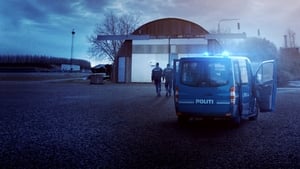
Into the Deep: The Submarine Murder Case
In 2016, a young Austrialian filmmaker began documenting amateur inventor Peter Madsen. One year in, Madsen brutally murdered Kim Wall aboard his homemade submarine. An unprecedented revelation of a killer and the journey his young helpers take as they reckon with their own complicity and prepare to testify.
2020

Bombshell: The Hedy Lamarr Story
The life and career of the hailed Hollywood movie star and underappreciated genius inventor, Hedy Lamarr.
2018
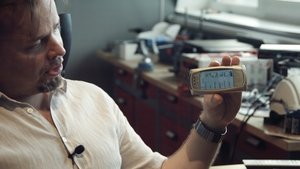
Nokia Mobile: We Were Connecting People
Once upon a time there was a large Finnish company called Nokia that manufactured the world’s best and most innovative mobile phones. Nokia’s annual budget was larger than that of the Government of Finland and their phones spread everywhere and changed the whole culture of communication. But then something changed. Film portrays the rise and fall of Nokia and the Finnish mobile phone industry. Nokia engineers, designers and managers tell their story about the creation, success and downfall of the Finnish mobile phone.
2017
The Maze
THE MAZE dissects the terror-attacks since Paris Bataclan in November 2015 and looks for common patterns. Why was intelligence failing? And why keep our governments pushing for more of the same? A road movie into surveillance reforms, power, money and cover-ups. A search for a way out of this maze - with a glimpse of hope on the horizon.
2017
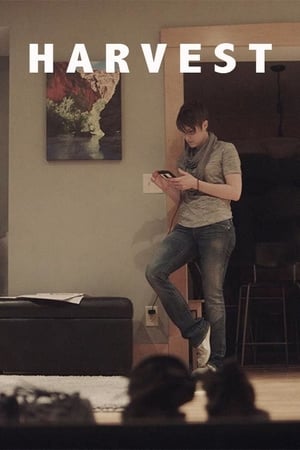
Harvest
Jenni has an ordinary life of simple patterns revolving around family and work. Her daily routine is seemingly unremarkable yet is of great interest to someone she doesn’t know—but who knows everything about her. Harvest is a thrilling and inventive depiction of the hidden value in mundane routines.
2017

Inside Chernobyl's Mega Tomb
Documentary which follows the construction of a trailblazing 36,000-tonne steel structure to entomb the ruins of the nuclear power plant destroyed in the 1986 Chernobyl disaster.
2016
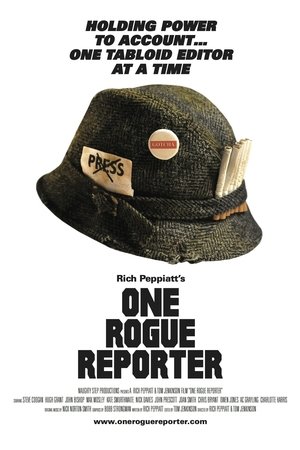
One Rogue Reporter
Rich Peppiatt delivers a satirical dissection of the newspaper trade by turning the tables on unscrupulous editors. Through a series of mischievous stunts and interviews with heavyweights of journalism, comedy & politics, Peppiatt hilariously exposes the hypocrisy at the heart of modern journalism.
2014
The Valley of the Jato
In the heart of Sicily, where the Mafia still rules, one man and his family-run TV station, has become the lone voice against corruption and organized crime.
2013

Good Copy Bad Copy
Good Copy Bad Copy is a documentary about copyright and culture in the context of Internet, peer-to-peer file sharing and other technological advances.
2007
Revolution OS
REVOLUTION OS tells the inside story of the hackers who rebelled against the proprietary software model and Microsoft to create GNU/Linux and the Open Source movement.
2001
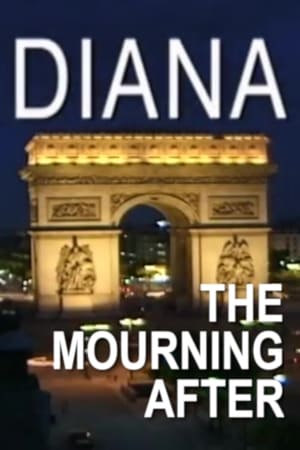
Princess Diana: The Mourning After
In "Diana: The Mourning After" Christopher Hitchens sets out to examine the bogusness of "a nation's grief", tries to uncover the few voices of sanity that cut against the grain of contrived hysteria. His findings suggested that the collective hordes of emotive Dianaphiles sobbing in the streets were not only encouraged but emulated by the media. In the aftermath of Diana's death a three-line whip was enforced on newspapers and on TV, selling the sainthood line wholesale. The suspicion was that journalists, like the public, greeted the death as a chance to wax emotional in print, as a change from the customary knowing cynicism, to wheel out all those portentous phrases they'd been saving up for the big occasion. Sadly, they just seemed to be showboating; the eulogies, laments and tear-soaked platitudes ringing risibly hollow.
1998
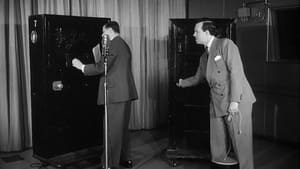
Behind Your Radio Dial
Familiar radio voice Ben Grauer leads the viewer on a behind the scenes tour of the National Broadcasting Company studios -- both radio and television -- in Rockefeller Center and Hollywood. The original 25-minute film previewed by network execs and affiliates in the fall of 1948 was cut down to 20 minutes before its first broadcast, reportedly to excise high-profile stars and programs such as Amos 'n' Andy, Jack Benny, and Edgar Bergen that had since left NBC for other networks.
1949