Watch The Certainty of Probabilities (2021) Online Free
1968, The Socialist Republic of Romania. Women catch up on the latest tendencies in beachwear, the young hippies of Hamburg are harshly criticized by Romanian students, while Nicolae Ceaușescu reads the famous defiance speech against the intervention of the Warsaw Pact troops in Czechoslovakia. Floating solemnly over all this is The Internationale, sung on a stadium by a crowd of pioneers dressed in white shirts and red ties. A certainty for each probability: the documentary is at the same time a history lesson and an ideological warning sign, the director’s endeavour permanently draws our attention to the functions of the propaganda film, yet without tarnishing the fascination that dwells in the core of the images, that of the figures that wave at us from a past buried in commonplaces and political parti pris.
Cast
Nicolae Ceaușescu, Ion Iliescu, Elena Ceaușescu, Ilarion Ciobanu
More Like This

Handbook of Movie Theaters' History
Handbook of Movie Theaters' History is a documentary about the history, the development in the present days and the future of movie theaters in the city of Turin, Italy. It mixes the documentary language with comedy and fiction, and is enriched by interviews to some of the most important voices of Turin cinematography. The film follows the evolution of movie theaters by enlightening its main milestones: the pre-cinema experiences in the late 19th Century, the colossals and the movie cathedrals of the silent era, the arthouse theaters, the National Museum of Cinema, the Torino Film Festival, the movie theaters system today and the main hypothesis about its future. The mission of Handbook of Movie Theaters' History is to explore and give back to the audience a deep reflection about the identity and the value of movie theater, in its social and anthropological role and as a mass media, and to analyze the experience of the viewer.
2021
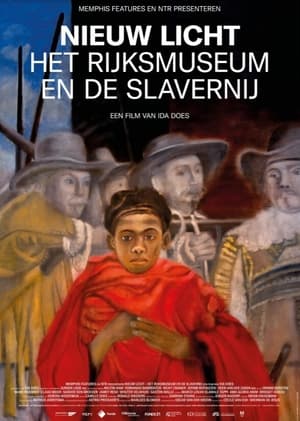
Nieuw Licht - Het Rijksmuseum en de Slavernij
2021
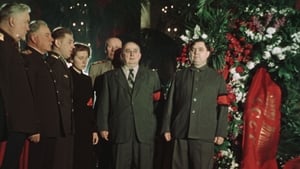
State Funeral
The enigma of the personality cult is revealed in the grand spectacle of Stalin’s funeral. The film is based on unique archive footage, shot in the USSR on March 5 - 9, 1953, when the country mourned and buried Joseph Stalin.
2019

The MovieLand Movie
I go to Movieland at least once a week, every week, for the last five years to sink some quarters into the games and the Movieland movie is an accumulation of the friends, lights, textures, and narratives that I have experienced in that time. I love Movieland!
2017
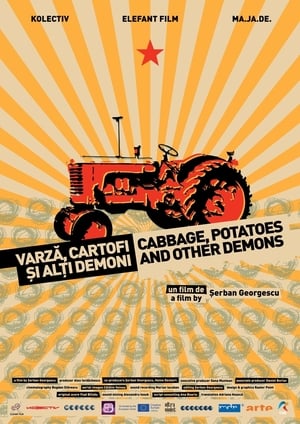
Cabbage, Potatoes and other Demons
1 village, 1.000 tractors, 100.000 tons of cabbages & potatoes each year - which are hardly sold and eventually destroyed. Is there any way out?
2017
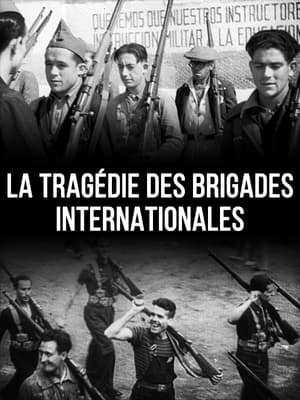
La Tragédie des Brigades Internationales
2016
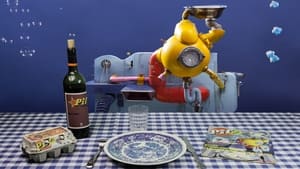
Pif, Behind the gimmicks
Taking stock of the extraordinary adventure of "Pif Gadget", a French publishing phenomenon of the 1970s-80s and even of the whole history of children's press. For the comic-strip magazine with the iconic dog, created in 1969 by the French Communist Party, often reached a million copies. With editions available for all of Europe (including Germany, under the title Yps), and on both sides of the Iron Curtain.
2015

100 Years of Wrigley Field
100 Years of Wrigley Field celebrates a century of the greatest moments and best personalities of the ballpark on Chicago's North Side.
2014

Planet Food: Spice Trails
In this remarkable journey, Planet Food travels the world to see how control of the spice trails, over the last five millennia, has made great cities and destroyed ancient civilizations. Our guides travel from the Molucca Islands of Indonesia, the original home of cloves and nutmeg, to the Indian province of Kerala, with its native pepper and cardamom. Additional stops include Venice, Beirut, Cairo and other significant places in the spice trade that created and toppled empires.
2012
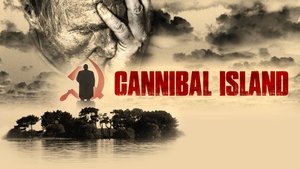
Cannibal Island
A disturbing chapter in Russian history is explored in this documentary. In 1933, Joseph Stalin sent 6000 "unwanted" citizens of Moscow and Leningrad to a desolate Siberian island - with no food or clothes to speak of. Decades later this documentary returns to the island.
2009
Swing con Son
Music documentary about Billo Frómeta by director Rafael Marziano Tinoco from Venezuela.
2009

The Polio Crusade
The film interweaves the personal accounts of polio survivors with the story of an ardent crusader who tirelessly fought on their behalf while scientists raced to eradicate this dreaded disease. Based in part on the Pulitzer Prize-winning book Polio: An American Story by David Oshinsky, Features interviews with historians, scientists, polio survivors, and the only surviving scientist from the core research team that developed the Salk vaccine, Julius Youngner.
2009

Charlie Marx and the Chocolate Factory
Charlie Marx and the Chocolate Factory started as an investigation of the link between politics and chocolate, at the Karl Marx Confectionary Factory in Kiev, Ukraine. Since access to the factory was denied, the project had to be re-considered, re-invented or re-enacted. Mostly made of archival footage and re-enacted performances based on the company's website, the film merges what was left of the initial idea with what has been collected and realized instead. It borrows from the genres of video art, 'Man on the street' interview, direct address, corporate film, essay, and music video, without legitimately belonging to any of them. The film unravels as a reflection on its own failure, and yet keeps on investigating what has always been at stake: the shift from public to private property (and from analog to digital technology), dialectics of permanence and change, language as a mirror of ideology, and post-Soviet oligarchy culture.
2009

The Hobbit Enigma
The Hobbit Enigma examines one of the greatest controversies in science today: what did scientists find when they uncovered the tiny, human-like skeleton of a strange creature, known to many as the Hobbit, on the Indonesian island of Flores in 2003?
2008
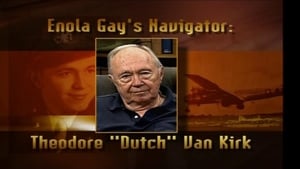
Enola Gay's Navigator: Theodore (Dutch) Van Kirk
Theodore "Dutch" Van Kirk navigated the first atomic bombing mission in Hiroshima, Japan, and later participated in the first Bikini Atoll atomic bomb tests.
2007

Ottoman Empire: The War Machine
This History Channel documentary traces the Ottoman Empire from its beginnings in the 14th century to its incarnation as one of the largest empires in history, spanning three continents.
2006
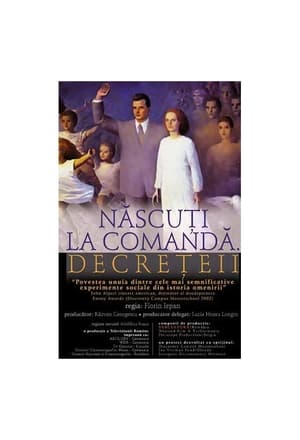
Children of the Decree
Procreation is the social duty of all fertile women, was the political thinking during the 1960s and 1970s in Romania. In 1966, Ceaucescu issued Decree 770, in which he forbade abortion for all women unless they were over forty or were already taking care of four children. All forms of contraception were totally banned. The New Romanian Man was born. By 1969, the country had a million babies more than the previous average. Romanian society was rapidly changing. By using very interesting archival footage and excerpts from old fiction films and by interviewing famous personalities from that time – gynecologists or mothers who were part of the new society - the director revives this period of tremendous oppression of personal freedom. Many deaths were caused by the mere fact that women, including wives of secret Romanian agents, famous TV presenters, and actresses, had to undergo illegal abortions. Many women were jailed for having them.
2005
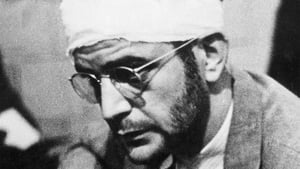
Asaltar los cielos
Documentary about the killer of Trotsky
1996
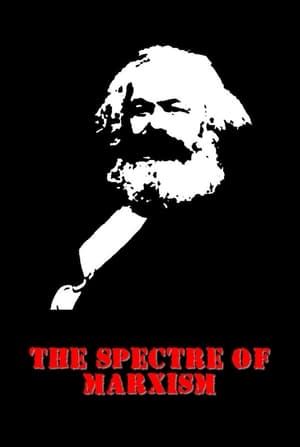
The Spectre of Marxism
The impact of Marx on the 20th century has been all-pervasive and world-wide. This program looks at the man, at the roots of his philosophy, at the causes and explanations of his philosophical development, and at its most direct outcome: the failed Soviet Union.
1983
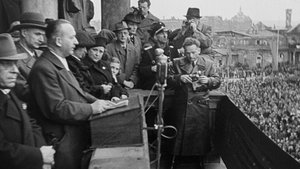
Unity SPD – KPD
Documentary about the merging of the Communist Party of Germany and the Socialist Unity Party of Germany in the Soviet occupation zone, a merger that would lead to the creation of the Socialist Unity Party that would rule the soon-to-be-created East Germany until 1989.
1946