Watch Cabbage, Potatoes and other Demons (2017) Online Free
1 village, 1.000 tractors, 100.000 tons of cabbages & potatoes each year - which are hardly sold and eventually destroyed. Is there any way out?
More Like This
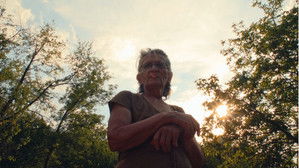
Honey and Milk
In a secluded village surrounded by forests and a river, an elderly beekeeper and a livestock farmer live alone, their lives shaped by tireless work and quiet harmony. Through one day in their hidden world, this documentary reveals the beauty and mystery of their bond with nature, far from the reach of modern life.
2024
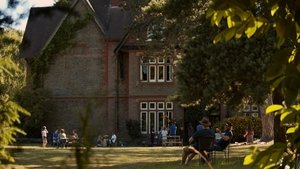
A Kingdom of Tea & Strangers
At L'Abri, a short-term "hospitality community" in the English countryside, five strangers spend a summer together exploring their big questions about faith, being human, and finding belonging back home.
2024

Miyama, Kyōto Prefecture
The follow-up film to “Barstow, California” takes us to the mountains of Miyama, a remote forest and tourist area north of Kyoto. Uwe Walter, a shakuhachi player from Germany, lives there with his wife Mitsuyo for 30 years. Together with the villagers he prepares the annual Gion Festival. On the eve of the festival, the village representatives tell him that his self-built studio is to be demolished. This brings back memories for him of earlier times and his first steps as a Nō actor. In the manner of a fresco, the film interweaves rural depictions of everyday life with the story of its German protagonist. In the village community with its togetherness of generations, Uwe shares life with his neighbours, with farmers, hunters, woodsmen, poultry farmers and anglers, tills his kitchen garden, and like other tradition-conscious villagers, he also grows his rice. The film shows them in a harsh mountain landscape between the rainy season and the first snow.
2023
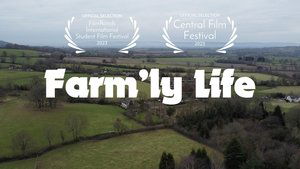
Farm'ly Life
A Documentary/Mockumentary that follows the story of Charlie who is passionate for farming.
2023
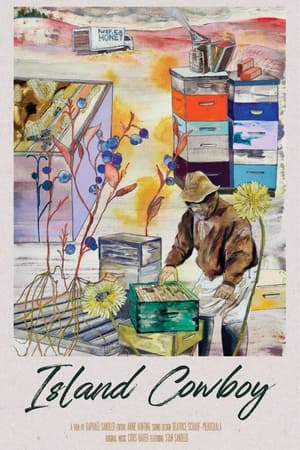
Island Cowboy
Island Cowboy follows a Canadian beekeeper on Prince Edward Island during one of his last years of work. At the age of 68, Stan Sandler would like to retire, but impending threats to his island home's ecosystem threaten the future of the bees, and the health of the environment. The relationship between a beekeeper’s labour and the economy of the island’s blueberry crop is explored through a season of beekeeping, as we get an intimate look at Stan and the "bee cowboys".
2021
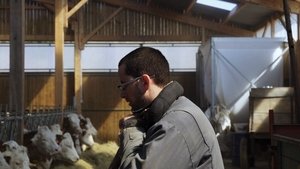
Cyrille
Cyrille, a young gay farmer from Auvergne, has only one friend, a homosexual like him. One day, he goes on vacation to a beach in Charente Maritime. He cannot swim and sees the sea for the first time. It was there that he met the director Rodolphe Marconi who decided to devote this sensitive and gentle portrait to him, plunging us into an agricultural world in crisis and into a life often lonely and made up of hard work rarely pays off.
2020
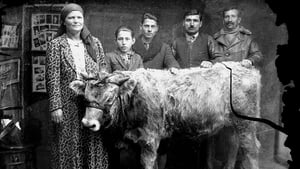
The Dead Nation
A documentary-essay which shows Costică Axinte's stunning collection of pictures depicting a Romanian small town in the thirties and forties. The narration, composed mostly from excerpts taken from the diary of a Jewish doctor from the same era, tells the rising of the antisemitism and eventually a harrowing depiction of the Romanian Holocaust.
2017
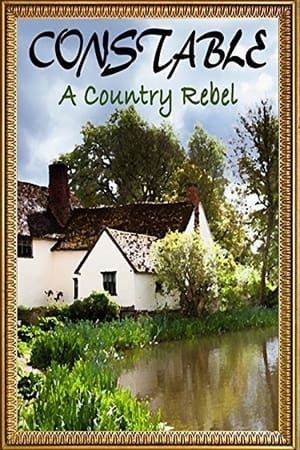
Constable: A Country Rebel
The Haywain by John Constable is such a comfortingly familiar image of rural Britain that it is difficult to believe it was ever regarded as a revolutionary painting, but in this film, made in conjunction with a landmark exhibition at the V&A, Alastair Sooke discovers that Constable was painting in a way that was completely new and groundbreaking at the time. Through experimentation and innovation, he managed to make a sublime art from humble things and, though he struggled in his own country during his lifetime, his genius was surprisingly widely admired in France.
2014
Hermann und das liebe Vieh
For more than 50 years, Hermann Völxen and his sister Hildegard have owned a farm with many cows. The documentary shows the sometimes troublesome day-to-day life of the farmer.
2010
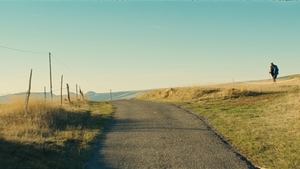
Modern Life
For ten years, Raymond Depardon has followed the lives of farmer living in the mountain ranges. He allows us to enter their farms with astounding naturalness. This moving film speaks, with great serenity, of our roots and of the future of the people who work on the land. This the last part of Depardon's triptych "Profils paysans" about what it is like to be a farmer today in an isolated highland area in France. "La vie moderne" examines what has become of the persons he has followed for ten years, while featuring younger people who try to farm or raise cattle or poultry, come hell or high water.
2008
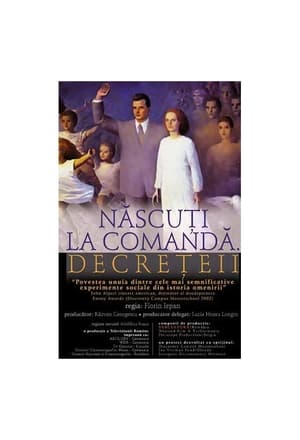
Children of the Decree
Procreation is the social duty of all fertile women, was the political thinking during the 1960s and 1970s in Romania. In 1966, Ceaucescu issued Decree 770, in which he forbade abortion for all women unless they were over forty or were already taking care of four children. All forms of contraception were totally banned. The New Romanian Man was born. By 1969, the country had a million babies more than the previous average. Romanian society was rapidly changing. By using very interesting archival footage and excerpts from old fiction films and by interviewing famous personalities from that time – gynecologists or mothers who were part of the new society - the director revives this period of tremendous oppression of personal freedom. Many deaths were caused by the mere fact that women, including wives of secret Romanian agents, famous TV presenters, and actresses, had to undergo illegal abortions. Many women were jailed for having them.
2005
The Gleaners and I
Varda focuses her eye on gleaners: those who scour already-reaped fields for the odd potato or turnip. Her investigation leads from forgotten corners of the French countryside to off-hours at the green markets of Paris, following those who insist on finding a use for that which society has cast off, whether out of necessity or activism.
2000
Bowl de campagne

Profils paysans : l'approche
The first of a documentary serie about rural France.
2001
Open files
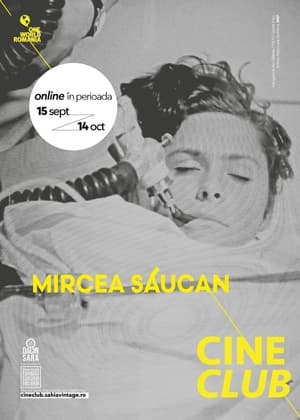
A more experimental aproach to labor protection films. In the line of Săucan's style, the soundtrack is as important as the image, the threatening music, full of shrillness, composed by Ion Dumitrescu potentiating the visual construction that mixes - in a montage reminiscent of the Soviet avant-garde school of the 1920s - all kinds of shooting techniques and frame combinations.
1975
Winter of a slacker
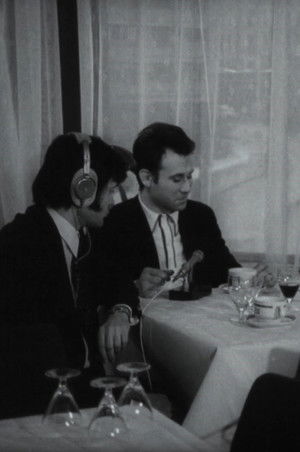
At the beginning of the 70s, Sahia Studio produced a number of social investigations commissioned by the Central Committee of the Romanian Communist Party, intended to expose the so-called "social parasitism". The decision was taken after the theses of July 1971, which provide that "one of the main objectives of political work, especially among the youth, is the firm fight against the tendencies of parasitism, of an easy life, without work, the cultivation of responsibility and the duty to work , in the service of the country, the people, the socialist society". The most famous films, made with the competition of the Ministry of the Interior and the Ministry of Justice, are Să treacă vara and Iarna unor pierde vară
1974

Women of Today
Made on the occasion of March 8, it presents a series of brief portraits of women, from various professional fields, of different ages and even of different ethnicities, pointing out the benefits that the communist organization had brought to their daily lives. A special emphasis is placed on their status as mothers and on the role of nurseries and socialist kindergartens not only in making their lives easier, but also in giving them the time they need to build a career. Another concern of the filmmaker, starting from the concrete case of one of the protagonists, is to highlight the differences between the happy present and the not-too-distant past in which someone with her social status should have dedicated herself exclusively to raising children, in hygienic and extremely difficult lives.
1958
East of the Malverns
Scenic route through the Vale of Evesham, Worcester and Great Malvern, with a detour to a lost masterpiece of outsider art.
1957
Let All Children Smile
The film's protagonists are the orphaned children taken into custody by the state and institutionalized at Children's House no. 6 from Bucharest. For Mészáros, the concern for the situation of children left orphaned during the Second World War is autobiographical: the director directly experienced the absence of parents in her own childhood.
1957

An Eastern Market
Documentary detailing a farmer’s visit to the market in Rawalpindi.
1928