Watch The Art of Vision (1965) Online Free
A deconstruction of Dog Star Man that takes the four rolls and shows them first combined, then each combination of three rolls, then each combination of two rolls, then each individual roll. The plot is of a man who goes up a mountain with a dog to chop down a tree but has some unspecified transcendental experience while he is there.
Cast
Stan Brakhage, Jane Wodening
More Like This
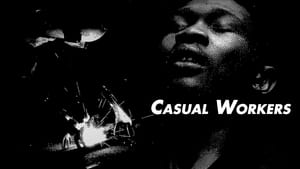
Casual Workers
An abstract perspective into two young South African workers in the heart of Johannesburg's industrial sector during Covid-19
2020
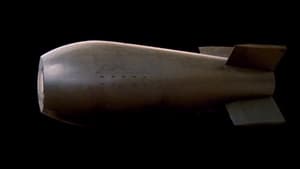
The Bomb
Filmmakers use archival footage and animation to explore the culture surrounding nuclear weapons, the fascination they inspire and the perverse appeal they still exert.
2017
State of Rest and Motion
This cine-portrait of New York City uses digital effects to turn the countless riders of the subway system into living, breathing paintings.
2017
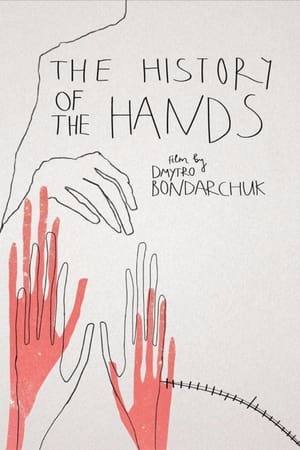
The History of the Hands
The film is a study of nature and significance of the hands in cinema. Besides review of movements and actions, which creates an independent story, it reveals interactions and interdependence of cinematic traditions of various authors, countries and periods
2016
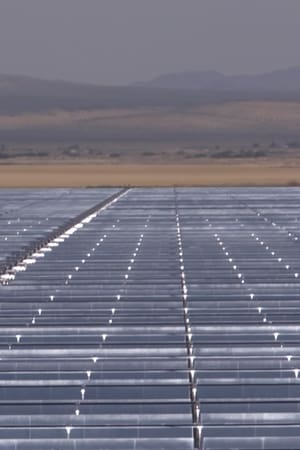
Irradiant Field
In the Mojave Desert, fields of solar panels follow the sun’s daily journey in perfect synchronicity.
2016
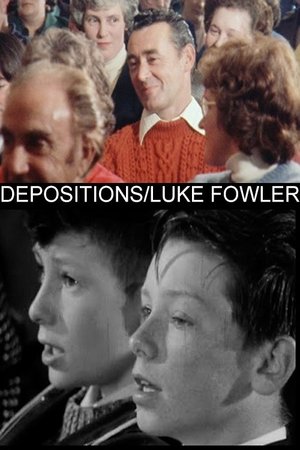
Depositions
The quietly insistent and critical DEPOSITIONS attempts to restore some dignity to images of the communities of the Scottish highlands taken from patronizing BBC documentaries and news features from the 70’s and 80’s. DEPOSITIONS repurposes footage from the archives of the BBC and sound from the School of Scottish Studies, it is a film about differences and dichotomies: science and superstition, near and far, community and the individual.
2014
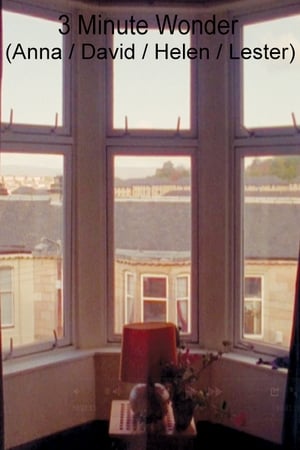
Tenement Films
A series of portraits, made for Television, of four diverse individuals brought together through shared residence. These short films were filmed in the tenement where I lived for eight years. The first is shot in our bedroom, which doubled up as my former partner's office, the three others were shot in architecturally identitical spaces owned by my then neighbours. Shot and edited on a single 16mm bolex camera using available light throughout, the films invoke reflections on the four individuals, how they occupy these particular spaces together.
2009
München, Raphaela
A film about a young woman's future plans in Munich, Germany. MUNCHEN, RAPHAELA (also known as RAPHAELA RING MUNCHEN) is part of Mike Plante's Lunchfilm series of commissioned shorts (made for the cost of a lunch between Plante and filmmaker Kevin Jerome Everson).
2006
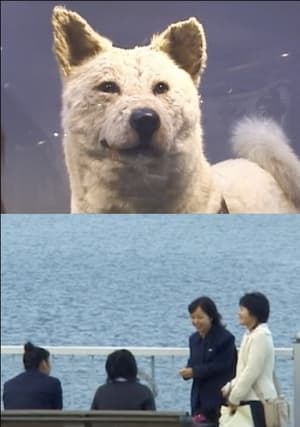
I Have No Memory of My Direction
Ostensibly searching for an emotional connection with her aging father, the woman contemplates her own inherited culture and familial touchstones. Her North American pop culture sensibility fuses with a distorted Japanese perspective to create a surreal interpretation of a “Japan of the imagination.” This fictional landscape is peppered with invented Japanese myths, ruminations on memory loss, the temporal space of digital photography and the ghosts of inherited imagination.
2005
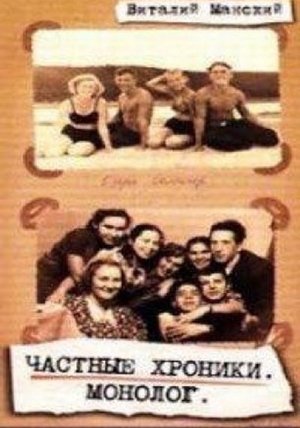
Private Chronicles: Monologue
The collective life of the generation born as Jurij Gagarin became the first man in space. Vitaly Mansky has woven together a fictional biography – taken from over 5.000 hours of film material, and 20.000 still pictures made for home use. A moving document of the fictional, but nonetheless true life of the generation who grew up in this time of huge change and upheaval.
1999
Dreams of Ice
In 1992 the Universal Exhibition in Seville was held in Spain. Chile participated in this exhibition by displaying in its pavilion an ice floe captured and brought especially by sea from Antarctica. In these true facts is based the fantasy narrated in Dreams of Ice. Filmed between November 1991 and May 1992 on board the ships Galvarino, Aconcagua and Maullín, in a voyage that goes from Antarctica to Spain, in this documentary film in which dreams, myths and facts converge towards a poetic tale turned into a seafaring saga, in the manner of the legends of the seafarers that populate the mythology of the American continent and universal literature.
1994
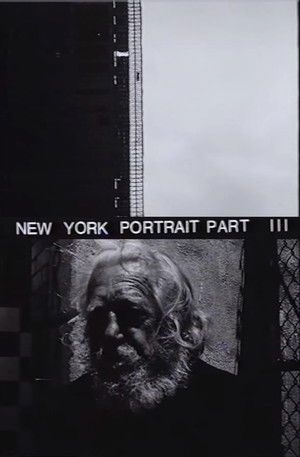
New York Portrait, Chapter III
"[Hutton’s] latest urban film, New York Portrait, Chapter III, takes on a unique tone in relation to Hutton’s ongoing exploration of rural landscape. The very fact that Hutton is dealing with older footage, with archives of memory more than immediacy, gives it a different texture than his earlier New York films. Hutton always found the presence of nature in the city, not only in his many shots of sky and vegetation, but also in the geometry and texture of the city itself, which seemed to project an independence from the human." (Tom Gunning)
1990
Anônimo e incomum
1990
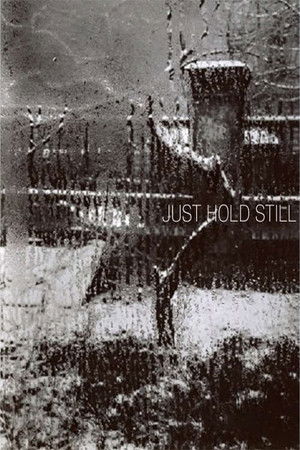
Just Hold Still
In his New York City landscape, Cohen finds inspiration in disturbance. Looking to life for rhythm and to architecture for state of mind, he locates simple mysteries. Just Hold Still is comprised of an interconnected series of short works and collaborations that explore the gray area between documentary, narrative, and experimental genres.
1989
Jeune femme à sa fenêtre lisant une lettre
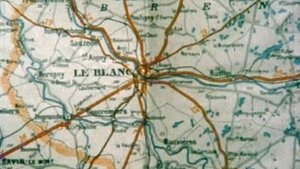
Jean-Claude Rousseau's Jeune femme à sa fenêtre lisant une lettre is not only his first medium-length film, but a chance to discover this filmmaker whom Jean-Marie Straub has called, along with Frans Van de Staak and Peter Nestler, the greatest working in Europe. With this newly restored print there is also a possibility to discover the relationship between Rousseau's art of filming and Jan Vermeer's famous painting. As Prosper Hillairet wrote in 1988, four years after Rousseau had finished Jeune femme ... (for the first time as we know today): «Without adopting the usual systematic spirit and form of cinéma structurel, Rousseau presents us with simple images and leaves it at that. Keeps the image in hand. A minimalist and ascetic expression of cinema: a shot that lasts.»
1983
Tree of Knowledge
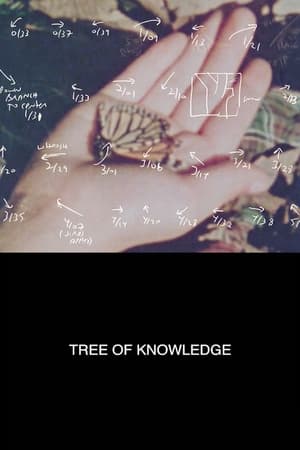
It started with filming the tree. Something was released in that manner of filming seemingly farthest removed from the procedure of the early films. I first thought a simple ordering of this rich material might be enough, something related to BARN RUSHES [...] But the film only came into its form-life with the idea of linking this deep-rooted and far-outreaching tree material with that film on paranoia that had fascinated me for many years. –L. G.
1981
Color of Korea
It shows Korea’s traditional colors and culture through the use of superimposing. It is an experimental film, which not only tries to show Korean traditional culture through the use of color, but also tries to show the modern history of Korea.
1976

The Middle Dog's Day
shows visual and metaphorical representation using rope as a motif through various rope images and meanings.
1974

The Hole
One of Han Ok-hee’s renowned pieces called The Hole uses the flicker, oblique angles, the cross-cutting of reality and fantasy to express inner entrapment and the desire for liberation. Han Ok-hee’s The Hole, The Rope and Untitled not only experimented with cinematic forms of expression, but also played an important role in the protest against forms of expression in experimental films and the artistic protest against the social suppression and censorship in 1970s Korea. (Art Cinema OFFoff)
1973
Running Shadow I
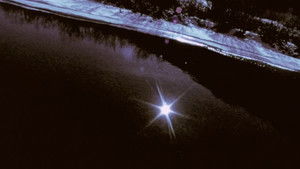
Rapidly changing images of natural objects, scenery, animals, plants, and people flicker, flash, tumble, and cascade across the screen.
1971