Watch The Art of 'Making Up' (1900) Online Free
Kathryn Osterman, the well-known vaudeville comedienne, in a complete exposition of the methods of "making-up" the face for the stage. She shows the penciling of the eye-brows, blackening the eye lashes, rouging the lips, applying the grease paint and so forth. The work is done in a very dainty and interesting way. Only the head and shoulders of the subject are shown; the figure thus being very large. (AMB Picture Catalogue, 1902)
Cast
Kathryn Osterman
More Like This
Two Letters for Ana
A medium-length film that takes the central place in the video installation "The Lady of Corinth". In both the medium-length film and the installation, Guerin delves into the relationship between cinema and painting based on Pliny the Elder's account of the invention of painting.
2011
The Dawn of Sound: How Movies Learned to Talk
Film historians, and survivors from the nearly 30-year struggle to bring sound to motion pictures take the audience from the early failed attempts by scientists and inventors, to the triumph of the talkies.
2007
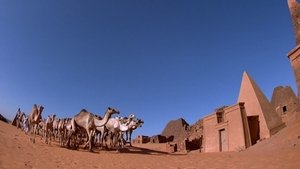
Mystery of the Nile
Filmed in IMAX, a team of explorers led by Pasquale Scaturro and Gordon Brown face seemingly insurmountable challenges as they make their way along all 3,260 miles of the world's longest and deadliest river to become the first in history to complete a full descent of the Blue Nile from source to sea.
2005
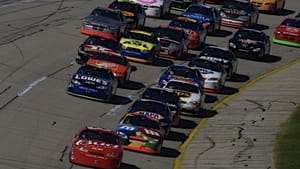
NASCAR: The IMAX Experience
A big-screen look into one of America's most successful entertainment industries, NASCAR racing.
2004
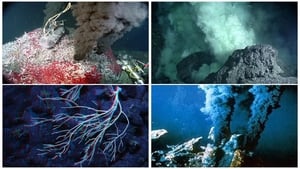
Volcanoes of the Deep Sea
12,000 feet down, life is erupting. Alvin, a deep-sea mechanized probe, makes a voyage some 12,000 feet underwater to explore the Azores, a constantly-erupting volcanic rift between Europe and North America.
2003
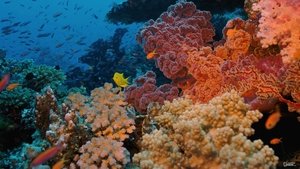
Coral Reef Adventure
Coral Reef Adventure follows the real-life expedition of ocean explorers and underwater filmmakers Howard and Michele Hall. Using large-format cameras, the Halls guide us to the islands and sun-drenched waters of the South Pacific to document the health and beauty of coral reefs. Featuring songs written and recorded by Crosby, Stills & Nash.
2003
Los 5 Faust de F. W. Murnau
2002
Alaska: Spirit of the Wild
Alaska... Here, in this vast and spectacularly beautiful land teeming with abundant wildlife, discover the "Spirit of the Wild." Experience it in the explosive calving of glaciers, the celestial fires of the Aurora Borealis. Witness it in the thundering stampede of caribou, the beauty of the polar bear and the stealthful, deadly hunt of the wolf pack.
1998
Amazon
Explore the mysterious Amazon through the amazing IMAX experience. Amazon celebrates the beauty, vitality and wonder of the rapidly disappearing rain forest.
1997
Cosmic Voyage
The Academy Award® nominee Cosmic Voyage combines live action with state-of-the-art computer-generated imagery to pinpoint where humans fit in our ever-expanding universe. Highlighting this journey is a "cosmic zoom" based on the powers of 10, extending from the Earth to the largest observable structures in the universe, and then back to the subnuclear realm.
1996
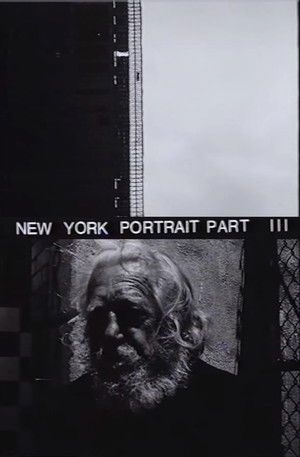
New York Portrait, Chapter III
"[Hutton’s] latest urban film, New York Portrait, Chapter III, takes on a unique tone in relation to Hutton’s ongoing exploration of rural landscape. The very fact that Hutton is dealing with older footage, with archives of memory more than immediacy, gives it a different texture than his earlier New York films. Hutton always found the presence of nature in the city, not only in his many shots of sky and vegetation, but also in the geometry and texture of the city itself, which seemed to project an independence from the human." (Tom Gunning)
1990
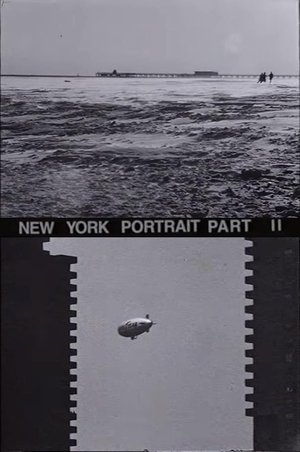
New York Portrait, Chapter II
Chapter Two represents a continuation of daily observations from the environment of Manhattan compiled over a period from 1980-1981. This is the second part of an extended life's portrait of New York.
1981
Clouds
Clouds 1969 by the British filmmaker Peter Gidal is a film comprised of ten minutes of looped footage of the sky, shot with a handheld camera using a zoom to achieve close-up images. Aside from the amorphous shapes of the clouds, the only forms to appear in the film are an aeroplane flying overhead and the side of a building, and these only as fleeting glimpses. The formless image of the sky and the repetition of the footage on a loop prevent any clear narrative development within the film. The minimal soundtrack consists of a sustained oscillating sine wave, consistently audible throughout the film without progression or climax. The work is shown as a projection and was not produced in an edition. The subject of the film can be said to be the material qualities of film itself: the grain, the light, the shadow and inconsistencies in the print.
1969
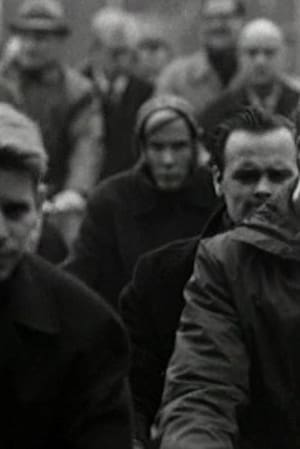
Bicycle
Rhythmic composition of moving photographs of cyclists in Amsterdam, ‘set’ to Vivaldi’s The Four Seasons.
1965
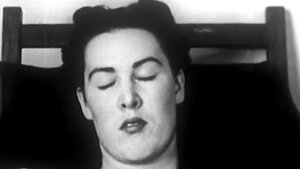
Photographic Studies in Hypnosis: Abnormal Psychology
Silent film showcasing hypnosis and its effects.
1938
We Live in Prague
A 13-minute documentary film depicting life in Prague.
1934
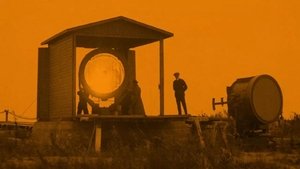
Finlandia
A documentary from Erkki Karu, one of the earliest pioneers of Finnish cinema: This government-produced propaganda film introduces the nature, sports, military, agriculture and capital of Finland.
1922
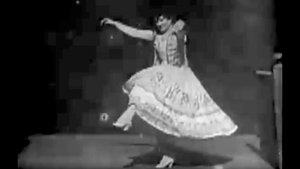
Carmencita
The first woman to appear in front of an Edison motion picture camera and possibly the first woman to appear in a motion picture within the United States. In the film, Carmencita is recorded going through a routine she had been performing at Koster & Bial's in New York since February 1890.
1894
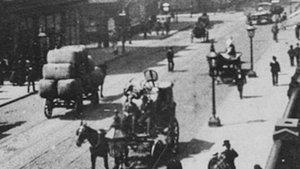
Traffic Crossing Leeds Bridge
A film by Louis Aimé Augustin Le Prince, shot in late October 1888, showing pedestrians and carriages crossing Leeds Bridge.
1888
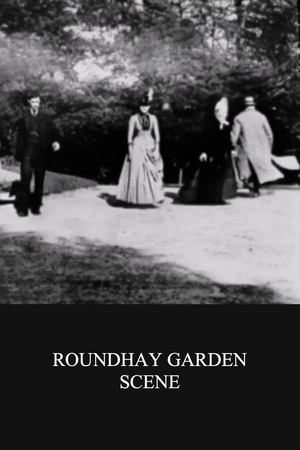
Roundhay Garden Scene
The earliest surviving motion-picture film, and believed to be one of the very first moving images ever created, was shot by Louis Aimé Augustin Le Prince using the LPCCP Type-1 MkII single-lens camera. It was taken on paper-based photographic film in the garden of Oakwood Grange, the Whitley family house in Roundhay, Leeds, West Riding of Yorkshire (UK), on 14 October 1888. The film shows Adolphe Le Prince (Le Prince’s son), Mrs. Sarah Whitley (Le Prince’s mother-in-law), Joseph Whitley, and Miss Harriet Hartley walking around in circles, laughing to themselves, and staying within the area framed by the camera. Roundhay Garden Scene is often associated with a recording speed of around 12 frames per second and runs for about 2 to 3 seconds.
1888