Watch Take (2019) Online Free
TAKE (te reo Maori: issue, promise, challenge) weaves mana wahine (female knowledge), dance and archival materials to retell the story of the removal of the ancestral Maori meetinghouse, Hinemihi o te Ao Tawhito, from Aotearoa, New Zealand to England in 1892. It is a call to return Hinemihi, embodied by Australian born Maori dancer and performance artist, Victoria Hunt. Set in the liminal spaces between history and emotion TAKE unfolds a story of origins, of traumatic events and colonial violence.
More Like This
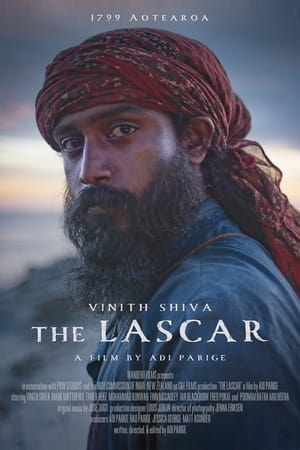
The Lascar
At the end of the 18th century, hundreds of Indian sailors, known as lascars, worked amongst European settlers in Aotearoa New Zealand - often under the gruesome working conditions of seal hunting gangs. The story follows a lascar, Dasa, who has been abandoned on the coast of Aotearoa NZ by the East India Company, alongside his sealing gang. When Dasa finds himself in the middle of a conflict between his abusive British superior and two Māori traders, he is faced with a choice: bend the knee or take a stand.
2024

In the Fire of War
Two young teenagers are forced to take control of their own destiny amid the chaos of a pivotal battle in New Zealand’s first land wars in 1864.
2024
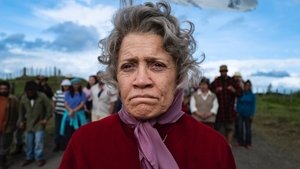
Whina
The story of Dame Whina Cooper, the beloved Māori matriarch who worked tirelessly to improve the rights of her people, especially women. Flawed yet resilient, Whina tells the story of a woman formed by tradition, compelled by innovation, and guided by an instinct for equality and justice whose legacy as the Te Whaea o te Motu (Mother of the Nation) was an inspiration to an entire country.
2022
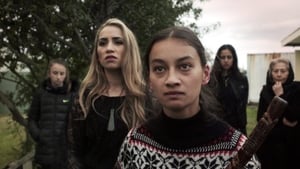
Waru
Eight Māori female directors have each contributed a sequence to this powerful and challenging feature which unfolds around the tangi of a small boy who died at the hands of his caregiver.
2017
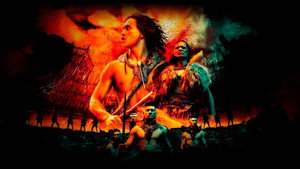
The Dead Lands
Hongi, a Maori chieftain’s teenage son, must avenge his father’s murder in order to bring peace and honour to the souls of his loved ones after his tribe is slaughtered through an act of treachery. Vastly outnumbered by a band of villains led by Wirepa, Hongi’s only hope is to pass through the feared and forbidden “Dead Lands” and forge an uneasy alliance with a mysterious warrior, a ruthless fighter who has ruled the area for years.
2014

Restoring Hope
This often confronting documentary observes a Māori restorative justice model through the eyes of straight-talking Mike Hinton, manager of Restorative Justice at Manukau Urban Māori Authority. The bringing together of victims (including wider whānau) and offenders may offer an alternate way forward for "a criminal justice system failing too many and costing too much”. Restoring Hope kicked off Māori Television’s 2013 season of Sunday night documentaries. In a Herald On Sunday preview, Sarah Lang argued it was “enough to restore hope in local documentary-making.” I’m in an arena where people have high emotions, they get stressed and pressured. I’m reasonably confident that I can avoid situations where I’ll be unsafe. I don’t have any death wish — I’ve got a game of golf tomorrow. – Mike Hinton, on the dangers of the job
2012
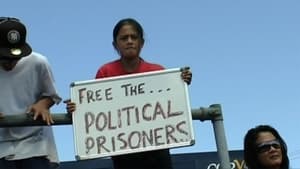
Operation 8
Operation 8 examines the so-called 'anti-terror' raids that took place around New Zealand on October 15, 2007 - asking how and why they took place and at what cost to those targeted.
2011

Waitangi Day: What Really Happened
This docudrama follows an imaginary news reporter who travels back in time to cover the days leading up to the Treaty of Waitangi's signing on 6 February 1840. Dropping the usual solemnity surrounding Aotearoa's founding document, it uses humour and asides to camera to evoke the chaos and motives behind the treaty. This clip features a confrontation between Hone Heke and representatives of the Crown.
2011
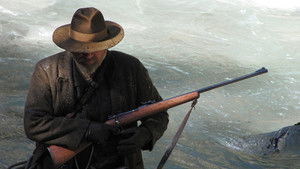
Tracker
A guerilla fighter from the South African Boer war called Arjan (Winstone) takes on a manhunt in New Zealand for Maori seaman Kereama (Morrison), who is accused of murdering a British soldier. What follows is a cat and mouse pursuit through the varied landscape of New Zealand with both hunter and huntee testing their bushcraft and wits against that of the other. Gradually they grow to know and respect one another but a posse, led by the British Commanding officer is close behind and his sole intention is to see the Maori hang.
2010
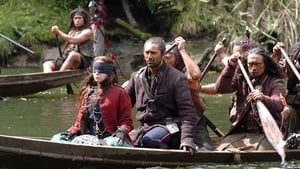
River Queen
In 1860s New Zealand, a young Irish woman desperately trying to find her son finds herself caught on both sides of the lines during the wars between Māori tribes and the British colonial army.
2005

What Becomes of the Broken Hearted?
Five years have passed and Jake has turned his back on his family. He's still up to his usual tricks in McClutchy's Bar, unaware, as he downs his latest opponent, that his eldest son, Nig, has died in a gang fight. The uncomfortable family reunion at Nig's funeral sparks a confrontation with second son, Sonny, and sets Jake and Sonny on a downward spiral.
1999

Peach
Lucy Lawless stars in this short which predated her rise to fame as Xena Princess Warrior. Sal is in a relationship going nowhere with Mog, a layabout who shows her no respect. A chance encounter with an easy-going female truck driver (Lawless) encourages Sal to take more chances in her life, symbolized by the purchase of a tasty but out-of-season peach.
1996
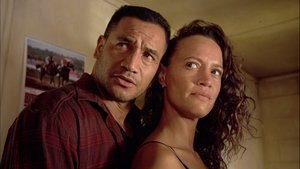
Once Were Warriors
In a violent relationship, it takes a mother’s strength to save herself and her children from the man she loved. Once Were Warriors is a violent love story set against a contemporary urban backdrop.
1994

The Piano
When an arranged marriage brings Ada and her spirited daughter to the wilderness of nineteenth-century New Zealand, she finds herself locked in a battle of wills with both her controlling husband and a rugged frontiersman to whom she develops a forbidden attraction.
1993
Mauri
Rewi Rapana returns to the small country town of Te Mata after his family has left the district. His arrival rekindles old tensions as well as renewing family ties. He is seeking an identity and a permanent place to call home yet desperately hiding a secret from his past. Oddly enough there is one person with whom he finds peace of mind. She is an old woman known as Kara. A special relationship develops between Rewi, Kara and Kara’s great granddaughter Awatea.
1988
Ka Mate! Ka Mate!
In a Maori settlement, Ngati Toa leader Te Rauparaha composes the famous chant "Ka Mate", also known as the haka, after evading enemy capture by hiding in a kumara pit.
1987
Māori
This 1981 NFU film is a tour of the contemporary world of Aotearoa’s tangata whenua. It won headlines over claims that its portrayal of Māori had been sanitised for overseas viewers. Debate and a recut ensued. Writer Witi Ihimaera felt that mentions of contentious issues (Bastion Point, the land march) in his original script were ignored or elided in the final film, and withdrew from the project. He later told journalists that the controversy showed that educated members of minority groups were no longer prepared to let the majority interpret the minority view.
1981
New Country - New People
A documentary about the history of settler groups that came to New Zealand from Europe.
1978

Green Dolphin Street
Sophie loved Edmund, but he left town when her parents forced her to marry wealthy Octavius. Years later, Edmund returns with his son, William. Sophie's daughter, Marguerite, and William fall in love. Marguerite's sister, Marianne, also loves William. Timothy, a lowly carpenter, secretly loves Marianne. He kills a man in a fight, and Edmund helps him flee to New Zealand. William deserts inadvertently from the navy, and also flees in disgrace to New Zealand, where he and Timothy start a profitable business. One night, drunk, William writes Octavius, demanding his daughter's hand; but, being drunk, he asks for the wrong sister.
1947
Rewi's Last Stand
Star-crossed lovers, Robert and Ariana, are caught up in the New Zealand wars of the 1860s. Ariana is claimed by the Maniapoto people as one of their own and, despite Robert's chivalrous defence, is taken by them and must help them prepare for war. Robert likewise must do his patriotic duty and enlists to fight on the other side. He volunteers to ride despatch, thinking it may give him an opportunity to see Ariana again, which it does, but their joy is short-lived; Maniapoto women fight beside their men, and furthermore she is a Rangitira (noble) and will not let her people down. The climax is the siege of Oraku Pa where 300 Maori hold off 2000 troops for three days. The Maniapoto are defeated, but Ariana, although wounded, survives to be reunited with Robert.
1940