Watch Svensk Filmindustri: La grande aventure du cinéma Suédois (2004) Online Free
Rarely in the history of the cinema, a company films productions will have marked the history and the culture of its country like "Svensk Filmindustri". Since its creation in 1919 by Charles Magnusson, Svensk Filmindustri have produced 1200 films including the major works of Mauritz Stiller, Victor Sjöström and Ingmar Bergman. The uncontested talent of the actresses Greta Garbo and Ingrid Bergman have given Swedish cinema a world recognition, a cinema that celebrates the power of the forces of nature, and where the inner life of its characters remains in our memories.
Cast
Stig Björkman, Lena Endre, Gunnar Fischer, Erland Josephson
More Like This
Watch the Tempo
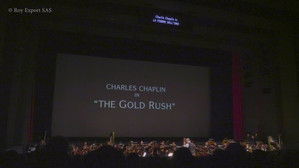
On 18th of December 2017, the Filarmonica Teatro Regio Torino, directed by Timothy Brock, presented "The Gold Rush" by Charles Chaplin, with live performance of the soundtrack. But let's go back a few days: this short film takes us in the backstage of the concert!
2018
Ava Gardner: Life Is Bigger Than the Movies
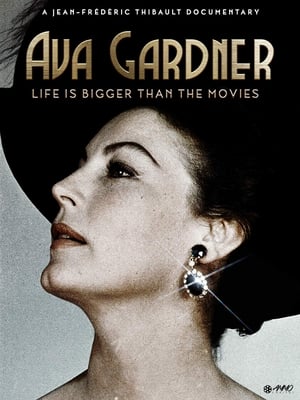
A barefoot contessa, a screwed-up princess, an exquisite drunk, a bawdy aristocrat, a nightmare for puritanical America and the moguls of Metro-Goldwyn-Mayer, Ava Gardner never stopped loving those she loved. She turned women green and made men sweat. And rejected with all her force the bulwark of normality.
2017
Cine São Paulo
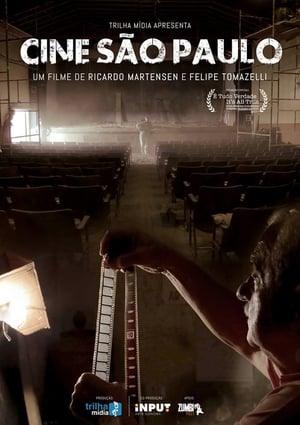
Chico has dedicated his whole life to CINE SAO PAULO. The building, inherited from his father, is now badly deteriorated. Refurbish it, in order to make the old movie theater get back to work, becomes his great obsession.
2017
En ningún lugar, Don Luis Buñuel
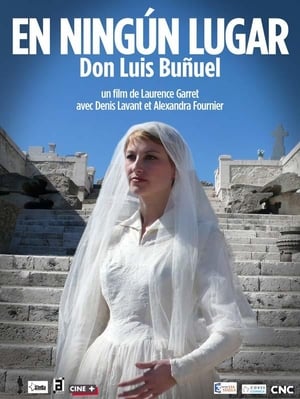
Denis Lavant reads long passages from Luis Buñuel's semi-autobiographical "My Last Sigh". From this text, without film excerpts, Laurence Garret travels in the footsteps of Buñuel, from Calanda to Zaragoza, Madrid to Toledo, Spain to Mexico.
2013
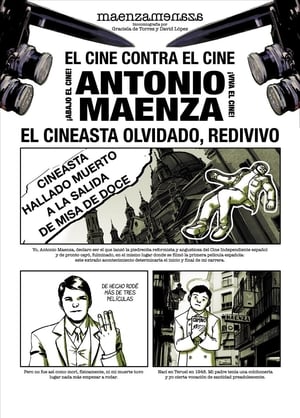
Materialista, idealista, cinematógrafo, magnetófono, buen chico y sádico
2012
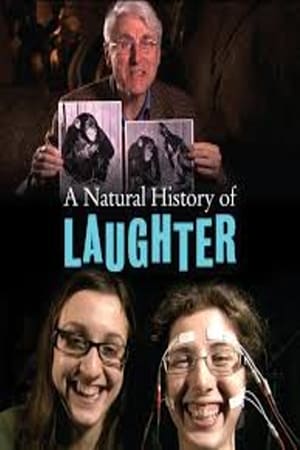
A Natural History of Laughter
For how long have we been laughing? Are human beings the only ones to laugh? In the past, scientists tended to neglect such questions of laughter, leaving them to the philosophers. Jacques Mitsch's A NATURAL HISTORY OF LAUGHTER explores recent scientific attempts to explicate this most elusive of human faculties, undertaken by scientists who see it as a means of approaching some of the larger mysteries of neurology and human behavior.
2011
Made in Hollywood
A breathtaking investigation into blockbusters, a film genre that enjoys worldwide success yet keeps its secret weapon well hidden backstage in Hollywood. The blockbuster appeals to a very wide audience, from 7 to 77 years and from Paris to Beijing. These films, which have boosted the film industry, started out with "Jaws" and "Star Wars" and are still prospering with Avatar or Alice in Wonderland. To succeed, the films must meet a few precise criteria, one of them being their cost - at 100 million dollars minimum. But in Hollywood, the films' ingredients are a well-kept secret; perhaps for fear of discovering that the studios' house rules are not as rosy as in certain fruitful happy endings? The pressure and the stakes are colossal. This fascinating documentary reviews the numerous professions affiliated with the blockbuster, via interviews with producers of the major studios (Walt Disney Studio, 20th Century Fox...)...
2011

Rafael Azcona
2010
Disney: Through the Looking Glass
Tito del Amo, a passionate 72-year-old researcher, takes the final step to unravel the enigma about the alleged Spanish origin of the American cartoonist Walt Disney, making the same journey that his supposed mother made to give him up for adoption in Chicago. A journey that begins in Mojácar, Almería, Spain, and ends in New York. An exciting adventure, like Alicia's through the looking glass, to discover what is truth and what is not, with an unexpected result.
2010
50 años de... Canciones
2009
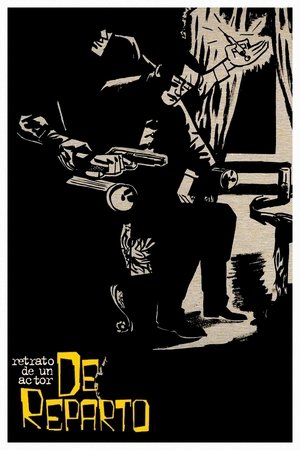
De reparto: retrato de un actor
2009
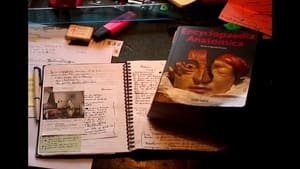
Journey Around My Room
The camera slowly pans through a room as Smolders offers various observations and memories.
2008

Sexo en el plató
How are the sex scenes filmed? What tricks are used to fake the desire? How do the interpreters prepare and feel? Spanish actors and directors talk about the most intimate side of acting, about the tricks and work methods when narrating exposed sex. In Spain the general rule is that there are no rules. Each film, each interpreter, faces it in very different ways.
2007
Podium
2007

Los últimos guerrilleros - Historia de la A.G.I. (Agrupación guerrillera de Levante)
2003
Polanski y los ojos del mal
Documentary that describes and analyzes the characteristics, themes and central concerns of Roman Polanski's cinema.
2002

Vieiros, vida y obra de Carlos Velo
2000

Grisha
An up-close look into the life of the often misunderstood movie director Grigori Kromanov through the lens of old friends and colleagues.
1996
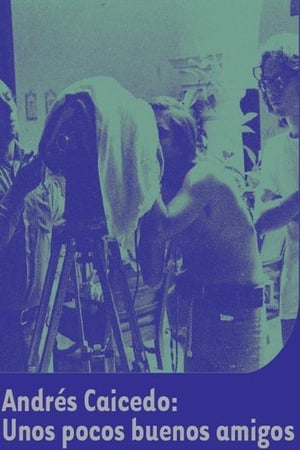
Andrés Caicedo: A Few Good Friends
Using the unfinished film, ANGELITA Y MIGUEL ÁNGEL, by Andrés Caicedo and Carlos Mayolo, as a structuring device, friends of prolific film critic and writer Andrés Caicedo, an unforgettable figure of the group of Cali in the 1970s who left an incredible amount of texts, reflect upon his life, his work, and his suicide at the age of 25, testify to his influence in the cultural life of Colombia, and remember his strong and touching personality.
1986

Discovering Color
The art of mixing color is shown in a visual presentation.
1960