Watch Surviving Jaws (2025) Online Free
Fifty years after Jaws terrified beachgoers, marine biologist Tom "Blowfish" Hurd and ecologist Michelle Jewell dive with great whites to separate fact from fiction -- like whether skinny dipping is risky or if a shark could really chew through a boat.
More Like This

Jaws, a Monstrous Success
In the summer of 1975, the young director Steven Spielberg set new standards for cinema worldwide with an oversized shark bite, a plastic shark fin and an unmistakable two-note main theme composed by John Williams. With the horror from the deep, a man-eating, gigantic great white shark, the film of the same name became a similarly traumatic reference as Alfred Hitchcock's "Psycho": it triggered lasting primal fears across generations. On the beaches of the world, there was clearly a "before" and an "after". Steven Spielberg, who was only 28 at the time, not only set new standards for the thriller genre, but also hid his biting criticism of US capitalism in the 1970s behind it.
2024
Sharksploitation
The ultimate deep dive into the world of shark cinema: filmmakers, critics, scholars and conservationists explore the weird, wild cinematic legacy of sharks on film and audiences' undying fascination with these misunderstood creatures.
2024
Shark vs. Ross Edgley
Ultra-athlete and shark advocate Ross Edgley goes head-to-head against four of the ocean’s most formidable sharks. He’s won the world record for the world’s longest assisted stage sea swim of nearly 1,800 miles but now Ross is pushing himself even further and testing his speed, strength, endurance, and digestive system. In four jaw-dropping shark challenges, Ross attempts a G-force turn like a hammerhead, a polaris jump out the water like a white shark, to out swim the mako — the world’s fastest shark — and finally, he tries to feast like a tiger shark.
2024
For the Love of Sharks
2022
Air Jaws: Top Guns
Shark cinematographers Andy Casagrande and Dickie Chivell travel to South Africa on a mission to capture the largest breaching great white shark ever recorded.
2022
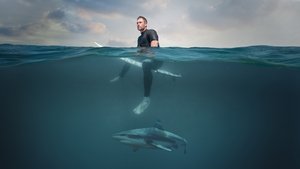
Shark Beach with Chris Hemsworth
Chris Hemsworth has a real passion for sharks. The Hollywood star talks to experts to find out more about the apex predators of the oceans.
2021
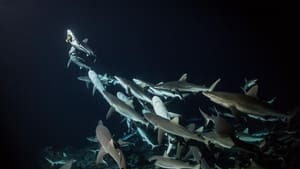
700 Sharks
Gombessa Expedition 4 Laurent Ballesta went to observe a gathering of thousands of groupers during the full moon of June 2014 (Le mystère mérou) in the southern pass of the Polynesian atoll of Fakarava, where he discovered a pack of over seven hundred grey sharks. How can this unprecedented density be explained? Could it be that social behaviors govern this wild horde? During three years of preparation, he and the other divers on his international scientific team tamed their fear by abandoning the defensive reflexes that provoke shark aggression, with the aim of slipping into the heart of the raging pack to study and film it from the inside. Sharks fitted with microchips, receiving antennas, hydrophones, an ark of 32 synchronized cameras...: a whole technological arsenal is mobilized for the project. As the groupers approach for their annual spawning, what battle plan will the sharks deploy?
2018
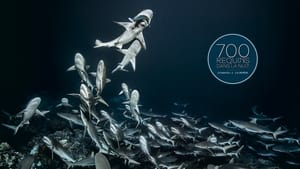
700 Sharks (Gombessa 4, Genesis)
Originally, in 2014, Laurent Ballesta had just one precise objective: to unravel the mystery of groupers. To understand the issues involved in their collective reproduction. But although focused on the study of groupers, the real surprise came from the sharks. Never before had the team been confronted with such a density of grey reef sharks. The divers took up the challenge of counting them. Methodically, they repeated the operation many times to arrive at the impressive figure of 700 grey reef sharks. Each year, the team returned to the southern pass of Fakarava in French Polynesia. Until 2019, for the fourth expedition, "Gombessa 4" is the synthesis of precise and unique scientific protocols. The mission demonstrated that shark hunts are not anarchic, but rely in part on social organization within the horde, following in the footsteps of the 700 grey sharks in "700 sharks in the night (Gombessa 4, Genesis)".
2016

Shark Land: Welcome to Cocos Island
“Entourage” star Adrian Grenier ventures to Cocos Island off the shore of Costa Rica to bring attention to the plight of endangered sharks who are being threatened by poachers and ocean pollution.
2015
Wild Sharks
With the aid of modern technology, reveal the unknown behavior of some unusual species of shark: lemon sharks and their white-tip reef counterparts.
2013

Special When Lit
What made more money than the entire American movie industry through the 50s and 60s? Pinball. Special When Lit rediscovers the lure of a lost pop icon. A product of the mechanical and electrical age, the American invention swept the world and defined cool. Now it is relegated to a nostalgic footnote deserving a better fate. Joining the fans, collectors, designers and champion players from across the globe who share a world many of us didn't know still existed.
2009
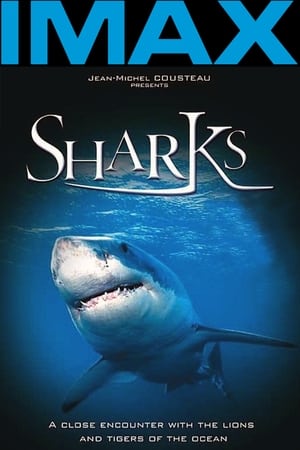
Sharks 3D
Jean-Michel Cousteau invites you to embark on a breathtaking underwater voyage to discover the ultimate predator: the shark. Experience an astonishing up-close encounter in 3D with the lions and tigers of the ocean.
2004
Encounters with Sharks
Imagine a beautiful day at sea, the magnificent waters allowing you to feel weightless and serene. And then you see it - the infamous single fin moving slowly in your direction. You panic...why? Man has always lived in fear of the shark because these predators represent for most, the epitome of evil and voraciousness. Ease your fears and join John Stoneman as he sets out to dispel many of the myths that surround the shark. But, don't get to comfortable. As John Stoneman will point out, there are certain species that must be feared.
1999
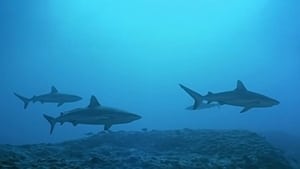
Atlantis
Atlantis is filmmaker Luc Besson's celebration of the beauty and wonder of the world beneath the sea, expanding upon themes touched on in his film The Big Blue. Combining stunning underwater cinematography and a hypnotic score by Eric Serra, Besson's singular vision defies dialogue or narrative structure to explore ocean life as you've never seen it before. Following the colossal success of The Big Blue, Luc Besson crisscrossed the world's seas and oceans to film the beauty and diversity of marine life: from the giant octopuses of Vancouver to the manta rays of the Pacific (New Caledonia), and the grey sharks of Tahiti. A film with no actors or sets other than the underwater world. A breathtaking view of marine species: sharks, dolphins, manatees, octopuses. An exploration of the seabed in the Bahamas, the Galapagos, Vancouver, and Tahiti.
1991
The Call
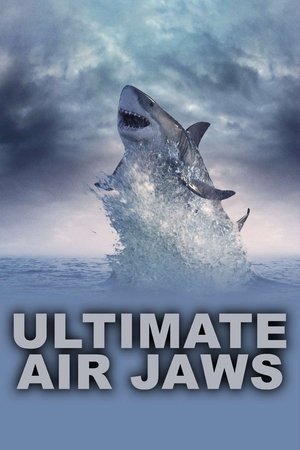
Ultimate air jaws
2010
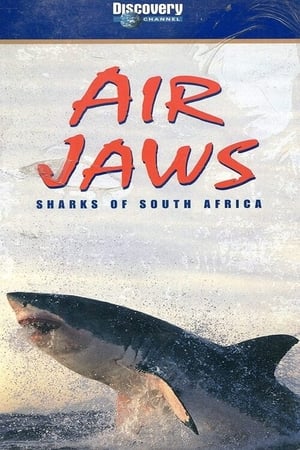
Air Jaws: Sharks of South Africa
Like crocodiles pulling zebra into the Mara River and like Orcas beaching themselves to capture sea lions, the aerial attacks of great white sharks in South Africa's False Bay rank among the most spectacular predatory events in nature. Join shark expert Dr. Rocky Strong in South Africa -- the only place in the world where these aerial attacks occur -- for an in-depth study of this incredible predatory behavior.
2001
The White Death
"Don't go in the Water." This line bred fear in millions of people around the world. In 1975, Jaws showcased the greatest eating machine, the great white shark, on the big scren and changed the swimming habits of movie-goers everywhere. By far the most feared creature in the sea, this species is responsible for more attacks on human beings that all other sharks combined. Step outside the Hollywood hype and travel to South Australia with an expedition as they attempt to increase understanding and reduce human/shark confrontations. Observe the behavior and lifestyle of the great white shark, and see these miracles of evolution up close in this unforgettable exploration under sea.
1999
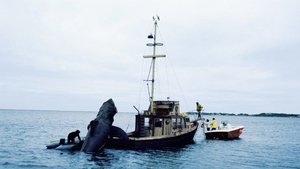
In the Teeth of Jaws
BBC documentary about the making of Steven Spielberg's Jaws.
1997

New England Our Way
The program is a fascinating look some at the key people involved with JAWS before it was released. It contains interviews with the “big three” of Scheider, Dreyfuss and Shaw, Steven Spielberg, and Martha’s Vineyard local Craig Kingsbury, who played Ben Gardner.
1974