Watch Surviving Eugenics (2015) Online Free
Surviving Eugenics is a documentary about the history and ongoing significance of eugenics. Anchored by survivor narratives from the province of Alberta in Canada, which had eugenic sterilization actively in place until 1972, Surviving Eugenics provides a unique insiders' view of life in institutions for the 'feeble-minded', and raises broader questions about disability, human variation, and contemporary social policies.
Cast
Leilani Muir, Rob Wilson, Judy Lytton, Roy Skoreyko, Ken Nelson, Glenn Sinclair, Jon Faulds, Lesley Cormack, Sandra Anderson, David Thomas King, Allan Garber, Gary Lytton
More Like This

Chaos Glacier Country
An expedition to climb British Columbia's highest mountain goes awry in the face of bad weather, a series of comic mishaps and the stubborn insistence of its leader on using antique climbing equipment.
2024
Gentleman Bandit
Documentary on the Canadian career of train robber Billy Miner, who became a folk hero in British Columbia. Locations near Kamloops and Mission are explored in present day.
2024

The Secret Order
Phil Comeau shines a spotlight on the Ordre de Jacques-Cartier, a powerful secret society that operated from 1926 to 1965, infiltrating every sector of Canadian society and forging the fate of French-language communities. Through never-before-heard testimony from former members of the Order, along with historically accurate dramatic reconstructions, this film paints a gripping portrait of the social and political struggles of Canadian francophone-minority communities.
2022
Tangled Roots
An intimate look into Demers family's experience raising children while dealing with the societal stigmas around disabilities and the consequences of Alberta's forgotten experiment in eugenics.
2022
The Last Baron
The meaty saga of Burger Baron, a rogue fast-food chain with mysterious origins and a cult following, run by a loose network of fiercely independent Arab Canadian immigrants.
2021
Killing the Indian in the Child
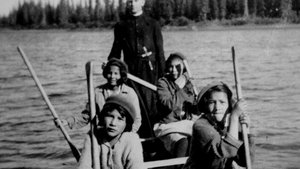
The Indian Act, passed in Canada in 1876, made members of Aboriginal peoples second-class citizens, separated from the white population: nomadic for centuries, they were moved to reservations to control their behavior and resources; and thousands of their youngest members were separated from their families to be Christianized: a cultural genocide that still resonates in Canadian society today.
2021

European Tour '73
A 15 minute documentary utilizing archival Super 8 film footage and original animation about a father fulfilling his dream of reconnecting his 5 small children to the steps of his own father when he fought for the Canadian military in WW2 through a trip to Europe in 1973.
2020

Being Canadian
What does it actually mean to be Canadian? This humorous documentary, featuring interviews with a who's-who of famous Canadians, hopes to find the answer.
2015

The Klondike Gold Rush
Renowned as the richest gold strike in North American mining history, the Klondike Gold Rush (1896-1899) set off a stampede of over 100,000 people on a colossal journey from Alaska to the gold fields of Canada's Yukon Territory. Filled with the frontier spirit, prospectors came and gave rise to what was one of the largest cities in Canada at that time - Dawson City. The boomtown, which became known as "the Paris of the North", earned the reputation as a place where lives could be revolutionized. Brought to life with excerpts from the celebrated book The Klondike Stampede - published in 1900 by Harper's Weekly correspondent Tappan Adney - and featuring interviews with award-winning author Charlotte Gray, and historians Terrence Cole and Michael Gates, The Klondike Gold Rush is an incredible story of determination, luck, fortune, and loss. In the end, it isn't all about the gold, but rather the journey to the Klondike itself.
2015
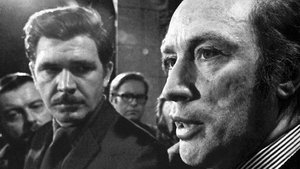
Black October
A documentary recounting the kidnappings of British Trade Commissioner James Cross and Quebec Vice-Premier & Minister of Labour Pierre Laporte by the FLQ on October 5, 1970 in Quebec.
2000
Hitler's Forgotten Victims
The story of black and mixed race people in Nazi Germany who were sterilised, experimented upon, tortured and exterminated in the Nazi concentration camps. It also explores the history of German racism and examines the treatment of Black prisoners-of-war. The film uses interviews with survivors and their families as well as archival material to document the Black German Holocaust experience.
1997
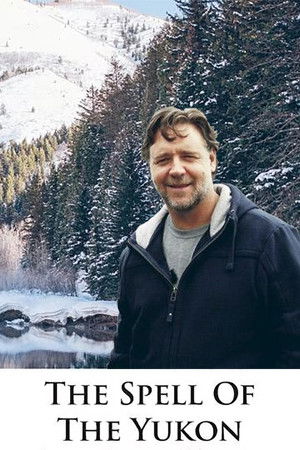
The Spell of the Yukon
This documentary tells the haunting story of the Klondike Gold Rush in legendary Dawson City. Peppered with Robert Service poems read by New Zealand-born Hollywood actor Russell Crowe, the film recounts how stampedes of fortune seekers came to the Yukon from far and wide in 1897. Less than half of the 100,000 adventurers ever finished the treacherous journey. Archival photographs re-create the saga of the Klondike, including stories from the deadly Chilkoot Pass and Dawson City itself, where fortunes were made and lost overnight. With a personal stake and a sense of wonder, filmmaker Rita Roy discovers a territory still vibrant with legends, and miners still panning for gold under the spell of the harsh yet stunning wilderness.
1996
Women in the Shadows
Filmed on location in Saskatchewan from the Qu'Appelle Valley to Hudson Bay, the documentary traces the filmmaker's quest for her Native foremothers in spite of the reluctance to speak about Native roots on the part of her relatives. The film articulates Métis women's experience with racism in both current and historical context, and examines the forces that pushed them into the shadows.
1991
The Relationship
This film explores how Canada wavers between rejection and acceptance of closer ties with the United States, tracing the historical precedents of current issues between the two nations. Canada continues to question her identity despite the influence of a powerful neighbour.
1988

Elk Island
This short documentary focuses on a man-made island that became the first federal sanctuary for wildlife in Canada. Situated an hour east of Edmonton, it houses one of the world's densest collections of wildlife, maintained by Parks Canada. Elk Island offers a glimpse of the behind-the-scenes activity of the island.
1985
Potlatch...a strict law bids us dance
Presents the history of the conflict between the Canadian government and the Kwakiutl Indians of the Northwest Pacific over the ritual of the Potlatch. Archival photographs and films, wax roll sound recordings, police reports, the original potlatch files, and correspondence of agents form the basis of the reconstruction of period events, while the film centres on a Potlatch given today by the Cranmer family of Alert Bay.
1975
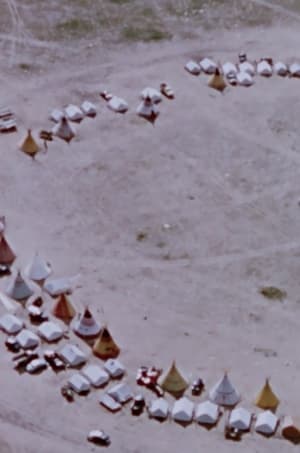
Kainai
On the Kainai (Blood) First Nations Reserve, near Cardston, Alberta, a hopeful new development in Indigenous enterprise. Once rulers of the western plains, the Bloods live on a 1 300-square-kilometer reserve. Many have lacked gainful employment and now pin their hopes on a pre-fab factory they have built. Will the production line and work and wages fit into their cultural pattern of life? The film shows how it is working and what the owners themselves say about their venture.
1973

Ville-Marie
Today it is the city of Montreal, but 3 centuries ago the tiny band of missionary founders called it Ville-Marie, the holy city of Mary. This film goes back to its beginning and those who felt called to plant an oasis of Christianity in the North American wilderness. In an imaginative, at times almost surrealistic, way the film recalls the highborn company from France, and shows what survives of Ville-Marie in the Montreal of today.
1965
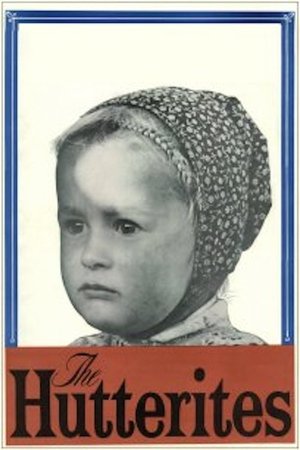
The Hutterites
A look at the Hutterites, an Anabaptist religious community similar to the Amish or the Mennonites in rural Alberta. The followers of religious leader Jacob Hutter live in farm communities, devoutly holding to the rules their founder laid down four centuries ago. Through the kindness of a Hutterite colony in Alberta, this film, in black and white, was made inside the community and shows all aspects of the Hutterites' daily life.
1964

Twilight of an Era (1934-1939)
This documentary examines some of the important events in Canada during the Depression years: the Moose River mine disaster, the great drought on the prairies and the introduction of a transatlantic air service between Canada and Europe. The film also looks at the major world events that influenced Canada: the abdication of the king of England; civil war in Spain; Hitler's rise to power and Canada's declaration of war on Germany. Part of the Between Two Wars series.
1960