Watch Space and Light (1972) Online Free
An award-winning wordless documentary that explores the architecture of the then new St. Peter's Seminary which is now seen as one of the most important post-war buildings in the United Kingdom. The film was made in celebration after architect Jack Coia was awarded the RIBA Gold Medal in 1969. Winner of the Medalla de Bronce at the Fifth Union of International Architects Festival in Madrid (1975).
More Like This

Raiano
2023
About the Memoirs of a House
The life of a couple is observed through the home they have left behind.
2022
Skál
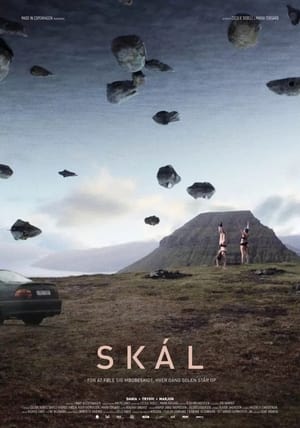
Dania is 21 years old and grew up in a Christian community in the Faroe Islands’ Bible belt. She has just moved to Tórshavn and is seeing Trygvi, a hip-hop artist and poet locally known as Silvurdrongur (Silver Kid). He comes from a secular family and writes poems and texts about the shadow sides of humanity. Dania herself sings in a Christian band but is fascinated by Trygvi’s courage to write brutally honest lyrics. As she tries to find her place in the world and understand herself, she starts to write more personal texts. Her writings develop into a collection of critical poems called ‘Skál’ (‘Cheers’), about the double life that she and other youths must live in the conservative Christian world.
2021
Who Are the Flat Earthers?
Film-maker Conor Reilly is given rare access to the Scottish flat earth community, setting into motion a chain of events that will introduce him to people that are making it their mission to spread the word of flat earth and why they believe in this so passionately. His journey takes him across Scotland, where he meets believers using social media to spread the message of 'waking up to the lies' and those who are taking to the streets with banners and flyers speaking to the public face to face. Finding a small but growing community of Scots leads him to Colorado, USA, and to the second International Flat Earth Conference, where he gets an insight into the movement on an entirely new level. Is this where Scotland is heading?
2019
Necessary Amendments
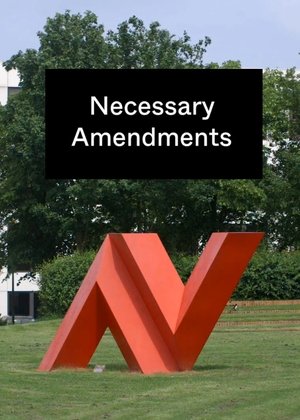
Commissioned by MK Gallery, this film combines contemporary footage of public artworks in Milton Keynes with archive footage from the Open University, cartoons from the Milton Keynes Development Corporation's internal newspaper and accounts from early residents, juxtaposing several perspectives on England's most ambitious 'new town'.
2019
The Last Days of Jesus
For almost two thousand years, the story of Jesus’ final days has been celebrated by Christians the world over. From Jesus’ triumphant entry into Jerusalem, through to his eventual crucifixion six days later, the key moments have been immortalized in countless films, pieces of music, and works of art. But in recent years, some historians have begun to question inconsistencies in the Gospels’ version of events. They believe that the Gospels could hide a very different story; one that casts the historical Jesus in an entirely new light. Based on a new interpretation of contemporary historical events in Rome, "Last Days of Jesus" peels back thousands of years of tradition, to explore a new political context to the events in Jerusalem. "Last Days of Jesus" explores how dramatic political events in Rome could have played a crucial role in shaping Jesus’ destiny, and examines an extraordinary political alliance that altered the course of history.
2017

Moriyama-San
One week in the extraordinary-ordinary life of Mr. Moriyama, a Japanese art, architecture and music enlighted amateur who lives in one of the most famous contemporary Japanese architecture, the Moriyama house, built in Tokyo in 2005 by Pritzker-prize winner Ryue Nishizawa (SANAA). Introduced in the intimacy of this experimental microcosm which redefines completely the common sense of domestic life, Ila Bêka recounts in a very spontaneous and personal way the unique personality of the owner: a urban hermit living in a small archipelago of peace and contemplation in the heart of Tokyo. From noise music to experimental movies, the film let us enter into the ramification of the Mr. Moriyama's free spirit. Moriyama-San, the first film about noise music, acrobatic reading, silent movies, fireworks and Japanese architecture!
2017
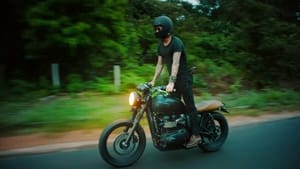
David Beckham: Into the Unknown
This documentary chronicles David Beckham and his friends' unforgettable journey deep into the heart of the Amazon rainforest in Brazil. Travelling by motorbike and boat, and guided by locals, he visits far-flung communities and tribes that live in this remote landscape.
2014
Revelation - The Bride, The Beast & Babylon
Going to the very heart of the Bible's most challenging Book, this one hour documentary decodes the visions of Revelation 12 and 17 for everyone to understand. Journeying from the birth of Christ through the Christian era, this amazing video pulls aside the veil of hidden history to reveal the rise of Babylon, the persecution of the bride of Christ, and the real-world identity of the beast. Educational and inspiring, Revelation delivers the keys to understanding the epic conflict between Christ and Satan and what it means for your life today.
2013
Inside Piano
The fifth project of the Living Architectures series, Inside Piano is composed of three films on three symbolic buildings of Renzo Piano's career. A visit throughout the prototype-building of the Centre Pompidou. An immersion in the soundproof world of a submarine floating in the depths of the Parisian underground. A journey aboard a luminous magic carpet of a highly sophisticated architectural machine. A humorous, caustic and quirky point of view.
2013
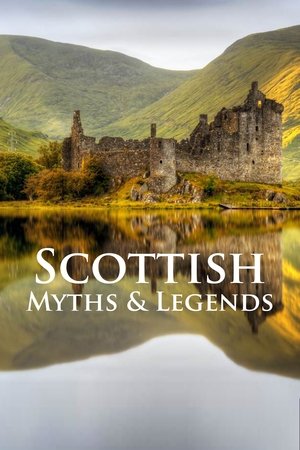
Scottish Myths & Legends
"Scottish Myths & Legends" explores the magic, mystery and sprinkling of mayhem that covers the dramatic landscape of Scotland. From the ancient tales of the Loch Ness Monster to the stories of shape shifting Kelpies, we go on a fascinating journey of discovery to uncover the stories behind the myths and the magnificent Scottish landscape that has inspired these truly legendary legends.
2010
Ekodomy aneb Život v rovnováze
2008
The Case for Christ
Based upon the Gold-Medallion award-winning best-seller, The Case for Christ documents Lee Strobel's journey from atheism to faith through his two-year investigation of the Bible and the life of Jesus Christ.
2007
Into Great Silence
An intimate portrayal of the everyday lives of Carthusian monks of the Grande Chartreuse, high in the French Alps (Chartreuse Mountains). The idea for the film was proposed to the monks in 1984, but the Carthusians said they wanted time to think about it. The Carthusians finally contacted Gröning 16 years later to say they were now willing to permit Gröning to shoot the movie, if he was still interested.
2005
Architects Herzog and deMeuron: The Alchemy of Building & The Tate Modern
Visiting examples of Herzog and de Meurons ground-breaking style, this film reflects their capacity to astonish and explore the way in which they transform what might otherwise be ordinary through new treatments and techniques.
2001
Rocinha 76/96
The camera goes back through the alleys and alleys of the community, leading the viewer to compare, with simultaneous shots of 76 and 96, the little or almost nothing that was accomplished, the neglect of the State, the abandonment over the 20 years. Finishing with a virtual image of the colored facades, as part of the proposed urbanization.
1996
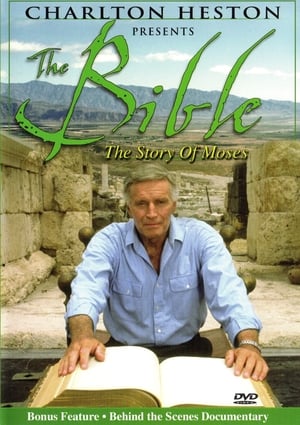
Charlton Heston Presents The Bible: The Story of Moses
"Ever since playing Moses in The Ten Commandments," Charlton Heston has said, "I've felt a deep, personal connection with the Bible, which remains as vivid and vital today as when it was told around campfires centuries before there was any written language." Heston brings his own storytelling gifts to the second in his acclaimed four-part Bible series.
1993

Brasilia, Contradictions of a New City
In 1967, de Andrade was invited by the Italian company Olivetti to produce a documentary on the new Brazilian capital city of Brasília. Constructed during the latter half of the 1950s and founded in 1960, the city was part of an effort to populate Brazil’s vast interior region and was to be the embodiment of democratic urban planning, free from the class divisions and inequalities that characterize so many metropolises. Unsurprisingly, Brasília, Contradições de uma Cidade Nova (Brasília, Contradictions of a New City, 1968) revealed Brasília to be utopic only for the wealthy, replicating the same social problems present in every Brazilian city. (Senses of Cinema)
1968
Le Corbusier
Making a documentary on Le Corbusier is not easy, because he is undoubtedly the architect most familiar to the general public but also the most unknown. If most people know his great achievements, such as the Cité radieuse of Marseille, the pavilions of the Cité universitaire de Paris or the Tourettes convent, many are unaware of his works in Moscow, Rio de Janeiro or Chandigarh. Roy Oppenheim pays a vibrant tribute to Corbusier, dismissing the criticisms and darker facets of the character. It presents the career of this pioneering architect, as well as his thinking, the essential principle of which was aimed at the development of human beings and the balance of society. Light, space and greenery are integrated into his large futuristic cities, because according to him the eyes of the inhabitants should be drawn into the distance and not into their neighbor's bathroom.
1967
Electronic Poem
Poème Électronique is an 8-minute piece of electronic music by composer Edgard Varèse, written for the Philips Pavilion at the 1958 Brussels World’s Fair. The Philips corporation commissioned Le Corbusier to design the pavilion, which was intended as a showcase of their engineering progress. The pavilion was shaped like a stomach, with a narrow entrance and exit on either side of a large central space. As the audience entered and exited the pavilion, the electronic composition Concret PH by Iannis Xenakis (who also acted as Le Corbusier's architectural assistant for the pavilion's design) was heard. Poème électronique was synchronized to a film of black and white photographs selected by Le Corbusier which touched on vague themes of human existence.
1958