Watch Slums: Cities of Tomorrow (2014) Online Free
One billion people on our planet—one in six—live in shantytowns, slums or squats. Slums: Cities of Tomorrow challenges conventional thinking to propose that slums are in fact the solution, not the problem, to urban overcrowding caused by the massive migration of people to cities. (Lynne Fernie, HotDocs)
More Like This
Skate Territory
After a long and successful career as a skater, Veronica has stepped away from competing, but continues her legacy by organizing skateboarding workshops to teach young girls from indigenous communities to skate, and to push them to fight back for the public spaces that have been occupied by men and to practice a sport that also belongs to women.
2024
Necessary Amendments
Commissioned by MK Gallery, this film combines contemporary footage of public artworks in Milton Keynes with archive footage from the Open University, cartoons from the Milton Keynes Development Corporation's internal newspaper and accounts from early residents, juxtaposing several perspectives on England's most ambitious 'new town'.
2019

Moriyama-San
One week in the extraordinary-ordinary life of Mr. Moriyama, a Japanese art, architecture and music enlighted amateur who lives in one of the most famous contemporary Japanese architecture, the Moriyama house, built in Tokyo in 2005 by Pritzker-prize winner Ryue Nishizawa (SANAA). Introduced in the intimacy of this experimental microcosm which redefines completely the common sense of domestic life, Ila Bêka recounts in a very spontaneous and personal way the unique personality of the owner: a urban hermit living in a small archipelago of peace and contemplation in the heart of Tokyo. From noise music to experimental movies, the film let us enter into the ramification of the Mr. Moriyama's free spirit. Moriyama-San, the first film about noise music, acrobatic reading, silent movies, fireworks and Japanese architecture!
2017

Meth Storm
As police and DEA agents battle sophisticated cartels, rural, economically-disadvantaged users and dealers–whose addiction to ICE and lack of job opportunities have landed them in an endless cycle of poverty and incarceration–are caught in the middle.
2017
Unsere Städte nach '45
A documentation about the reconstruction and destruction of german cities after the 2nd World War.
2017
Los posibles
Santiago Mitre co-directs his first movement following The Student together with choreographer Onofri Barbato. Although it would have been more accurate to say “his first film-story-adventure-movie-great movie following The Student”, the word movement fits perfectly in Los posibles, the most overwhelmingly kinetic work Argentine cinema has delivered in many, many years. The film deals with the adaptation of a dance show directed by Onofri together with a group of teenagers who came to Casa La Salle, a center of social integration located in González Catán, trying to find some refuge from hardship. Already entitled Los posibles, the piece opened in the La Plata Tacec and was later staged in the AB Hall of the San Martín Cultural Center. Now, it dazzles audiences out of a film screen, with extraordinary muscles and a huge heart: Los posibles is a rhapsody of roughen bodies and torn emotions. Precise and exciting, it’s our own delayed, necessary, and incandescent West Side Story.
2013
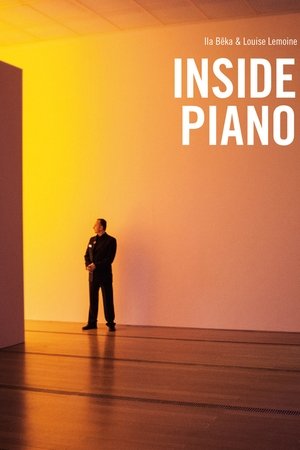
Inside Piano
The fifth project of the Living Architectures series, Inside Piano is composed of three films on three symbolic buildings of Renzo Piano's career. A visit throughout the prototype-building of the Centre Pompidou. An immersion in the soundproof world of a submarine floating in the depths of the Parisian underground. A journey aboard a luminous magic carpet of a highly sophisticated architectural machine. A humorous, caustic and quirky point of view.
2013
Ekodomy aneb Život v rovnováze
2008

Blood and Water
When the 2004 tsunami hit the coast of Sri Lanka, 65-year-old Anton Ambrose's wife and daughter were killed. "In five minutes," he says, "I lost everything." A year later, Anton returns to Sri Lanka. With him is his nephew, award-winning filmmaker Rohan Fernando. A Tamil, Anton moved to California in the 1970s and became a very successful gynecologist. His daughter, Orlantha, made the opposite journey, returning to Sri Lanka where she ran a non-profit group that gave underprivileged children free violin lessons. Blood and Water is the story of one man's search for meaning in the face of overwhelming loss, but it is also filled with improbable characters, unintentional comedy and situational ironies.
2007
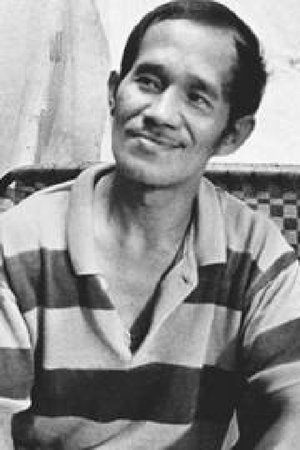
Life on the Tracks
Riles is a documentary about the life of a riles resident, Eddie, in a squatter area along the railroad tracks within the downtrodden section of Balic-balik, Manila.
2003
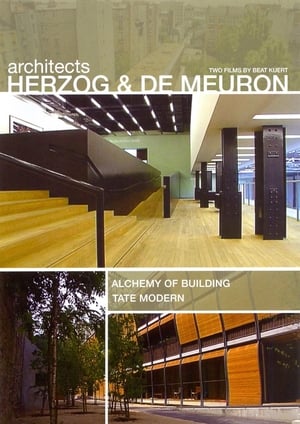
Architects Herzog and deMeuron: The Alchemy of Building & The Tate Modern
Visiting examples of Herzog and de Meurons ground-breaking style, this film reflects their capacity to astonish and explore the way in which they transform what might otherwise be ordinary through new treatments and techniques.
2001
Megacities
Megacities is a documentary about the slums of five different metropolitan cities.
1998
Mama General
A film about poverty in a rich country: father, mother, seven children have made it out of the homeless asylum. The author met the Cologne family B. for the first time in 1976. Living with debts, installments, reminders, living with the certainty that the children will not fare any differently. For more than twenty years, between dreams and fears, the camera recorded two generations' fear of failure and hunger for middle class. A unique film chronicle from the "latest economic miracle" - between 1976 and 1997.
1997
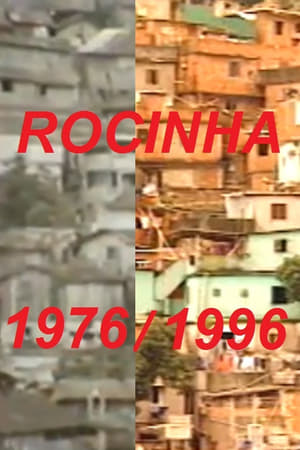
Rocinha 76/96
The camera goes back through the alleys and alleys of the community, leading the viewer to compare, with simultaneous shots of 76 and 96, the little or almost nothing that was accomplished, the neglect of the State, the abandonment over the 20 years. Finishing with a virtual image of the colored facades, as part of the proposed urbanization.
1996
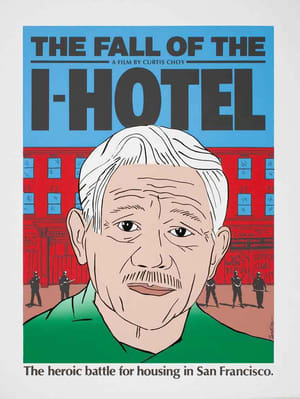
The Fall of the I-Hotel
The Fall of the I-Hotel brings to life the battle for housing in San Francisco. The brutal eviction of the International Hotel's tenants culminated a decade of spirited resistance to the razing of Manilatown. The Fall of the I-Hotel works on several levels. It not only documents the struggle to save the I-Hotel, but also gives an overview of Filipino American history.
1983

Dokkoi! Songs from the Bottom
After the waning of the protests in Sanrizuka, Ogawa Pro started questioning the future of the collective and looking for other subjects to film. Following the method developed in the previous films, the filmmakers moved to the slum of Kotobuchi in the port city of Yokohama, where more than 6000 people were struggling to get by without any means of survival, exposed to industrial accidents and diseases. The result is one of the most moving films produced by the collective, a series of beautifully filmed portraits, voicing the silenced stories and songs of a group of people living in this community. Credit: ICA London
1975

Brasilia, Contradictions of a New City
In 1967, de Andrade was invited by the Italian company Olivetti to produce a documentary on the new Brazilian capital city of Brasília. Constructed during the latter half of the 1950s and founded in 1960, the city was part of an effort to populate Brazil’s vast interior region and was to be the embodiment of democratic urban planning, free from the class divisions and inequalities that characterize so many metropolises. Unsurprisingly, Brasília, Contradições de uma Cidade Nova (Brasília, Contradictions of a New City, 1968) revealed Brasília to be utopic only for the wealthy, replicating the same social problems present in every Brazilian city. (Senses of Cinema)
1968
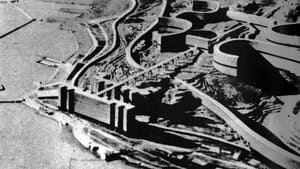
Le Corbusier
Making a documentary on Le Corbusier is not easy, because he is undoubtedly the architect most familiar to the general public but also the most unknown. If most people know his great achievements, such as the Cité radieuse of Marseille, the pavilions of the Cité universitaire de Paris or the Tourettes convent, many are unaware of his works in Moscow, Rio de Janeiro or Chandigarh. Roy Oppenheim pays a vibrant tribute to Corbusier, dismissing the criticisms and darker facets of the character. It presents the career of this pioneering architect, as well as his thinking, the essential principle of which was aimed at the development of human beings and the balance of society. Light, space and greenery are integrated into his large futuristic cities, because according to him the eyes of the inhabitants should be drawn into the distance and not into their neighbor's bathroom.
1967
Electronic Poem
Poème Électronique is an 8-minute piece of electronic music by composer Edgard Varèse, written for the Philips Pavilion at the 1958 Brussels World’s Fair. The Philips corporation commissioned Le Corbusier to design the pavilion, which was intended as a showcase of their engineering progress. The pavilion was shaped like a stomach, with a narrow entrance and exit on either side of a large central space. As the audience entered and exited the pavilion, the electronic composition Concret PH by Iannis Xenakis (who also acted as Le Corbusier's architectural assistant for the pavilion's design) was heard. Poème électronique was synchronized to a film of black and white photographs selected by Le Corbusier which touched on vague themes of human existence.
1958

Land Without Bread
An exploration —manipulated and staged— of life in Las Hurdes, in the province of Cáceres, in Extremadura, Spain, as it was in 1932. Insalubrity, misery and lack of opportunities provoke the emigration of young people and the solitude of those who remain in the desolation of one of the poorest and least developed Spanish regions at that time.
1933