Watch Sky Above Srebrenica (2012) Online Free
On 11th of July 1995, the most mortifying crimes after World War II in Europe destroyed the Bosnian town of Srébrenica. Shootings and deportations beyondimagination were preceded by a betrayal of humaity: while 40,000 civilians were looking into the sky of Srébrenica, waiting for a sign from the international community, guaranteeing their protection, the headquarters of the United Nations decided to surrender. The betrayal kill 8,372 men, women and children. Sky above Srebrenica (101 minutes) is based on protocols of the secret crisis meetings of the UN headquarters. In a unique way never before released original material of the consequences is shown next to those who are responsible for these.
More Like This
Postwar Album
Winter 2019. Spanish war photographer Gervasio Sánchez, who documented with his camera the long and tragic siege of Sarajevo during the Bosnian War (1992-95), returns to the city in search of the children he met among the ruins, those who survived to grow up, live and remember.
2021
Trapped Time
Petar Peca Popović is one of the greatest, most famous, most authoritative and for sure, the best, connoisseur of Rock and Roll in the former Yugoslavia. He promoted Rock and Roll in those heroic times. We are going on a peculiar kind of trip with him, along an "emotional homeland", of ex-Yu, "searching for the lost times" and dear friends, the most significant representatives of this culture - rock'n'roll legends.
2017
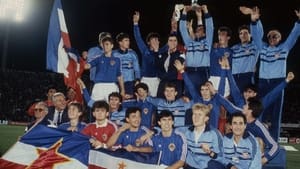
Chileans
The story of the Yugoslavian football team who became youth world champions in Chile, 1987.
2017
Toward a Common Tenderness
Moments in the life of a young Japanese filmmaker in Bosnia, charged with acoustic and visual poetry. Buoyant and essayistic entries in a process of self- and world-reassurance.
2017
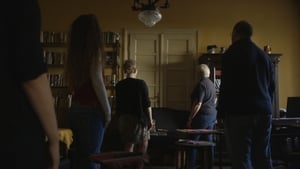
The Other Side of Everything
For Serbian filmmaker Mila Turajlic, a locked door in her mother's apartment in Belgrade provides the gateway to both her remarkable family history and her country's tumultuous political inheritance.
2017
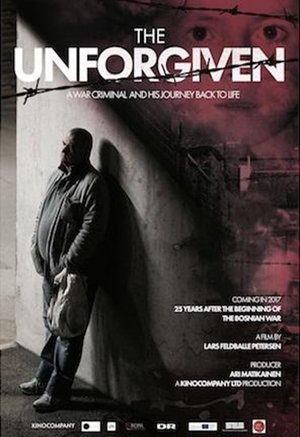
The Unforgiven
Is it possible for a war criminal to find forgiveness and to reconcile with the past? How do you find your way back to what is known as a normal life when you have been convicted of one of the worst crimes of all – a crime against humanity? Esad Landzo has looked for answers for many years, but in vain. He decides to make one last attempt. The Balkan War criminal travels back to Bosnia to meet his former camp-guard friend, his victims and his family. Will he ever be forgiven? Should he?
2017
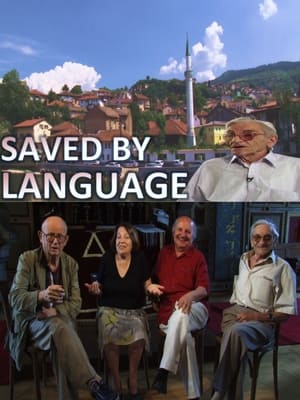
Saved by Language
Can a language save your life? Yes it can, even an ancient one from the 15th century. Saved by Language tells the story of Moris Albahari, a Sephardic Jew from Sarajevo (born 1930), who spoke Ladino/Judeo-Spanish, his mother tongue, to survive the Holocaust. Moris used Ladino to communicate with an Italian Colonel who helped him escape to a Partizan refuge after he ran away from the train taking Yugoslavian Jews to Nazi death camps. By speaking in Ladino to a Spanish-speaking US pilot in 1944 he was able to survive and lead the pilot, along with his American and British colleagues, to a safe Partizan airport.
2015
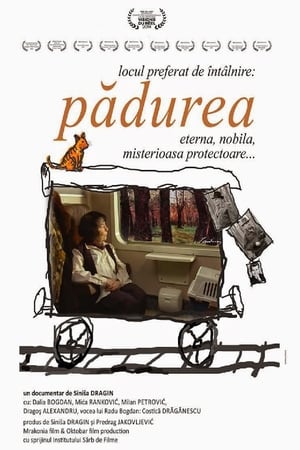
The Forest
In 1947, Yugoslav President Josip Broz Tito visited, for the first time, Romania. Its communist regime gave him, as present, a painting from a great Romanian artist Ion Andeescu: 'The Leafless Forest'. In the 60s, a young art critic, Radu Bogdan, decided to elaborate a monograph dedicated to the great painter, including reproduction of the painting given to Tito. After countless problems, he obtained the permission to photograph the painting. The moment they took the painting off the wall, they found - a microphone. Somebody was spying on Tito...
2014
Omarska: Memorial in Exile
Living Death Camps describes the condition of two former concentration camps located in the territory of ex-Yugoslavia: the World War II-era camp of Staro Sajmište, and the camp of Omarska, dating from the Yugoslav war. Both are presently inhabited and used for other purposes. Living Death Camps names a collaborative project that seeks to investigate the complex material and political issues currently unfolding around these two sites, and to understand the politics of commemoration in which each of them is embroiled.
2013
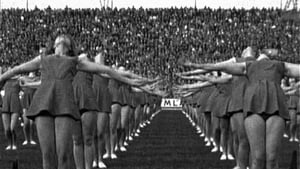
Yugoslavia: How Ideology Moved Our Collective Body
A research-based essay film, but also a very personal perspective on the history of socialist Yugoslavia, its dramatic end, and its recent transformation into a few democratic nation states.
2013

The Weight of Chains
The Weight of Chains is a Canadian documentary film that takes a critical look at the role that the US, NATO and the EU played in the tragic breakup of a once peaceful and prosperous European state - Yugoslavia. The film, bursting with rare stock footage never before seen by Western audiences, is a creative first-hand look at why the West intervened in the Yugoslav conflict, with an impressive roster of interviews with academics, diplomats, media personalities and ordinary citizens of the former Yugoslav republics. This film also presents positive stories from the Yugoslav wars - people helping each other regardless of their ethnic background, stories of bravery and self-sacrifice.
2010
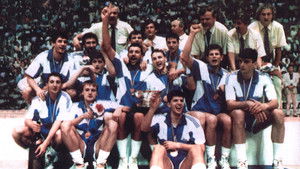
Once Brothers
Drazen Petrovic and Vlade Divac were two friends who grew up together sharing the common bond of basketball. Together, they lifted the Yugoslavian National team to unimaginable heights. After conquering Europe, they both went to USA where they became the first two foreign players to attain NBA stardom. But with the fall of the Soviet Union on Christmas Day 1991, Yugoslavia split up. A war broke out between Petrovic's Croatia and Divac's Serbia. Long buried ethnic tensions surfaced. And these two men, once brothers, were now on opposite sides of a deadly civil war. As Petrovic and Divac continued to face each other on the basketball courts of the NBA, no words passed between the two. Then, on the fateful night of June 7, 1993, Drazen Petrovic was killed in an auto accident. This film will tell the gripping tale of these men, how circumstances beyond their control tore them apart, and whether Divac has ever come to terms with the death of a friend before they had a chance to reconcile.
2010
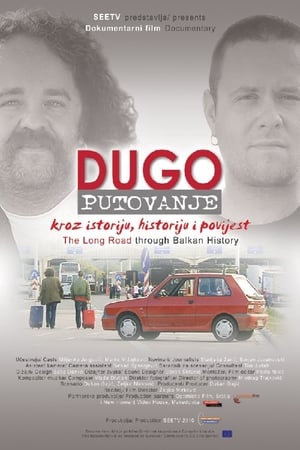
The Long Road Through Balkan History
Bosnian Croat writer Miljenko Jergović and Serbian writer Marko Vidojković replace one another by the steering wheel of Yugo, a symbol of their common past while driving on the Brotherhood and Unity Highway that stretched across five of six republics of Yugoslavia.
2009
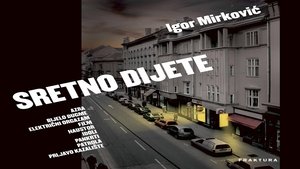
The Happy Child
The Happy Child is a story of "New Wave" rock genre predominant in the ex-Yugoslavia during the socialist 70's and 80's.
2003
War Photographer
Documentary about war photographer James Nachtwey, considered by many the greatest war photographer ever.
2001
Mladí muži poznávají svět
The docu-drama takes place during the war in the former Yugoslavia. A young journalist arrives in destroyed Sarajevo and finds out how people live in the middle of war. He encounters everyday problems that an individual, especially young people, has to deal with.
1996
Suzana from the Cellar
A cellar-dwelling woman talks about her life to a camera during the devastating war in Bosnia.
1995
Bosnia!
The carnage in Sarajevo provides the focus of this French documentary which seeks to call attention to the terrible conflict in the hopes of finally ending it. The film is divided into five parts. Each part covers a time frame ranging from April 4, 1992, the beginning of the war, to the present. The major issues that occur are three-fold. It depicts the systematic genocide of Bosnians, the silence of Western countries, and the determination of the Bosnians to resist. They refuse to be seen as victims, even though the filmmakers portray them so. Also included are the origins and political aspects of the war. It offers interviews with participants. It also reveals how the U.S. State Department censored reports about Serbian death camps.
1994
Serbian Epics
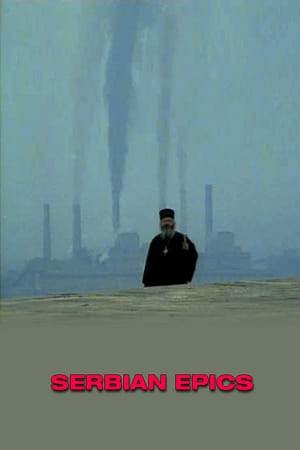
Paul Pawlikowski's award-winning documentary on life behind Serbian lines in Bosnia. The film observes the roots of the extreme nationalism which has torn apart a country and provides a chilling examination of the dangerous power of ancient nationalist myths.
1992
In the Valley of Neretva
It shows the Neretva river from its source to the shores of the Adriatic Sea. The document also captures the original four-hundred-year-old bridge in Mostar.
1959