Watch Safari (1939) Online Free
Between 1933 and 1935, the painter Wilhelm Eggert and his wife Dora Kuster traveled the African continent. Their expedition took them from Mediterranean Algiers through the Sahara and parts of the African west coast to the Congo and Kenya. Not only did the couple explore vast stretches of land that were almost completely unknown, at least to private travelers at the time, they also captured this journey on film. A screenable documentary film was compiled from the original 12,000m of film material. In cinemas and film clubs, European audiences were presented with a film that was evidently able to satisfy an interest in foreign, 'wild' cultures and exotic landscapes, albeit one that was always Eurocentric. The spectacular shots of African lifestyles and nature, which in many respects were new to European viewers who were almost completely unfamiliar with Africa, were praised and appreciated precisely because of their supposed authenticity.
Cast
Erwin Hartung
More Like This
Amílcar
Poet, agricultural engineer and revolutionary Amílcar Cabral was born in Guinea-Bissau to Cape Verdean parents. After studying in Portugal, he emerged as the charismatic leader of the anti-colonial struggle against Portuguese rule. With his utopian ideas, he sparked a cultural and an armed uprising that went on to inspire other African liberation movements.
2025
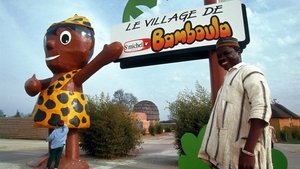
Le Village De Bamboula
"Bamboula": this word was chosen in the 1980s for a chocolate cookie well known to children at the time. In 1994, he sponsored an Ivorian village set up in the Port-Saint-Père zoological park south of Nantes, where children and adults lived in a zoo to offer their folklore as a show to visitors. This documentary film, narrated by Jean-Pascal Zadi, gives a voice to those who lived in this African safari and to those who fought for their dignity
2022
Route 4
2021
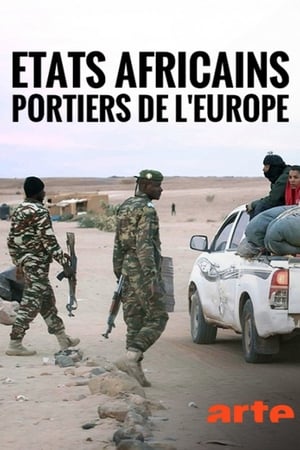
Europe's Doormen
The EU is investing billions to establish African states as its new border guards. It also supports dictatorships that close their borders in return.
2018
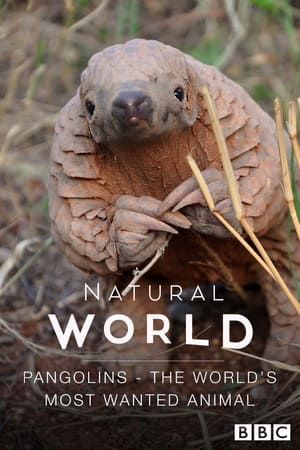
Pangolins: The World's Most Wanted Animal
In Namibia, conservationist Maria Diekmann found herself on the frontline of the battle to save these wanted animals after unexpectedly becoming a surrogate mother to an orphaned baby pangolin named Honey Bun. On an emotional journey, Diekmann travels to Asia to better understand the global issues facing pangolins, before joining forces with a Chinese megastar to help build a campaign to bring awareness to the plight of these surprisingly charming creatures.
2018

Black President
Exiled, yet internationally celebrated Zimbabwean artist Kudzanai Chiurai's demons come to life as he tries to flee South Africa following increasingly fractious experiences on the Johannesburg art scene. His greatest demon “Black Guilt” is one he can never shake off, this burden of having to speak for his people. But Is this responsibility really a burden at all, or is it actually a superpower? Either way, will Kudzi ever be President of His Own State of Being?
2015
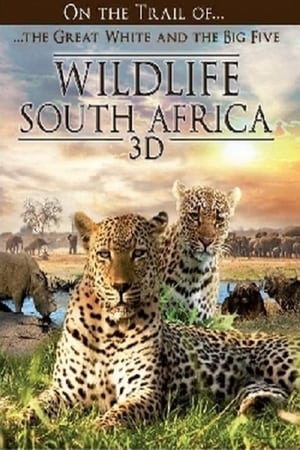
Wildlife South Africa 3D
In this three part documentary we look at all topics South Africa has to offer. THE BIG FIVE focuses on the kings of animals, lion, rhinoceros, elephant, leopard and the African buffalo. Armed with 3D cameras, we visited the Kings of the savannah and the jungle, where we sensed the fascination that emanates from the largest animals in the wild. In SAFARI we look behind the scenes of a park and found out what it means to pursue eco-tourism and just what the opportunities and the risks are. Finally, we discover the WEST CAPE region and its unique flora and fauna, swim with whales and sea lions, follow penguins and – as a highlight – we meet the white sharks. Join us on a spectacular 3D journey.
2012
Der inszenierte Hunger
2011
You All Are Captains
A European director is making a film with children from a social center in Tangiers. Because of his methods, his relationship with the children during shooting degenerates and transforms the evolution of the project.
2010
The Myth of the Fifth Island
This documentary explores the emigration myth. The main character’s curiosity takes him to London, a cosmopolitan city where one must fight to survive, before he joins other communities with different horizons. Why do people from so many nationalities end up on that piece of land? Were they looking for something better? A fifth island?
2007

Thomas Sankara: The Upright Man
Thomas Sankara, former president of Burkina Faso, was known as "the African Che", and became famous in Africa due to his innovative ideas, his devastating humor, his spirit and his altruism. More than a classic biography, this film sheds light on the impact that this man and his politic made on Burkina Faso and Africa in general.
2006

Gorillas Revisited with Sir David Attenborough
David Attenborough recounts his very personal experiences with the mountain gorillas of Rwanda. Ever since they were discovered over a century ago, these remarkable creatures have been threatened by loss of habitat, poaching, disease and political instability. But despite all odds their numbers have increased. David tells the extraordinary tale of how conservationists like Dian Fossey have battled to save the mountain gorilla from the brink of extinction.
2006
Africa Unbottled
Hosted by Val Kilmer, the documentary follows playwright Nicholas Ellenbogen as he travels to remote communities in six different African countries. In each community, the residents have taken an holistic and somewhat controversial approach to managed wildlife care.
1998

Séo!
The film shows Catherine Destivelle's trip to Dogon Country, in Mali, where she will make spectacular free solo rock climbing ascents in the sun-warmed cliffs of Bandiagara. Destivelle is accompanied on this trip by a friend climber, Lucien Abbet. A film by Pierre-Antoine Hiroz produced in 1987 by Paradoxe and also featuring Tidjani Koné, Ibrahim Dolo, and the Dogon inhabitants of the Bandiagara Escarpment. The film won the Genziana D'argento for best free climbing film at the Trento Film Festival in 1987.
1987
Gorilla
This fascinating film tells the story of one man's struggle to protect a small population of gorillas on the slopes of Mount Kahuzi in Zaire and of his incredible relationship with Kasimir, the great silver-backed male, and his family.
1974
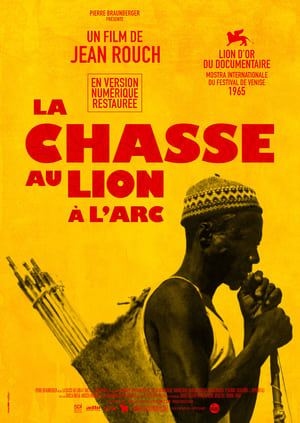
The Lion Hunters
Etnographic documentary about lion hunting in Africa.
1966

Zanzabuku
Famed explorer Lewis Cotlow leads a hunting and archaeological expedition into Africa.
1956
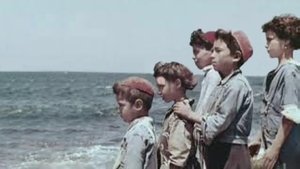
Les Anneaux d'Or
At the time of Tunisian independence, owners of large boats decide to sell, while many small fishermen soon find themselves without work. Their wives then decide to pool their gold rings to sell them and thus buy boats.
1956
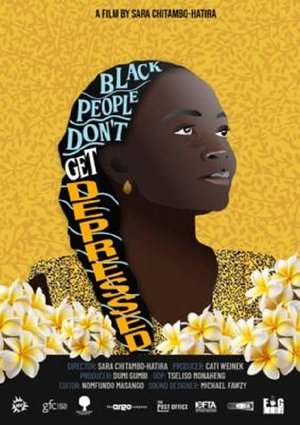
Black People Don't Get Depressed
A poetic exploration of mental health issues among creatives in communities on the African continent and in the diaspora, exploring myths, stigma and solutions through the personal stories of the characters.
Lion Hunting
Two hunters set out on safari with their African guide. They observe zebras, an ostrich, and a hippopotamus, capture a monkey, and camp for the night. After a lion kills their goat and horse, they shoot it by the water’s edge and later kill a second. The animals are skinned, and the hunters relax with cigarettes beside their trophies. (Note: Produced by Nordisk Film in 1907, Løvejagten gained notoriety because founder Ole Olsen purchased lions from Copenhagen Zoo, released them on an island, and filmed their killing. Supplemented with zoo footage to simulate Africa, the film caused public outrage yet drew huge audiences, establishing Nordisk’s reputation worldwide.)
1908