Watch The Lion Hunters (1966) Online Free
Etnographic documentary about lion hunting in Africa.
Cast
Tahirou Koro, Issiaka Moussa, Belébia Moussa, Wangari Moussa, Yaya Koro, Osseini Dembo
More Like This
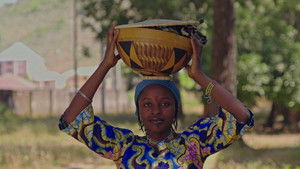
The Sahel Cuisine: Fura Da Nono
A documentary film about the art and process of making Fura Da Nono - a type of food that is originated from West Africa's Sahel region, one of the many unique traditions of the Fulani people which has been preserved for centuries.
2024
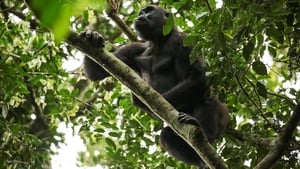
Gorillas of Gabon
A race is on to save Gabon’s Moukalaba-Doudou National Park and the silverback gorillas that call it home. Once, this area was protected by a thriving oil industry, but now, big companies are moving out and the logging industry is poised to move in. Ecotourism could be the only way to prevent the trees of this rainforest from coming down, but a team of conservationists needs to make the gorillas of Gabon tolerant of humans first. Follow them as they get up-close with the gorillas, study their moves, and journey to war-torn Central African Republic to learn the secrets of successful gorilla habituation.
2019
Disparitions autour du Kanga Pan
2019
Beard Chef
A look at the life of a man and his hat and his beard.
2016
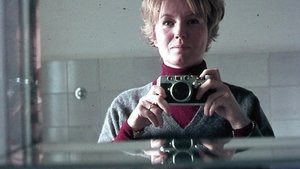
Io sono nata viaggiando
A journey back through Dacia Maraini's and her trips around the world with her close friends cinema director Pier Paolo Pasolini and opera singer Maria Callas. An in-depth story of this fascinating woman's life. Maraini's memories come alive through personal photographs taken on the road as well as her own Super 8 films shot almost thirty years ago.
2013

The Last Lions
In Botswana's Okavango Delta, an ostracized lioness and her two cubs must fight alone to survive - overcoming all manner of hazards. Their only defense is to escape to Duba Island -- and with that, an unknown future. The setting for this epic tale is one of the last regions where lions can live in the wild. Faced with dwindling land and increasing pressure from hunting, lions - like our lone lioness and her cubs - are approaching the brink of extinction.
2011
Les États-Unis d'Afrique
2011
The Island of the Spirits
A small island, a great history. Long before giving its name to the country, the Mozambique island had a fundamental role in the Indian Ocean during centuries. Anchor point for caravels, meeting point for pirates, it is a melting pot of races. It raises its walls in the middle of the sea. Its winding streets full of life reveal small palaces, churches and white houses. Its inhabitants are eccentric characters, proud of the island's past history. As we wander through the streets we meet an historian, a maritime archaeologist, a fisherman, the "doorman" of the island, a dancer, many spirits...
2010
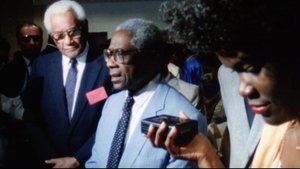
Papa Césaire
Shortly after his death in 2008, Maldoror made this film about her longtime friend and collaborator, the Négritude poet Aimé Césaire. In this film, she retraces the steps of Césaire’s travels across the globe — particularly back to his hometown in Martinique, where Maldoror interviews his relatives about his life — and her working relationship with Césaire, including fragments of her previous films about him, Un homme, une terre (1976) and Le masque des mots (1987).
2009
Saving Africa's Witch Children
This shocking documentary reveals the plight of young Nigerians branded as witches.
2008

Der lange Weg ans Licht
Edeltraut Hertel - a midwife caught between two worlds. She has been working as a midwife in a small village near Chemnitz for almost 20 years, supporting expectant mothers before, during and after the birth of their offspring. However, working as a midwife brings with it social problems such as a decline in birth rates and migration from the provinces. Competition for babies between birthing centers has become fierce, particularly in financial terms. Obstetrics in Tanzania, Africa, Edeltraud's second place of work, is completely different. Here, the midwife not only delivers babies, she also trains successors, carries out educational and development work and struggles with the country's cultural and social problems.
2008
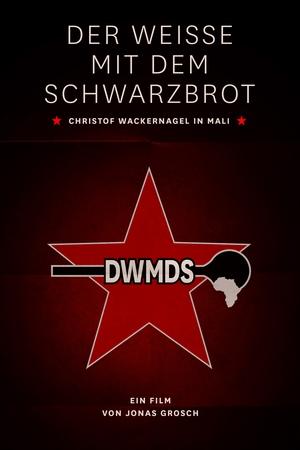
White Man with Black Bread
Christof Wackernagel, best known in Germany as an actor and former member of the Red Army Faction ("RAF") lives in Mali. In his compelling portrait, Jonas Grosch shows a man who simply cannot stand still if he senses injustice. The courage to stand up for one’s beliefs coupled with vanity? However one chooses to look at it, it is easy to imagine what made him connect with the "RAF". With his irrepressible will for freedom, Christof Wackernagel gets entangled in the horrors of day-to-day life in Africa.
2007
Si-Gueriki, Queen Mother
Si-Gueriki is the story of the confrontation of a young man with his history, his roots and culture.
2002

Living With Lions
Exclusive two-disc film documenting the British and Irish Lions tour to South Africa in the summer of 1997. The unprecedented behind-the-scenes access to the team shows the preparations, the training, the fun, the team selection, the 'earthy' language, the bonding, the awesome task of playing and some shocking footage of injuries. Despite securing the series with wins in the first two tests, the Lions remained motivated by the prospect of a 3-0 whitewash, a feat never achieved against the Springboks throughout the century.
1999
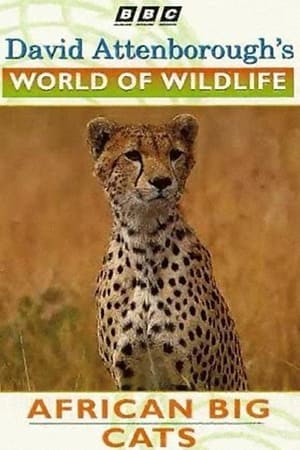
World of Wildlife: African Big Cats
Sir David Attenborough presents and narrates this wildlife series, a visual encyclopedia of the natural world. This episode looks at the fast, sleek and elegant cheetahs - supreme athletes and hunters of the animal world. Also the leopard, another deadly hunter, is observed in its natural habitat.
1995
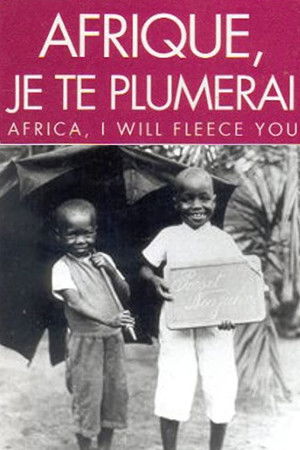
Africa, I Will Fleece You
This documentary of repressive political realities in Cameroon begins with the 1990 publication of an open letter to President Biya calling for a national conference - and the immediate arrest of the letter's author and publisher. The narration then examines the nation's colonial history, beginning with the first German missionary in 1901, the establishment of schools, French occupation following World War I, the paucity of books written by and published by Cameroonians, and the repression of the CPU, a leftist organization of the 1950s and 1960s. Cameroon and its people are the lark, its feathers plucked first by colonialism and then by native strongmen: 'Alouette, je te plumerai.'
1993
Ôrí
A look at the Brazilian black movement between 1977 and 1988, going by the relationship between Brazil and Africa.
1989
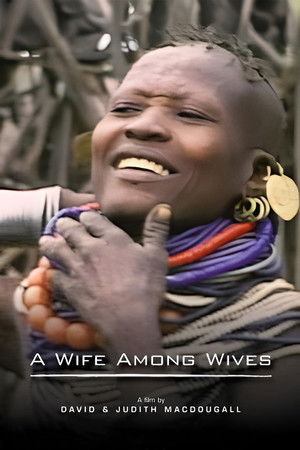
A Wife Among Wives
David and Judith MacDougall are exploring the marriage rituals and roles of Turkana women in this ethnographic documentary. The film's biggest part is taken up by talks between the Turkana people. As one of the first ethnographic documentaries "A Wife Among Wives" subtitles these talks so that the viewer can get a better and probably more personal understanding of the life of the Turkana.
1981
The Pan-african Festival in Algiers
Festival panafricain d'Alger is a documentary by William Klein of the music and dance festival held 40 years ago in the streets and in venues all across Algiers. Klein follows the preparations, the rehearsals, the concerts… He blends images of interviews made to writers and advocates of the freedom movements with stock images, thus allowing him to touch on such matters as colonialism, neocolonialism, colonial exploitation, the struggles and battles of the revolutionary movements for Independence.
1969
Dawn of the Damned
This excellent feature-length documentary - the story of the imperialist colonization of Africa - is a film about death. Its most shocking sequences derive from the captured French film archives in Algeria containing - unbelievably - masses of French-shot documentary footage of their tortures, massacres and executions of Algerians. The real death of children, passers-by, resistance fighters, one after the other, becomes unbearable. Rather than be blatant propaganda, the film convinces entirely by its visual evidence, constituting an object lesson for revolutionary cinema.
1965