Watch Running for the Mountains (2024) Online Free
RUNNING FOR THE MOUNTAINS digs into West Virginia's history of 'patriotic sacrifice,' unearthing veins of dark money and dirty politics. The film tracks grassroots candidates and ordinary citizens' attempts to save their land, water, homes, and communities - calling out the pro-extraction politicians enabling destruction, including Senator Joe Manchin and his likely replacement, coal baron Governor Jim Justice. Appalachia is the proverbial canary in a coal mine; pay attention or pay the price.
Cast
Charlotte Pritt
More Like This
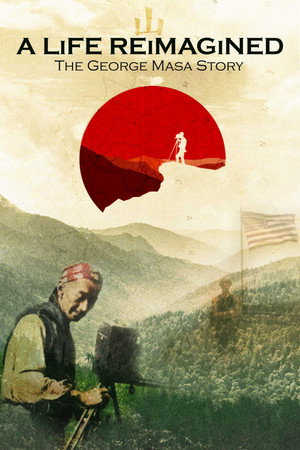
A Life Reimagined: The George Masa Story
In 1915 a young, charismatic Japanese man with a mysterious past entered into the Appalachian culture of Asheville, North Carolina, is suspicioned a spy, targeted by the Klan, but perseveres with a passion for photography and the mountains he adopts, bringing to life Great Smoky Mountains National Park & the Appalachian Trail.
2026

King Coal
The cultural roots of coal continue to permeate the rituals of daily life in Appalachia even as its economic power wanes. The journey of a coal miner’s daughter exploring the region’s dreams and myths, untangling the pain and beauty, as her community sits on the brink of massive change.
2023

Picture Proof
Examines the intergenerational impact of addiction by chronicling the love, labor, loss, and uncertainty of one woman’s struggle to live a life of sobriety. Weaving together moments of glee, fulfillment, acceptance, sorrow, and disappointment, this documentary takes an intimate look at the bonds that hold one family together and a disease that threatens to tear them apart.
2023
Mountain Monsters: A Tribute to Trapper
The Appalachian Investigators of Mysterious Sightings (A.I.M.S.) team comes together to reminisce and celebrate the life of their founder, John "Trapper" Tice, in this Mountain Monsters special.
2021
Scenes from the Blackjewel Miners Blockade
In July of 2019 the Blackjewel coal company announced it was declaring bankruptcy. Miners were told to stop working mid shift, and their last paychecks bounced. The miners retaliated by blocking a train full of coal, camping out on the coal tracks for weeks. Queer regional organizers made their way to the encampment to support the miners. The encampment became a place for community gathering and mutual aid distribution. Sarah Moyer, a film maker living in Kentucky, also made their way to the encampment and filmed this short documentary on the blockade. (Summary from Queer Appalachia)
2020

Hillbilly
A documentary that examines the cultural stereotype of the people of Appalachia and how that has affected America's relationship with its rural communities.
2018
The Mothman of Point Pleasant
Learn the terrifying, true story about thirteen months that changed history! In November of 1966 a car full of kids encountered a creature unlike anything they'd ever seen before. In the weeks and months to follow, the monster – now known as The Mothman – was sighted again and again on country roads and around the state of West Virginia.
2017
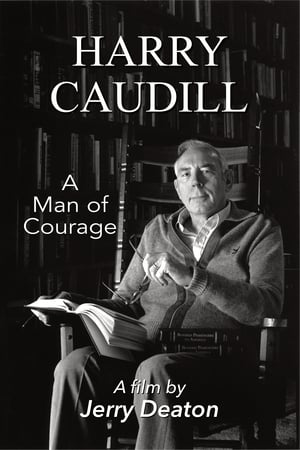
Harry Caudill: A Man of Courage
One of the most important Kentuckians of the 20th century, Harry Caudill brought the story of Appalachia to national attention when his book “Night Comes to the Cumberlands” was released in 1963. The nonfiction account of Eastern Kentucky’s coal region, part history and part polemic, eloquently recounted the exploitation of Appalachia’s land and its people by business and government interests, and made Caudill a national spokesperson for his homeland. Harry Caudill spent his life advocating for Eastern Kentucky, with the aim of helping the powerless as well as securing the region’s unmatched natural resources for future generations. His work led to lasting government reforms for Appalachia, and his legacy remains a touchstone for activists today.
2015

Rand University
Randy Moss has long been an enigma known for his brilliance on the football field and his problems off it. Sometimes there's even been an intersection of those two qualities. "Rand University" gets to that crossing by going back to where he came from - Rand, West Virginia - and exploring what almost derailed him before he ever became nationally known for his extraordinary abilities as a wide receiver.
2014
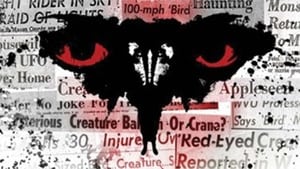
Eyes of the Mothman
In 1966 West Virginia, four friends encounter a tall, winged creature in the woods surrounding an abandoned dynamite factory.
2011
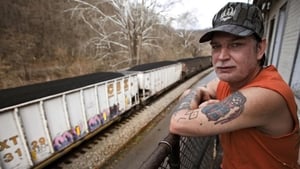
The Wild and Wonderful Whites of West Virginia
Produced by Johnny Knoxville and Jeff Tremaine for MTV and Dickhouse Productions, The Wild and Wonderful Whites of West Virginia is a documentary about the renowned West Virginia outlaw Jesco White and his eccentric backwoods family. In addition to getting in trouble with the law, the Whites, who live deep within Appalachia, uphold a time-honored dancing style, even as they contend with poverty, drugs and other issues. Alternately humorous and sad, the movie is an unflinching look at life on the criminal margins of rural mountain culture.
2009
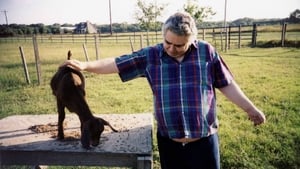
The Devil and Daniel Johnston
This 2005 documentary film chronicles the life of Daniel Johnston, a manic-depressive genius singer/songwriter/artist, from childhood up to the present, with an emphasis on his mental illness and how it manifested itself in demonic self-obsession.
2006
The Appalachians
Follows the 300 year history of the Appalachian people with interviews by scholars, musicians and writers.
2005
Stranger with a Camera
In 1967 Canadian filmmaker Hugh O'Connor came with a crew to eastern Kentucky to make a film showing people from all walks of life in the United States. They finished the day by filming coal miners and their families in rental houses. As the filmmakers were leaving, Hobart Ison, the owner of the property, drove up and fired three shots, killing Hugh O'Connor. Elizabeth Barrett, from Kentucky herself, explores why this happened by trying to understand the people and culture of eastern Kentucky.
2000
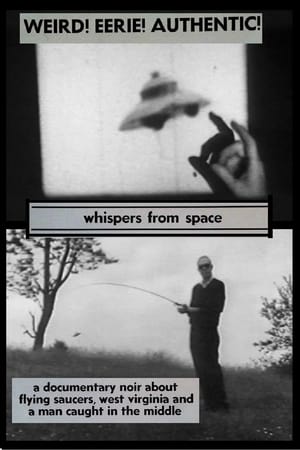
Whispers From Space
A documentary noir about flying saucers, West Virginia and a man caught in the middle.
1995
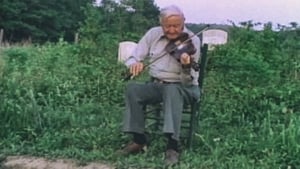
Sprout Wings and Fly
Set in the North Carolina Appalachians, Sprout Wings and Fly honors the fiddle playing of 82-year-old Tommy Jarrell of Toast, NC. Tommy was quirky, gregarious and generous, and this film shows him at his best, in fine fiddling form.
1983

A Ribbon In The Sky
A documentary covering the planning, construction, and legacy of the Blue Ridge Parkway.
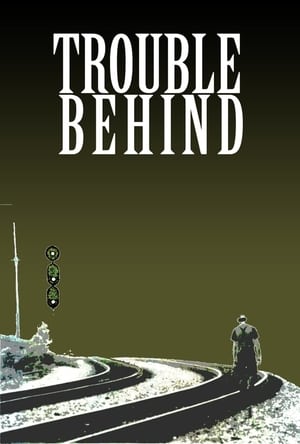
Trouble Behind
During World War I, African-Americans worked on the railroad near Corbin, Kentucky. When whites returned from the war, there was conflict. Whites sought their former jobs and positions in the community. In 1919, a race riot occurred. Whites put the African-Americans on railroad cars and ran them out of town. In Trouble Behind, members of the Corbin community speak out on the issue. The filmmakers also interview former members of the Corbin, which at the time of filming had only one black family. Some Corbin residents express confusion as to why African-Americans don't move back. Others openly use racial epithets. Some young adults seem troubled by the racism, past and present. Others don't.
1991
The End of an Old Song
John Cohen, founding member of the ‘50s folk troupe the New Lost City Ramblers, started making films in order to bring together the two disciplines he was heavily active in: music and photography. The End of an Old Song brings us to North Carolina, and demonstrates the power of old English ballads sung with gusto while soused in a saloon.
1969
The Children Must Learn
Documentary profiling an Appalachian farming family struggling to scrape out a living. Linking education and economic development, The Children Must Learn suggests that better schooling, especially in agricultural techniques, would bring improvement.
1940