Watch Road Not Taken (2016) Online Free
After the failed Umbrella Revolution in 2014, lives go back to normal, but the scenes of the great protest are like yesterday for Billy and Popsy, students in the University of Hong Kong who took part in the movement. One of them now becomes a student leader, while the other chooses a low-profile life as a private tutor. Amid the rapid social changes, when the Communist Beijing government is extending their influence to Hong Kong to take away the freedom and democracy, how would the youths see their future? Do they still see hopes, when both peaceful protests and radical actions seem to be futile?
Cast
Billy Fung, Popsy Hui
More Like This
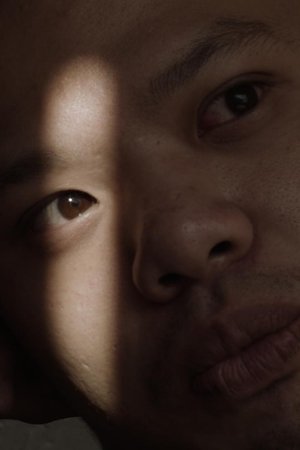
Heart Murmurs
Heart Murmurs is a poetic dialogue between the filmmaker and Dean, a young man living in Hong Kong. In reflecting on his experience living with a congenital disability and HIV during the first years of the COVID pandemic, Dean expresses his sense of self in the face of regular medical challenges.
2023
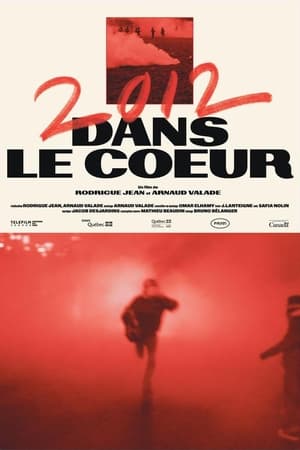
2012/Through the heart
What remains of the 2012 Quebec student protests? Little has changed in the decade that ensued. Rodrigue Jean and Arnaud Valade exhume images of the battles, recorded live and relayed through the mass media, that flared up as anger and indignation went head-to-head with the rhetoric of power. Against these divisive images, the filmmakers overlay a historical perspective of the state and its police in Montreal, Quebec and Canada, delving into the roots of sanctioned violence. Their compelling glance at the past is, of course, a cry that continues to echo in the present day. While the voices have been silenced, revolt still brews. All it takes is a spark...
2023
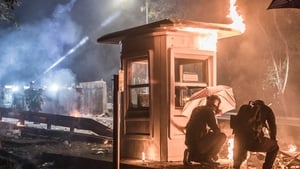
If We Burn
Hundreds of thousands − perhaps even millions − of protestors have taken to the streets of Hong Kong since early June. Sparked initially by the government's plans for a controversial extradition bill, the movement has now transformed into a broader push for greater freedoms and democracy, with anger over police brutality fuelling a cycle of violence. The protests are Hong Kong's biggest challenge to Beijing since its return to China in 1997. If We Burn looks at the movement through the eyes of Hong Kongers whose fates, like their city's future, now hang in the balance.
2023

Reunion
By asking the same question across generations of Southern Chinese in the UK, this film documents a vignette of two recent Hong Kong immigrants and reflects their own socio-political conditions through their conversation.
2022
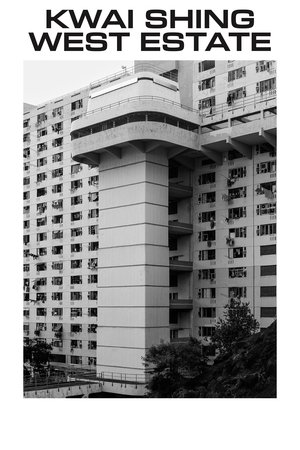
Kwai Shing West Estate
A homage to the social housing architecture that is so atypical of Hong Kong - especially the Kwai Shing West Estate. About half of the population lives in such building complexes, where one experiences a strong sense of loneliness. The neighborhoods are the scene of modern living conditions, but also of social protests, which have been punishable by life imprisonment in Hong Kong since 2020 due to a new law.
2021
We Have Boots
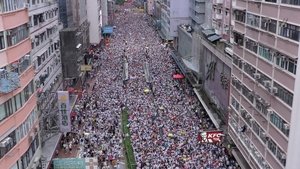
The Umbrella Movement of 2014, also known as the Occupy Movement, paved the way for Hong Kong’s current upheavals, but unfolded in significantly different ways. This creative documentary focuses on the intellectual, political, and discursive underpinnings of the social and political actions of 2014, before fast-forwarding to 2019. A range of thoughtful and engaged intellectuals, students, scholars, activists, and artists including Benny Tai, Chan Kin-man, Ray Wong, and Agnes Chow (many of whom are facing imprisonment for their democratic activism) articulate a range of philosophies, viewpoints and emotions, set against Hong Kong’s spectacular urban background of skyscrapers, night lights, and street-occupying mass movements.
2020
Notes before the Wind
A loose collection of scenes in Hong Kong shot over a five-year period, this film begins with the Umbrella Movement in 2014 and ends right before the summer of 2019, when large-scale social unrest and violent resistance erupted. The everyday scenes capture the ambience and the landscape of change in the city, standing as a quiet prelude to the ensuing conflicts.
2020
Like an abortion, for the very first time
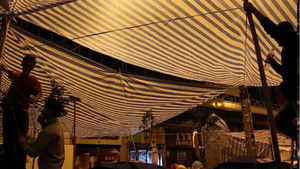
The Umbrella Movement was a wave of street protests that took place in Hong Kong from September to December 2014 as a reaction to oppressive practices of the Chinese government against the citizens of Hong Kong dissatisfied with planned changes in the electoral system. In her feature film debut, To Liu captured the citizens of the western part of Kowloon, Mong Kok, whose protests might not have been as visible as those of the leading activists, but were no less important. The documentary rhythmized by opening entries and darkening of the scene, much like the director’s first film, follows two characters, a master and an apprentice.
2018
YP1967
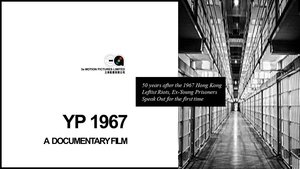
Everyone has their secrets. Everyone has the past no one’s heard about. But what makes an entire generation sit in stunned silence with unmentionable hesitation to talk about their past? Even the past was 50 years ago. Five decades after the Hong Kong leftist riots, six ex-young prisoners speak out for the first time about their personal and unmentionable experience. Documentary film YP1967 is about their love and hate towards their country, their honour and dishonour as a convicted criminal, their condonation and condemnation of the parties involved, and their truth-seeking and reconciliation with the past.
2017
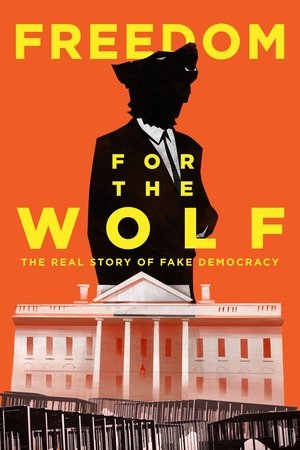
Freedom for the Wolf
The Real Story of Fake Democracy. Filmed over three years in five countries, FREEDOM FOR THE WOLF is an epic investigation into the new regime of illiberal democracy. From the young students of Hong Kong, to a rapper in post-Arab Spring Tunisia and the viral comedians of Bollywood, we discover how people from every corner of the globe are fighting the same struggle. They are fighting against elected leaders who trample on human rights, minorities, and their political opponents.
2017
Pseudo Secular
They are frozen in place, stagnating without any direction. Around them, things change rapidly.
2016
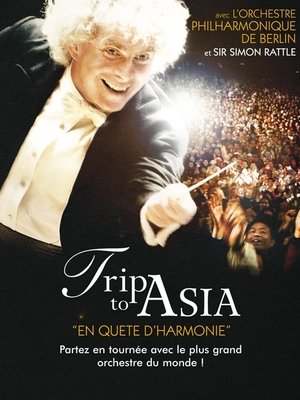
Trip to Asia: The Quest for Harmony
Journey with the musicians of the Berlin Philharmonic and their conductor Sir Simon Rattle on a breakneck concert tour of six metropolises across Asia: Beijing, Seoul, Shanghai, Hong Kong, Taipei and Tokyo. Their artistic triumph onstage belies a dynamic and dramatic life backstage. The orchestra is a closed society that observes its own laws and traditions, and in the words of one of its musicians is, “an island, a democratic microcosm – almost without precedent in the music world - whose social structure and cohesion is not only founded on a common love for music but also informed by competition, compulsion and the pressure to perform to a high pitch of excellence... .” Never before has the Berlin Philharmonic allowed such intimate and exclusive access into its private world.
2008
Made in Hong Kong
Allows glimpses on a Hong Kong shortly before the 1997 handover to China. But rather than focusing on the expected hysteria Luc Schaedler’s documentary debut works towards complexity by allowing six diverse residents to talk about their relationship to the colonial city. Their life stories beautifully mix with the images of the author. Made in Hong Kong is a very personal portrait of a city in transition and we learn about Hong Kong’s ambiguities and its political and social problems, as well as the uncertainties regarding the time after 1997.
1997
La parte bassa
Divided into three parts (two documentary and one fictional), the film explores the early stages of the 1977 movement, between demonstrations and heated assemblies at the Circoli del Proletariato Giovanile of the State University of Milan. The daily difficulties and the search for redemption are told without rhetoric, but with a raw reflection on social marginalization.
1978
Krawall
A Swiss political documentary about the Zurich youth unrest of 1968
1970
Follow Me
Documentary about two boys and a girl who travel to surfing spots around the world.
1969
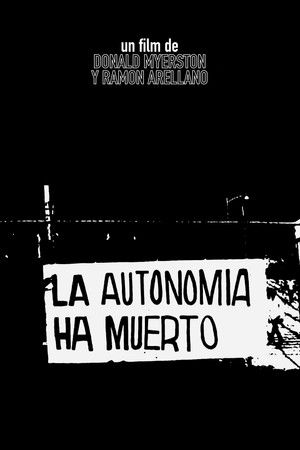
La autonomía ha muerto
In 1969, the Renovación Universitaria movement and the subsequent raid on the Central University of Venezuela by the government of Rafael Caldera, triggered a strong wave of protest in the Institutes of Higher Education in Venezuela. This documentary collects part of the events that took place in the city of Mérida, Mérida State, where the University of the Andes is located.
1969
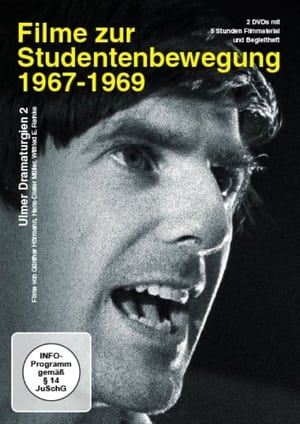
Ruhestörung
The film chronicles the beginning of the student protest following the death of student Benno Ohnesorg in Berlin in June of 1967.
1967
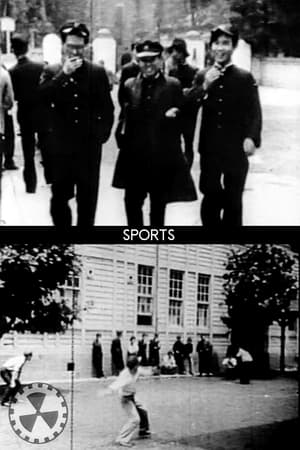
Sports
The film is about a protest provoked when the university decided to restrict access to sports facilities to athletes, cutting out all other students. This is, strictly speaking, not a Prokino film. It was produced by the Waseda University Film Circle, which was organized by Kawazoe Shiro. Feature film directors Yamamoto Satsuo and Taniguchi Senkichi were apparently students at Waseda at the time and participated in the production.
1932
Fishball Revolution
An asylum seeker from Hong Kong builds a new life for himself in Glasgow, using his passion for street food to maintain his cultural identity.