Watch La autonomía ha muerto (1969) Online Free
In 1969, the Renovación Universitaria movement and the subsequent raid on the Central University of Venezuela by the government of Rafael Caldera, triggered a strong wave of protest in the Institutes of Higher Education in Venezuela. This documentary collects part of the events that took place in the city of Mérida, Mérida State, where the University of the Andes is located.
More Like This
La Memoria es un Caracol
Documentary about the life of Luis Mariano Rivera.
2025
2012/Through the heart
What remains of the 2012 Quebec student protests? Little has changed in the decade that ensued. Rodrigue Jean and Arnaud Valade exhume images of the battles, recorded live and relayed through the mass media, that flared up as anger and indignation went head-to-head with the rhetoric of power. Against these divisive images, the filmmakers overlay a historical perspective of the state and its police in Montreal, Quebec and Canada, delving into the roots of sanctioned violence. Their compelling glance at the past is, of course, a cry that continues to echo in the present day. While the voices have been silenced, revolt still brews. All it takes is a spark...
2023
A Night of Knowing Nothing
L, a student in India witness to the government's violent response to university protests, writes letters to her estranged lover while he is away.
2022
Emmanuelle: Queen of French Erotic Cinema
France, 1974. The erotic film Emmanuelle, directed by Just Jaeckin, breaks all records for cinema attendance: the story of the creation of a sensual epic that marked a turning point in the struggle for sexual emancipation.
2021

When a City Rises
Behind the gas masks of Hong Kong’s democracy movement, the often very young activists are just as diverse as the youths of the rest of the world. But they share a demand for democracy and freedom. They have the will and the courage to fight – and they can see that things are going in the wrong direction in the small island city, which officially has autonomy under China but is now tightening its grip and demanding that ‘troublemakers’ be put away or silenced. Amid the violent protests, we meet a 21-year-old student, a teenage couple and a new father.
2021

André Malraux: Writer, Politician, Adventurer
Writer, journalist, explorer, filmmaker, communist militant, freedom fighter. Truths and lies. A plot twist. Politician. General De Gaulle's shadow. Overwhelmed by the weight of power. The numerous exploits of André Malraux (1901-1976).
2019
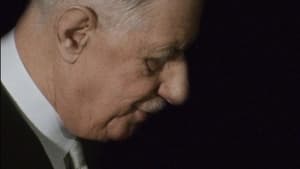
De Gaulle, the Last King of France
Charles de Gaulle, the first president (1958-1969) of the Vth Republic, France’s current system of government, left his mark on the country . He was statesman of action and has been compared to a monarch. This film depicts the general’s personality through the great events of his presidential term, at a time when the world was undergoing considerable changes.
2017
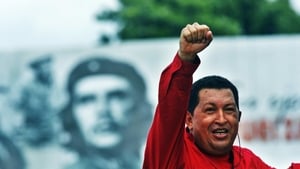
Hugo Chávez: Itinéraire d'un révolutionnaire
2016
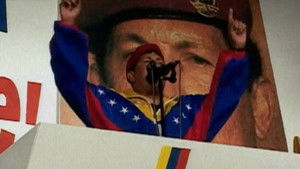
The Revolution Will Not Be Televised
Hugo Chavez was a colourful, unpredictable folk hero who was beloved by his nation’s working class. He was elected president of Venezuela in 1998, and proved to be a tough, quixotic opponent to the power structure that wanted to depose him. When he was forcibly removed from office on 11 April 2002, two independent filmmakers were inside the presidential palace.
2003
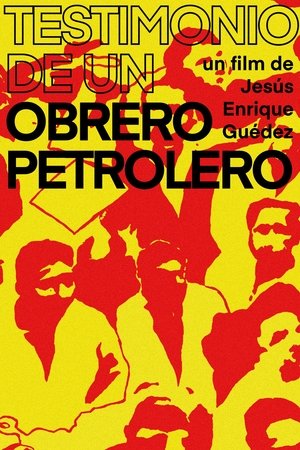
Testimonio de un obrero petrolero
Through the testimony of Manuel Taborda, a pioneer of labor organizing in Venezuela’s oil fields, this documentary revisits the experiences of oil workers between 1920 and 1936. Their memories reveal a world marked by corporal punishment, exploitation, racial segregation, and disease, alongside the emergence of collective resistance against the American and British oil companies that controlled the industry and the government that enabled them.
1978
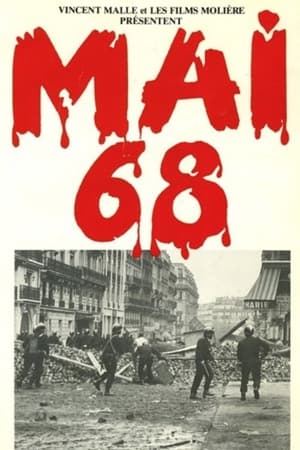
Mai 68
A montage film that begins in May 1, 68 and ends in mid-June. Everything is there: the students of Nanterre in revolt, the demonstrations, the cobbles, the barricades, the rioting nights, the busy Sorbonne, the happening of the Odeon, the factories on strike and Séguy who gets on the bandwagon , the general protest, 10 million French without work, de Gaulle and The reform, yes, the doglit, no, the Gaullist demonstration of May 30, Grenelle, the death of a high school student, the offensive Pompidou and the return in the factories.
1974
The Society of the Spectacle
Guy Debord's analysis of a consumer society.
1974
Brink of Disaster!
A student is held up in the library while a riot rages outside. As SDS protesters head to burn the library down, he has to fend them off with his baseball bat. This film opens with actual footage of civil disturbances in the 1960s, and moves on to images of historical American figures.
1972

Chronicle Of A Group
Produced within the framework of the “Programmi Sperimentali” of Italian public television (structure of the RAI which allowed, in the 1970s, the production of films such as Lutte en Italie by the Dziga Vertov Group, Cancer by Glauber Rocha or Perché pagare per essere felici by Marco Ferreri), Cronaca di un gruppo tells the story of a group of young French revolutionaries who, between Paris and the Pyrenees region, are looking for ways to continue their political activities, through the theater experimental and counter-information, the day after May 68. Produced in collaboration with Gianni Toti, Didier Sandre and the Nanterre experimental theater group.
1970
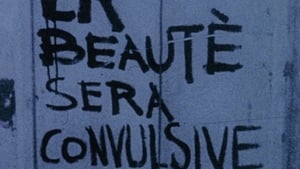
A Film Like Any Other
An analysis of the social upheaval of May 1968, made in the immediate wake of the workers’ and students’ protests. The picture consists of two parts, each with with identical image tracks, and differing narration.
1968
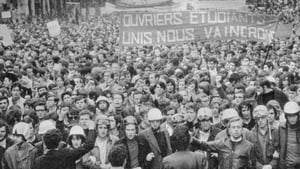
Actua 1
A film considered almost lost even by Garrel, who recently found his negatives. Shot during the events of the May 68, it was made collectively; the film is a merge of Garrel’s and his partners’ points of view, all of them students and filmmakers that participated in the revolt.
1968
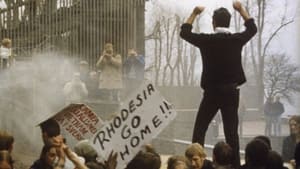
The White Game
Documentary film about the protests against the 1968 Davis Cup tennis match between Sweden and Rhodesia, in Båstad, Sweden. In a series of interviews, demonstrators and members of the Swedish government give their views on sport, politics and civil disobedience.
1968
Ruhestörung
The film chronicles the beginning of the student protest following the death of student Benno Ohnesorg in Berlin in June of 1967.
1967
Ein Fenster in die Welt
Students from nine nations unite on August 7, 1950 at the Franco-German border near Germanshof, tear down the barriers and remove the border posts and barriers, which they burn in a ceremony. This act is a commitment to Europe and a protest against the arbitrariness of borders between nations.
1951
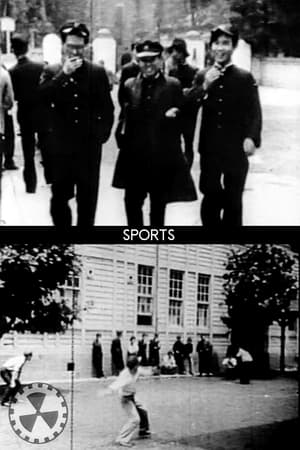
Sports
The film is about a protest provoked when the university decided to restrict access to sports facilities to athletes, cutting out all other students. This is, strictly speaking, not a Prokino film. It was produced by the Waseda University Film Circle, which was organized by Kawazoe Shiro. Feature film directors Yamamoto Satsuo and Taniguchi Senkichi were apparently students at Waseda at the time and participated in the production.
1932