Watch Riding Light (2015) Online Free
In our terrestrial view of things, the speed of light seems incredibly fast. But as soon as you view it against the vast distances of the universe, it's unfortunately very slow. This animation illustrates, in realtime, the journey of a photon of light emitted from the surface of the sun and traveling across a portion of the solar system, from a human perspective. Liberties were taken with certain things like the alignment of planets and asteroids, as well as ignoring the laws of relativity concerning what a photon actually "sees" or how time is experienced at the speed of light, but overall the size and distances of all the objects were kept as accurate as possible. It was also decided to end the animation just past Jupiter to keep the running length below an hour.
More Like This
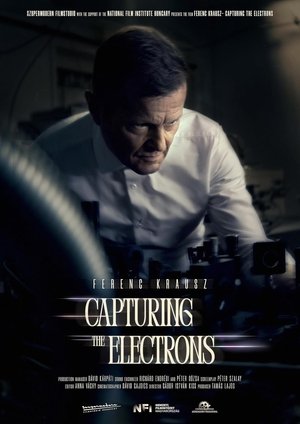
Capturing the Electrons
Capturing the Electrons documents the life and career of Nobel Prize-winning Hungarian physicist Ferenc Krausz. His research team has generated and measured the first attosecond light pulse and used it for capturing electrons' motion inside atoms, marking the birth of attophysics. In 2023, jointly with Pierre Agostini and Anne L'Huillier, he was awarded the Nobel Prize in Physics.
2024
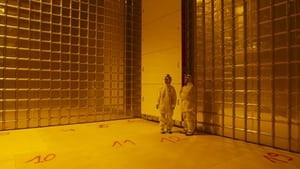
Way Beyond
The Future Circular Collider is the machine of the future. Thanks to it, we will finally be able to go back in time to the origin of our universe. But which way do we go to set up the largest scientific instrument of all time? Between metaphysics and underground tunnels, a story of the preparations or how men are ready to move mountains for more knowledge.
2022
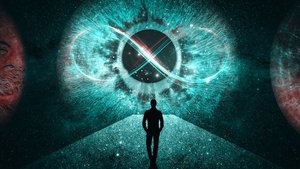
A Trip to Infinity
Does infinity exist? Can we experience the Infinite? In an animated film (created by artists from 10 countries) the world's most cutting-edge scientists and mathematicians go in search of the infinite and its mind-bending implications for the universe. Eminent mathematicians, particle physicists and cosmologists dive into infinity and its mind-bending implications for the universe.
2022
Searching for Planet 9
At the edge of our solar system supposedly lies an immense planet. Five to ten times the size of the Earth. Several international teams of scientists have been competing in a frantic race to detect it, in uncharted territories, far beyond Neptune. The recent discovery of several dwarf planets, with intriguing trajectories, have put astronomers on the trail of this mysterious planet. Why is this enigmatic planet so difficult to detect? What would a ninth planet teach us about our corner of the universe? Could it help us unlock some of the mysteries of our solar system?
2022
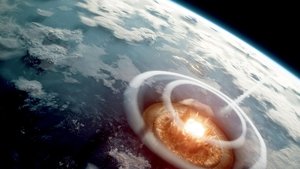
Alerte aux astéroïdes
Faced with the risk of collision with the Earth, space agencies are refining their observations on the course of asteroids in our galaxy. A documented state of the art of the current programs.
2022
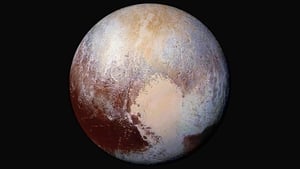
Pluto and Beyond
Since it explored Pluto in 2015, the New Horizons spacecraft has been zooming toward NASA's most distant target yet. Join the mission team as the probe attempts to fly by Ultima Thule, an object 4 billion miles from Earth.
2019

The Hunt for Dark Matter
CERN and the University of California-Santa Barbara are collaborating in the search for the elusive substance that physicists and astronomers believe holds the universe together -- dark matter. Where is this search now in the realm of particle physics and what comes next?
2017

Miniverse
What if you could get behind the wheel and race through space? We scale down the Solar System to the continental United States and place the planets along the way to better appreciate the immense scale of the Universe. See space as never before, with Mars looming over the Freedom Tower and Jupiter towering above the Lincoln Memorial. Join former astronaut Chris Hadfield - a YouTube sensation for his performance of David Bowie’s “Space Oddity” aboard the International Space Station - and his interstellar hitchhikers Michio Kaku and astronomers Derrick Pitts and Laura Danly. It’s a joyride from coast to coast - and from the sun to Pluto.
2017
Cassini's Grand Finale
To help visualize the dramatic final chapter in Cassini's remarkable story, NASA's Jet Propulsion Laboratory produced this short film that features beautiful computer-generated animation, thoughtful narration and a rousing score. Producers at JPL worked with filmmaker Erik Wernquist, known for his 2014 short film "Wanderers," to create a stirring finale video befitting one of NASA's most successful missions of exploration.
2017
Svalbard
Svalbard is a norwegian archipelago in the Arctic Ocean where the world's northernmost city is situated. It is a place where the underground, terrestrial and spatial universes blend into each other starting from a coal mine up to Venus.
2016
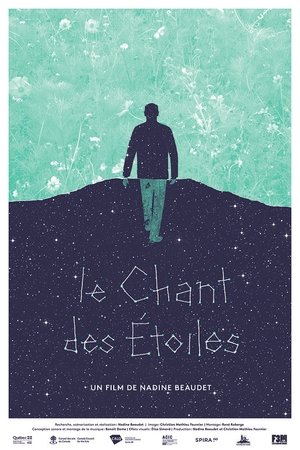
Le chant des étoiles
2016
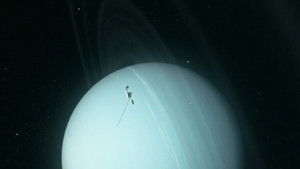
New Horizons
A brief visualisation of NASA’s historic spacecrafts Mariner, Pioneer, Voyager, and Dawn, exploring the solar system, culminating in the New Horizons mission.
2015
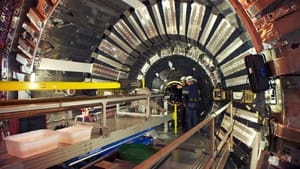
CERN
CERN in Switzerland is a research center where they try to recreate the big bang. Nikolaus Geyrhalter follows the center's infrastructure and meets the people who created the "Large Hadron Collider".
2013
Fermilab: Science at Work
Six days. Three frontiers. One amazing lab. From 2010 to 2012, a film crew followed a group of scientists at the Department of Energy's Fermilab and filmed them at work and at home. This 40-minute documentary shows the diversity of the people, research and work at Fermilab. Viewers catch a true behind-the-scenes look of the United States' premier particle physics laboratory while scientists explain why their research is important to them and the world. Scientists included: Brendan Casey, Herman White, Craig Hogan, Denton Morris, Mary Convery, Bonnie Fleming, Deborah Harris, Dave Schmitz, Brenna Flaugher and Aron Soha.
2013
CERN, or The Factory for the Absolute
Human action is often influenced by the desire for knowledge. This desire is in itself a positive impulse and could be said to be the basis of all progress. Let's move this statement to the ground of scientific research at CERN, and see if it applies here - and then test the common experience that human stupidity permeates every social stratum and, in the case of the elites, is a potential threat.
2010
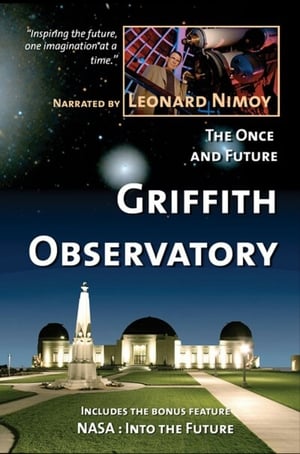
The Once and Future Griffith Observatory
Documentary about the Griffith Observatory, shown at their Leonard Nimoy Event Horizon Theater
2006
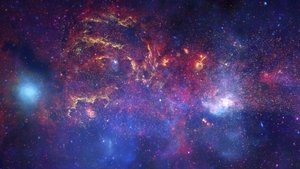
Cosmic Voyage
The Academy Award® nominee Cosmic Voyage combines live action with state-of-the-art computer-generated imagery to pinpoint where humans fit in our ever-expanding universe. Highlighting this journey is a "cosmic zoom" based on the powers of 10, extending from the Earth to the largest observable structures in the universe, and then back to the subnuclear realm.
1996

A Brief History of Time
This shows physicist Stephen Hawking's life as he deals with the ALS that renders him immobile and unable to speak without the use of a computer. Hawking's friends, family, classmates, and peers are interviewed not only about his theories but the man himself.
1991

Planets of the Sun
An Educational Favorites VHS from the NATURE SERIES featuring Leonard Nimoy
1985

Physics at Half Past Nine
A physicist, a director of popular-science films, and a sports fan talk about the structure of the atom between periods of a hockey game they watch on TV.
1971