Watch Richard Wright: Native Son, Author and Activist (2009) Online Free
RICHARD WRIGHT was an African-American author of novels, short stories and non-fiction that dealt with powerful themes and controversial topics. Much of his works concerned racial themes that helped redefine discussions of race relations in America in the mid-20th century. Born on a plantation in Mississippi, Wright was a descendent of the first slaves who arrived in Jamestown Massachusetts. This program follows his arduous path from sharecropper to literary giant. Through authors like H.L. Menken, Sinclair Lewis, Theodore Dreiser, he discovered that literature could be used as a catalyst for social change. In 1937 Wright moved to New York and his work began to garner national attention for it's political and social commentary. Much of Wright's writing focused on the African American community and experience; his novel Native Son won him a Guggenheim Fellowship and was adapted to the Broadway stage with Orson Welles directing in 1941.
Cast
Richard Wright
More Like This

The Grim & The Dark
When looking for a gift for his kid, Jon Heder (Napoleon Dynamite) is introduced to the world of Grimdark. In that moment he starts down a journey that will take him all over the world and through interviews with prominent Grimdark authors, game developers, and dedicated fans, he delves into the themes that define the genre—all in an effort to find the man who started it all: John Blanche.
2025
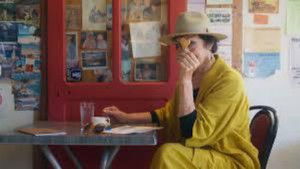
Anny Duperey, artiste en équilibre
A popular actress, Anny Duperey lived a precarious life for many years until she found a place to settle down in Creuse. It is there that she keeps her photos, writes, and recharges her batteries. In this portrait, she breaks with convention by playing with her image and openly questioning the desires of an actress as her career is revisited.
2025
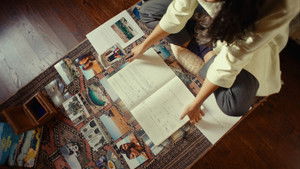
Sarah Thankam Mathews: After All This
Following the success of her debut novel, All This Could Be Different, author Sarah Thankam Mathews embarks on her second novel, drawing from her adolescence between India and Oman. As Sarah excavates lost place and time, she must contend with the weight of truthful representation and the contradictions within her childhood memories.
2024

Grid
A ritual of grids, reflections and chasms; a complete state of entropy; a space that devours itself; a vertigo that destroys the gravity of the Earth; a trap that captures us inside the voids of the screen of light: «That blank arena wherein converge at once the hundred spaces» (Hollis Frampton).
2021
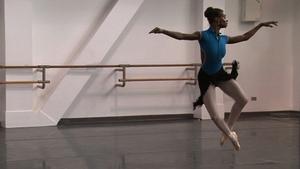
Black Ballerina
BLACK BALLERINA tells the story of several black women from different generations who fell in love with ballet. Six decades ago, while pursuing their dreams, Joan Myers Brown, Delores Browne and Raven Wilkinson confronted racism, exclusion and unequal opportunity. Today, young dancers of color continue to face formidable challenges breaking into the overwhelmingly white world of ballet. Moving back and forth in time, this lyrical, character driven film shows how far we still have to go and stimulates a fresh discussion about race, inclusion and opportunity across all sectors of American society.
2016
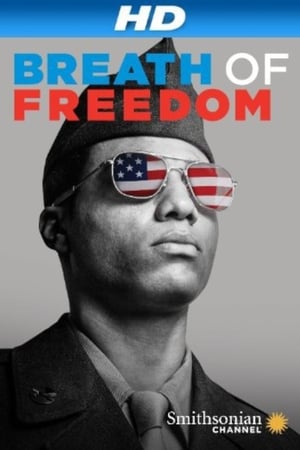
Breath of Freedom
In World War II. African-American GIs liberate Germany from Nazi rule while racism prevailed in their own army and home country. Returning home they continue fighting for their own rights in the civil rights movement.
2014

Armando's Tale of Charles Dickens
Armando Iannucci presents a personal argument in praise of the genius of Charles Dickens. Through the prism of the author's most autobiographical novel, David Copperfield, Armando looks beyond Dickens - the national institution - and instead explores the qualities of Dickens's work that still make him one of the best British writers. While Dickens is often celebrated for his powerful depictions of Victorian England and his role as a social reformer, this programme foregrounds the elements of his writing which make him worth reading, as much for what he tells us about ourselves in the twenty-first century as our ancestors in the nineteenth. Armando argues that Dickens's remarkable use of language and his extraordinary gift for creating characters make him a startlingly experimental and psychologically penetrating writer who demands not just to be adapted for television but to be read and read again.
2012
The Black List: Volume Three
Documentary film interviews leading African Americans on race, identity, and achievement.
2010
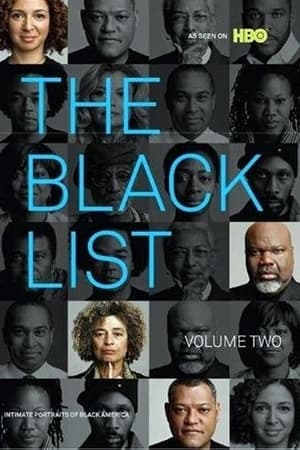
The Black List: Volume Two
THE BLACK LIST: VOL. 2 profiles some of today's most fascinating African-Americans. From the childhood inspirations that shaped their ambitions, to the evolving American landscape they helped define, to the importance of preserving a unique cultural identity for future generations, these prominent individuals offer a unique look into the zeitgeist of black America, redefining the traditional pejorative notion of a blacklist.
2009
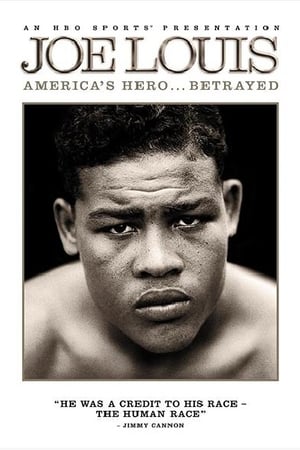
Joe Louis: America's Hero Betrayed
An American story. Traces the career of Joe Louis (1914-1981) within the context of American racial consciousness: his difficulty getting big fights early in his career, the pride of African-Americans in his prowess, the shift of White sentiment toward Louis as Hitler came to power, Louis's patriotism during World War II, and the hounding of Louis by the IRS for the following 15 years. In his last years, he's a casino greeter, a drug user, and the occasional object of scorn for young Turks like Muhammad Ali. Appreciative comment comes from boxing scholars, Louis's son Joe Jr., friends, and icons like Maya Angelou, Dick Gregory, and Bill Cosby.
2008
The Black List: Volume One
As a new chapter begins in this country, THE BLACK LIST offers a dynamic and never-before-heard perspective from achievers of color. This series of inspired - and inspiring - observations on African-American life in the 21st century forms a roll call of some of the most compelling politicians, writers, thinkers and performers ever to tackle their fields of endeavor. Watch the interview-portraits and get a sharper snapshot of where this country has been and where it's headed.
2008
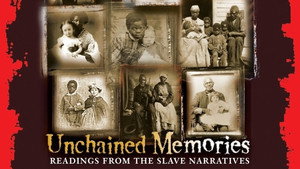
Unchained Memories: Readings from the Slave Narratives
When the Civil War ended in 1865, more than four million slaves were set free. Over 70 years later, the memories of some 2,000 slave-era survivors were transcribed and preserved by the Library of Congress. These first-person anecdotes, ranging from the brutal to the bittersweet, have been brought to vivid life in this unique HBO documentary special, featuring the on-camera voices of over a dozen top African-American actors.
2003
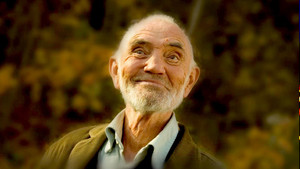
Odd Børretzen: Mer enn helt all right
A portrait of Norwegian poet Odd Børretzen in his own words, featuring musical highlights from Børretzen's work with musicians Alf Cranner and Lars Martin Myhre.
2001
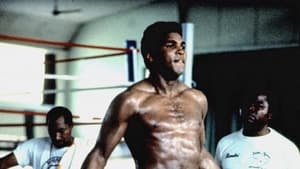
When We Were Kings
It's 1974. Muhammad Ali is 32 and thought by many to be past his prime. George Foreman is ten years younger and the heavyweight champion of the world. Promoter Don King wants to make a name for himself and offers both fighters five million dollars apiece to fight one another, and when they accept, King has only to come up with the money. He finds a willing backer in Mobutu Sese Suko, the dictator of Zaire, and the "Rumble in the Jungle" is set, including a musical festival featuring some of America's top black performers, like James Brown and B.B. King.
1996
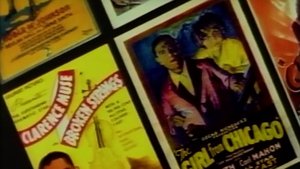
Midnight Ramble
A documentary chronicling the pioneering efforts of black filmmaker William D. Foster in the early years of the industry and Oscar Micheaux's controversial impact on the subsequent "race movies".
1994
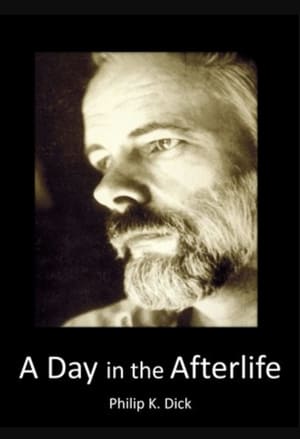
Philip K Dick: A Day in the Afterlife
A poetic look at the life and legacy of legendary author Philip K. Dick (1928-1982), who wrote over a hundred short stories and 44 novels of mind-bending sci-fi, exploring themes of authority, drugs, theology, mental illness and much more.
1994
No Regret
Five gay Black men who are HIV-positive discuss how they are battling the double stigmas surrounding their infection and homosexuality.
1993
Jack Kerouac: King of the Beats
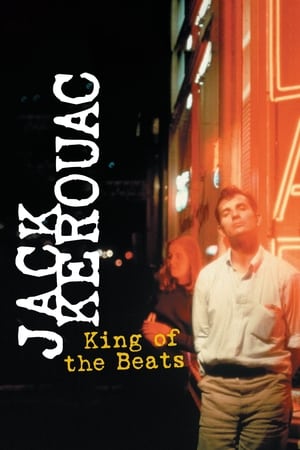
Jack Kerouac's life is examined through interviews with his contemporaries and friends including Allen Ginsberg, Lawrence Ferlinghetti and William S. Burroughs. The film also employs dramatic recreations of Kerouac's life beginning with his early childhood.
1985
Tove Ditlevsen – jeg har altid villet alting
1973
Still A Brother: Inside the Negro Middle Class
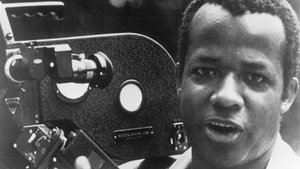
The Black middle class, torn between white goals and Black needs, are examined by producers William Greaves and William Branch in a 90-minute NET Journal documentary.
1968