Watch Aleph (2021) Online Free
Structured as a labyrinth-like game and inspired by Jorge Luis Borges, Aleph is a travelogue of experience, a dreamer's journey through the lives, experiences, stories and musings of protagonists spanning ten countries and five continents.
Cast
Anne Waldman, Guillermina Pico, Bouamama BenFareh, Žarko Laušević, Irina Giri, Nara Rakchang, Desire Marea, Marija Dakić, Masande Nthato Masekwameng, Namita Kandel, Alicia Labraga, Boudaoud Zaoui
More Like This
Idak-Idak-Idak
Idak-Idak-Idak is a hybrid-documentary relating the stolen Lombok Treasures with the Sasak diaspora through three generations of women: a daughter, her mother, and her grandmother. Blending full-spectrum cinematography with personal footage, this film moves between Indonesia and the Netherlands to examine colonial legacies, displacement and healing the heart of home. In Sasak, "Idak" can be interpreted as both “heart” and “absence”, becoming a container for memory, loss, and the unseen layers of the self between generations.
2025
A Place of Absence
This poetic film follows director Marialuisa's journey with Anita and Leticia, Central American women traveling with the Caravan of Mothers of Missing Migrants.
2025
Death Sounds a Quiet Gong
‘Death Sounds a Quiet Gong’ was originally screened at Village Works (12 St. Marks Place, New York City, NY) on October 24, 2025. The poem was first published in the inaugural release of biannual literary journal the Tough Poets Review.
2025
A Castle in Spain
Everyday a father works hard to preserve the fragmentary present. He creates a world of images, a memory room where he meets his daughter. But it is difficult, the pictures are torn and forgotten and the fragmentary landscapes are constantly changing.
2025
Greenland
2024
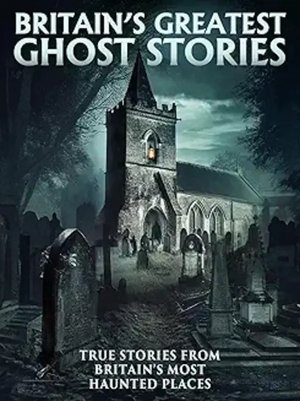
Britain's Greatest Ghost Stories
A team of paranormal investigators use modern techniques and advanced technology looking into some of most famous ghost stories in and around Great Britain.
2023
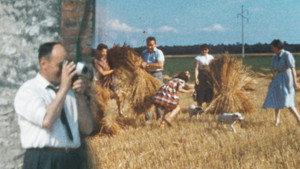
Paysans cinéastes
Farmers in the Île-de-France region, they filmed life on the farm, working in the fields, and family and village celebrations on 8 mm or Super 8 film. From the 1950s to the 1980s, these testimonies unfold a history of rural life: we move away from a peasant and family model to industrial agriculture for export. Through these family images, I attempt to answer my own questions about our agricultural future. In the 1950s, the land of Île-de-France fed us.
2023
L'Orientalisme
Orientalism is a literary and artistic movement born in Western Europe in the 18th century. Through its scale and popularity, throughout the 19th century, it marked the interest and curiosity of artists and writers for the countries of the West (the Maghreb) or the Levant (the Middle East). Orientalism was born from the fascination of the Ottoman Empire and followed its slow disintegration and the progression of European colonizations. This exotic trend is associated with all the artistic movements of the 19th century, academic, romantic, realistic or even impressionist. It is present in architecture, music, painting, literature, poetry... Picturesque aesthetics, confusing styles, civilizations and eras, orientalism has created numerous clichés and clichés that we still find today in literature or cinema.
2019
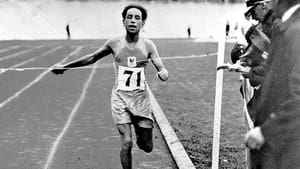
El Ouafi Boughera, The marathon runner of history
On August 5, 1928, after 2 hours and 32 minutes of racing, the 71st rooster wearing the bib entered the Olympic stadium in Amsterdam. Ahmed El Ouafi Bouguéra wins the gold medal and becomes the first Olympic champion from the African continent. He achieved his feat under the tricolor flag. The start of his real marathon is underway. The history of sport extends to the history of Algeria and France. This documentary retraces the different stages of the life of this great champion, not only the history of sport but also the great story. Archival photographs and interviews mingle with the painted paintings. The series thus once again gives voice to this forgotten hero, one of the great heroes of immigration who defended France for more than a century.
2018

L'Algérie de Gustave Guillaumet (1840-1887)
Born on March 25, 1840, Gustave Guillaumet discovered Algeria by chance when he was about to embark for Italy. Over the course of his ten or eleven trips and extended stays, he established a familiarity with this space. Traveling through the different regions from north to south, he never ceases to note the differences. He is also the first artist, apart from Delacroix's Women of Algiers, to penetrate into female interiors and reveal the reality, far removed from the harem fantasies that reigned in his time. Fascinated by the country, its deserts and its inhabitants , going so far as to live like the Algerians, Gustave Guillaumet devoted his life and his painting to this country, breaking with the colorful and exotic representations of the time. The painting The Famine in Algeria, restored thanks to exceptional fundraising, was dictated by the events of the years 1865-1868, and well illustrates his knowledge of the country, in a manner that is at once demanding, sensitive and serious.
2018
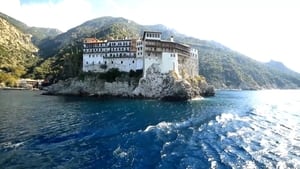
Athos
The Athos peninsula in Greece is one of Europe's last secrets. Over 2000 monks live on Athos - cut off from the outside world. Access is denied to women, tourists are not welcome. Only workers and pilgrims can obtain a visa. The "Autonomous Monastic State of the Holy Mountain" attracts people who feel like they are missing something from their modern lives. With the help of three Athos monks, "Athos - A Taste of Heaven" tells the story of the island and its inhabitants in a unique filmed diary style. The film's guiding theme is the path we as people have to find and follow - each and everyone for themselves. "First we must heal our own souls, only then we can help others", is one of Father Galaktions core messages. He lives as a hermit on the holy mountain. Not all monks, however, live as secluded and demure as Father Galaktion. The film team is also received by Father Epiphanios - a gifted and poetic cook who certainly does not disdain the pleasures of life.
2016
Dark Souls Commentary
Hello ladies and gentlemen. In this video, Matthew is going to be showing Dark Souls from start-to-finish (or as much of it as he can) and commentating on it as he goes.
2015
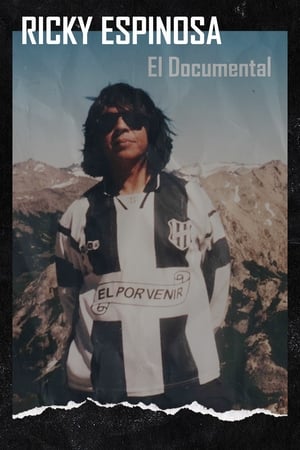
Ricky Espinosa: El Documental
Ricky Espinosa: The Documentary is a self-managed and independent project created by Juan Pablo Duarte in Buenos Aires, Argentina. It explores the life of Ricky Espinosa as an artist—his beginnings, his career, and his discography—featuring previously unreleased archival material and exclusive interviews.
2015
Starting Place
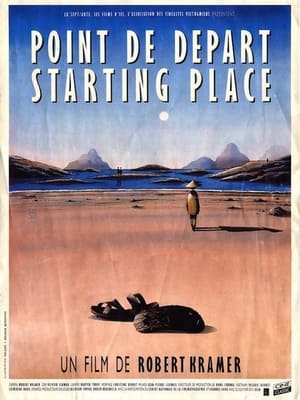
In this film from late in his career, Kramer returns to Hanoi after nearly 25 years to re-envision the city’s struggle through an uncertain and daunting past, present, and future. The Vietnamese characters in the film are diverse: Kramer’s former guide from an earlier visit in 1969; a tight-rope walker in the national circus; a man who took photos of B-52s and another who lost his fingers shooting them down.
1994

History and Memory: For Akiko and Takashige
This film is a poetic composition of recorded history and non-recorded memory. Filmmaker Rea Tajiri’s family was among the 120,000 Japanese and Japanese Americans who were imprisoned in internment camps after the attack on Pearl Harbor. And like so many who were in the camps, Tajiri’s family wrapped their memories of that experience in a shroud of silence and forgetting. This film raises questions about collective history – questions that prompt Tajiri to daringly re-imagine and re-create what has been stolen and what has been lost.
1991
Danny
A moving personal documentary about Danny, a friend of Kybartas who died of an AIDS-related illness in 1986. This powerful work explores the reason for Danny’s return home and his attempts to reconcile his relationship with his family members who had difficulty facing his homosexuality and his imminent death.
1987
Oversand
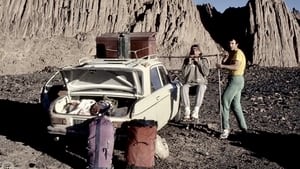
Oversand is one of the first films about free climbing, the third film in a series of three with "Overdon" and "Over-Ice". Directed by Jean-Paul Janssen, the film was shot in 35mm in Algeria, in the Sahara Desert, in the Tamanrasset region, on the walls of the majestic peaks of the Atakor massif, central sub-region of Hoggar, mountainous heart of Hoggar, a volcanic plateau of almost circular shape, whose average altitude is 2000 meters, and which culminates at Mount Tahat (2918m), the highest point in Algeria. The Atakor is distinguished by its spectacular volcanic peaks, its needles, and its rugged landscapes, resulting from the erosion of ancient volcanic chimneys, which make it the most emblematic summits of the Hoggar, such as the Assekrem, the Ilamane, or the Tizouyag, where climbers Patrick Edlinger, Patrick Bérhault, Bernard Gorgeon, Hugues Jaillet, Jacques Perrier, Stéphane Troussier and Odette Schoënleb evolve under the watchful eye of the Tuareg caravans.
1981
The Pan-african Festival in Algiers
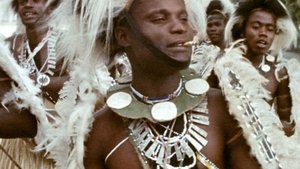
Festival panafricain d'Alger is a documentary by William Klein of the music and dance festival held 40 years ago in the streets and in venues all across Algiers. Klein follows the preparations, the rehearsals, the concerts… He blends images of interviews made to writers and advocates of the freedom movements with stock images, thus allowing him to touch on such matters as colonialism, neocolonialism, colonial exploitation, the struggles and battles of the revolutionary movements for Independence.
1969

Les Mains Libres
In 1964, Algeria, just two years after the end of the war of independence, found itself catapulted into new contradictions, a still rural territory which responded to the modernity brought by the revolution. Filmed during the winter of 1964-1965 by the young director Ennio Lorenzini, it is the first international Algerian production which paints a rare portrait in color of a multifaceted nation, far from the simplistic vision created by the press and the French army. Produced by Casbah Film, Les Mains Libres (initially titled Tronc De Figuier) bears witness to the stigmata of colonization and the future of free Algeria throughout the Algerian territory and reveals the richness of its landscapes and the diversity of its traditions . The documentary, using the aesthetics of militant cinema of the time, is made up of four scenes: Sea and Desert, The Struggle, The Earth, Freedom.
1965
Alger Et Ses Environs
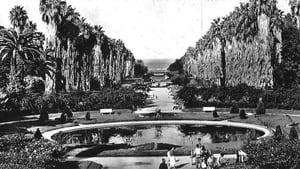
The film, shot in 1938, is part of a series entitled “The true face of Algeria”. The film highlights the proximity of Algiers to Paris and promotes air travel. The commentary supporting the images highlights the urban dynamism (“Every day, a new skyscraper replaces a wasteland”) and the comparison with Paris (“Algiers is often nicknamed the Paris of North Africa because of its elegance become proverbial). Contemporary architectural achievements are described as the sign of “grandiose modernism”: “we love the new, the bold”. But the point does not forget the buildings illustrating “the Moorish, classic and attractive style”. The description of the Casbah also attempts to understand the architectural organization but also the diversity and even the atmosphere.
1945