Watch Reich: Three Tales (2002) Online Free
"Three Tales" is a video music work by American composer Steve Reich and video artist Beryl Korot. It is set in three "Acts", each depicting a technological advance of the 20th century and its negative implications on humanity: the dirigible airship Hindenburg and its explosion; the Atom Bomb and its testing on Bikini Atoll; and Dolly the sheep, first successful genetic cloning of a mammal.
Cast
Richard Dawkins, Kevin Warwick, Freya von Moltke, Steven Pinker, Robert Pollack, Ruth Deech, Adin Steinsaltz, James Watson, Joshua Getzler, Gina Kolata, Ray Kurzweil, Stephen Jay Gould
More Like This
Mystery Man of the A-Bomb
Stories of the people who built the first atomic weapons are well known. But what about those who provided the uranium? We look at a mysterious man who derived huge profits from the business of war.
2023
Oppenheimer: Genius or Madman?
This documentary explores famous figure J. Robert Oppenheimer, an American theoretical physicist who was called, "father of the atomic bomb" for his role in the Manhattan Project.
2023
A Compassionate Spy
Physicist Ted Hall is recruited to join the Manhattan Project as a teenager and goes to Los Alamos with no idea what he'll be working on. When he learns the true nature of the weapon being designed, he fears the post-war risk of a nuclear holocaust and begins to pass significant information to the Soviet Union.
2022
NUMEC: How Israel Stole the Atomic Bomb
NUMEC: How Israel Stole the Atomic Bomb and Killed JFK. Terrorists took advantage of the massive weapons surplus following the end of WWII and created lucrative black-markets for illegal arms trafficking many of which went to ethno-fascist fanatics who created the state of Israel. The weapons theft would escalate to Highly Enriched Uranium for nuclear bombs and the assassination of a US president.
2022

The Conductor
Leonard Bernstein’s protégée Marin Alsop reveals how she smashed the glass ceiling to become an internationally renowned conductor.
2022
Le Robot Solitaire
Robots live alongside mankind in a not too distant future, but are they really living?
2020

The Portal
Documentary approach follows six people (and a robot) who transform their lives using stillness and mindfulness.
2019
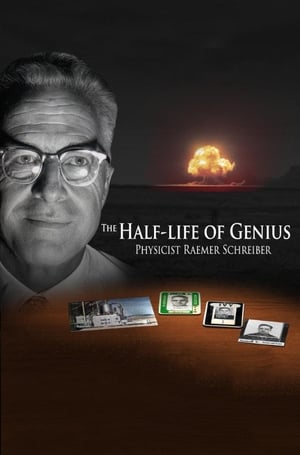
The Half-Life of Genius Physicist Raemer Schreiber
Our two-hour film highlights the life and career of Dr. Schreiber with respect and clarity. Raemer, his wife Marge, and young daughter Paula would move to the high-desert of New Mexico where he and other brilliant minds would change the world forever.
2018

The Metropolitan Opera: The Exterminating Angel
After the acclaimed Met premiere of Thomas Adès's "The Tempest" in 2012, the composer returned with another masterpiece, this time inspired by filmmaker Luis Buñuel's seminal surrealist classic "El Ángel Exterminador", during the 2017–18 season. As the opera opens, a group of elegant socialites gather for a lavish dinner party, but when it is time to leave for the night, no one is able to escape. Soon, their behavior becomes increasingly erratic and savage. The large ensemble cast tackles both the vocal and dramatic demands of Adès's opera with one riveting performance after another. Tom Cairns, who also penned the work's libretto, directs an engrossing and inventive production, using a towering wooden archway to trap the characters onstage. And Adès himself takes the podium to conduct the frenzied score, which features a host of unconventional instruments, including the eerie electronic ondes Martenot.
2017

Robot world - A meeting with your alternate double
The non-spoken documentary from Martin H. Schmitt exploring the senses and evolution of robots, from a mechanical somnambulist to an autonomous sensorium.
2010
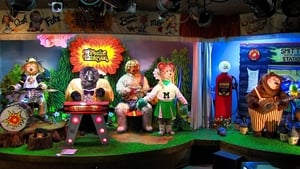
The Rock-afire Explosion
"The Rock-afire Explosion" is the story of a small-town disc-jockey, a struggling inventor, and an animatronic rock band, that quickly becomes an eccentric portrait of childhood memories, broken dreams, and the resilience of the human spirit.
2008
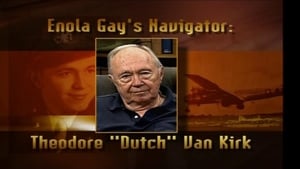
Enola Gay's Navigator: Theodore (Dutch) Van Kirk
Theodore "Dutch" Van Kirk navigated the first atomic bombing mission in Hiroshima, Japan, and later participated in the first Bikini Atoll atomic bomb tests.
2007

Robots Rising
Comprehensive survey of robotics filmed in the leading labs of the world (primarily the United States and Japan) and featuring experts such as Rodney Brooks of MIT and William “Red” Whittaker of Carnegie Mellon University. Incorporates pop culture robots with the less glamorous real world and delves into the ultimate issues of what constitutes life and whether consciousness is a product of intelligence.
1998
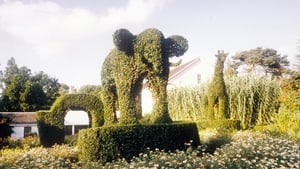
Fast, Cheap & Out of Control
Errol Morris’s Fast, Cheap & Out of Control interweaves the stories of four men, each driven to create eccentric worlds from their unique obsessions, all of which involve animals. There’s a lion tamer who shares his theories on the mental processes of wild animals; a topiary gardener who has devoted a lifetime to shaping bears and giraffes out of hedges and trees; a man fascinated with hairless mole rats; and an MIT scientist who has designed complex, autonomous robots that can crawl like bugs.
1997
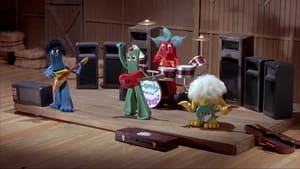
Gumby: The Movie
Amidst putting together a benefit concert for the local farmers and on the brink of a huge deal with mogul Lucky Claybert, Gumby and his band The Clayboys must battle with the villainous Blockheads, who have kidnapped their loyal canine Lowbelly.
1995
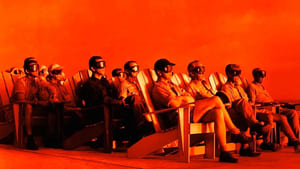
Trinity and Beyond: The Atomic Bomb Movie
"Trinity and Beyond" is an unsettling yet visually fascinating documentary presenting the history of nuclear weapons development and testing between 1945-1963. Narrated by William Shatner and featuring an original score performed by the Moscow Symphony Orchestra, this award-winning documentary reveals previously unreleased and classified government footage from several countries.
1995
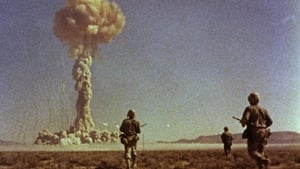
The Atomic Cafe
A disturbing collection of 1940s and 1950s United States government-issued propaganda films designed to reassure Americans that the atomic bomb was not a threat to their safety.
1982
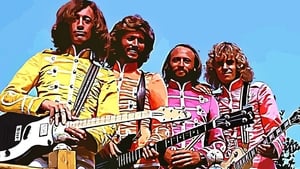
Sgt. Pepper's Lonely Hearts Club Band
A small town band makes it big, but loses track of their roots, as they get caught up into the big-time machinations of the music biz. Now, they must thwart a plot to destroy their home town. Built around the music of The Beatles, this musical uses some big name groups like Peter Frampton and Aerosmith.
1978
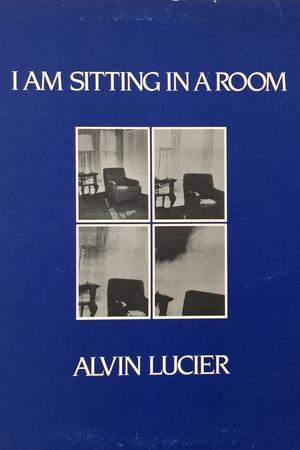
I Am Sitting in a Room
I am sitting in a room is a sound art piece by American composer and sound artist Alvin Lucier composed in 1969. The first performance of the work was in 1970 at the Guggenheim Museum in New York. In collaboration with his partner Mary Lucier. The piece features Lucier recording himself narrating a text, and then playing the tape recording back into the room while re-recording it. The new recording is then played back and re-recorded, and this process is repeated. Due to the room's particular size and geometry, certain resonant frequencies are emphasized while others are attenuated. Eventually the words become unintelligible, replaced by the characteristic resonance of the room.
1970

Effects of the Atomic Bomb on Hiroshima and Nagasaki
This was the only documentary made in the aftermath of the atomic bombings of 1945. Japanese filmmakers entered the two cities intent on making an appeal to the International Red Cross, but were promptly arrested by newly arriving American troops. The Americans and Japanese eventually worked together to produce this film, a science film unemotionally displaying the effects of atomic particles, blast and fire on everything from concrete to human flesh. No other filmmakers were allowed into the cities, and when the film was done the Americans crated everything up and shipped it to an unknown location. That footage is now lost. However, an American and a Japanese filmmaker each stole and hid a copy of the film, fearful that the reality of Hiroshima and Nagasaki would be hidden from history. Eventually, these prints surfaced and became our only precious archive of the aftermath of nuclear warfare -- a film that everyone knows in part, yet has rarely seen in its entirety.
1946