Watch Rainbow Hill (1938) Online Free
A half brother and sister work at a hotel in Hakone respectively as a porter and a souvenir shop clerk. They are close. One day a woman named Hasegawa checks into the hotel in order to recuperate in a calm environment with fresh air. She is the mother of the store employee. The mother and daughter were separated due to the Kanto earthquake. The girl was practically raised by her older half brother.
Cast
Hideko Takamine, Akira Kishii, Chizuko Kanda, Sachiko Murase, Kazuko Enami, Hiroshi Imaizumi, Toshiko Itō, Hinako Katagiri, Hirokuni Koyama, Shoji Maruyama, Kazuko Matsudairia, Kō Mihashi
More Like This

I Can Only See
A comic horror drama depicting a grotesque situation that occurs with the appearance of a supernatural entity navigating between the filming teams at the filming site.
2021
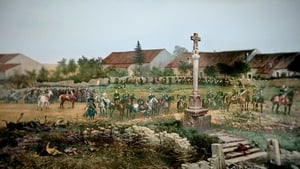
Panoramas of War
The end of the Franco-Prussian war (1870-71) saw the birth of the panoramas of war, huge circular paintings depicting scenes of war, cruelty and desolation that were contemplated by thousands of spectators, a kind of inmersive static newsreels, a mass media prior to the era of mass media, a virtual reality on canvas.
2018
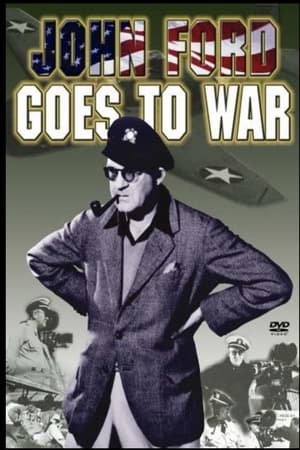
John Ford Goes to War
When World War II broke out, John Ford, in his forties, commissioned in the Naval Reserve, was put in charge of the Field Photographic Unit by Bill Donavan, director of the soon-to-be-OSS. During the war, Field Photo made at least 87 documentaries, many with Ford's signature attention to heroism and loss, and many from the point of view of the fighting soldier and sailor. Talking heads discuss Ford's life and personality, the ways that the war gave him fulfillment, and the ways that his war films embodied the same values and conflicts that his Hollywood films did. Among the films profiled are "Battle of Midway," "Torpedo Squadron," "Sexual Hygiene," and "December 7."
2002
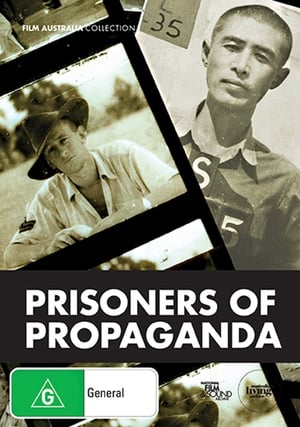
Prisoners of Propaganda
In 1943, the Imperial Japanese Secret Service made a film called Calling Australia! to show the "exemplary conditions" under which prisoners of war were kept, and to "soften up" the Australian public for the anticipated occupation of their country by Japanese forces. Prisoners of Propaganda tells why the film was made, and how it came to be forgotten.
1987
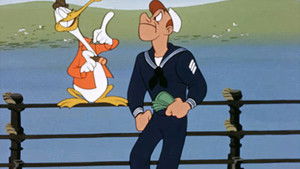
The Sailor and the Seagull
The Sailor and the Seagull was released by the U.S. Navy in 1949 with a simple goal: encouraging servicemen to re-enlist. In the film, a disgruntled sailor named McGinty complains about the raw deal he believes he is receiving by serving in the Navy. As luck would have it, a seagull comes to release him from service so that he can experience the freedom of civilian life. McGinty soon learns, however, that civilian life means less freedom and less money than he had imagined and quickly jumps at the chance to re-enlist. (cont. http://blogs.archives.gov/unwritten-record/2013/09/26/sailor-and-the-seagull/)
1949
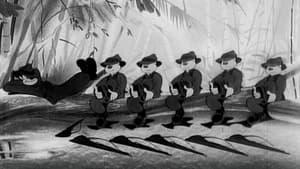
6 Little Jungle Boys
A short animated War Office commissioned health education film, showing the fate of each of the 6 jungle soldiers.
1945
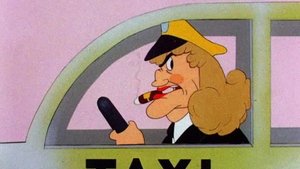
The Weakly Reporter
A newsreel spoof with WWII homefront gags, including rationing, air raid drills and women filling in men's jobs.
1944
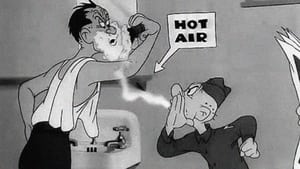
Rumors
Snafu inadvertantly starts a panic on his base when he begins a mistaken rumour that the base is about to be bombed.
1943
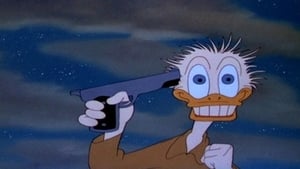
The Old Army Game
The old shell game gets a new face as Donald stays off-base past "Taps" and has to try to sneak back in with out alerting Pete.
1943
Scrap Happy Daffy
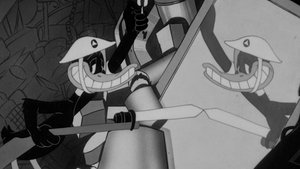
During World War Two, Daffy Duck owns a junkyard which collects scrap metal to use in building weapons to continue the Allied fight against the Axis powers. Hitler reads about Daffy's scrap pile and about Daffy's stated intent to win the war with junk and, after throwing a fit and chewing a carpet like a mad dog, orders Daffy's scrap pile destroyed.
1943
Spies
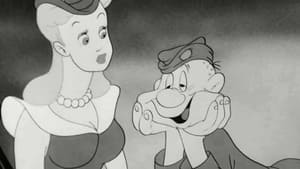
The doltish but self-confident and self-congratulatory Private Snafu is in possession of a military secret during World War II. Over the course of the day, spouting rhymed couplets, he divulges the secret a little at a time to listening Axis spies. He tells his mom some of the secret when he calls her from a phone booth; the rest he spills to a dolly dolly spy who plies him with liquor. Snafu's loose lips put himself at risk.
1943
Little Miss Muddlehead
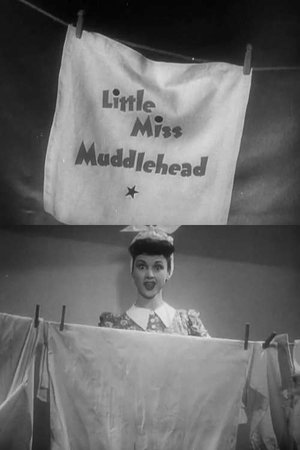
Laundry soap brand Rinso was quick to jump on the 1940s fuel rationing bandwagon and remind housewives that, unlike other soaps, Rinso required very little hot water (it was customary to boil clothes at the time). This ingenious two-pronged marketing approach - bolster the war effort while increasing sales - was in keeping with the soap manufacturer's pioneering approach to advertising.
1943
Panama Hattie
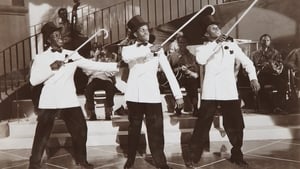
Sailors and spies mingle in between the acts at Hattie's nightclub in the Canal Zone.
1942
Song of Victory
A vulture, a gorilla and a hyena (“with no small resemblances to actual dictators”) bully the woodland animals, who eventually fight back, using the letter V as their victory symbol.
1942
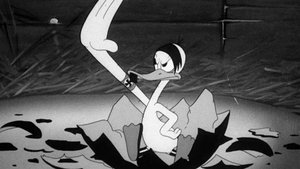
The Ducktators
A wartime cartoon that satirizes the Axis leaders of World War II.
1942
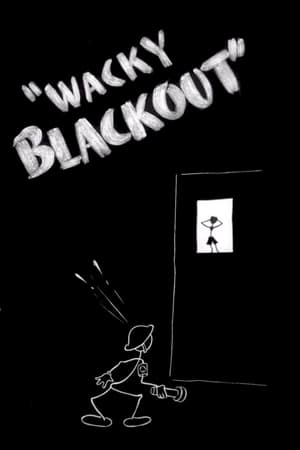
Wacky Blackout
We tour a farm and see how the various animals are preparing for the war, in a series of blackout skits.
1942
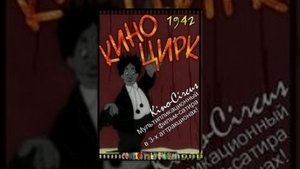
Cinema-Circus
Soviet propaganda cartoon from World War 2. Adolf Hitler, introduced by Charlie Chaplin's the Tramp, is ridiculed in three short skits.
1942
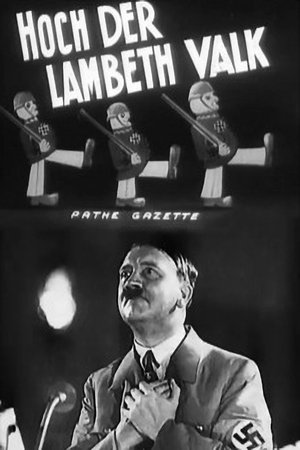
Hoch der Lambeth Valk
A 1941 Ministry of Information propaganda film set to the tune of The Lambeth Walk, a popular song from the musical Me and My Girl.
1941
Sankichi the Monkey: The Storm Troopers
Short movie from 1934 about a war between monkeys and bears.
1934
Colonel Heeza Liar Foils the Enemy
Despite the bombs which he suffers from at the war front, war correspondent, Col. Heeza Liar succeeds to foil the enemy lines.
1915