Watch Quick Billy (1971) Online Free
A psychedelic montage of home movie footage gives way to a silent western story.
More Like This
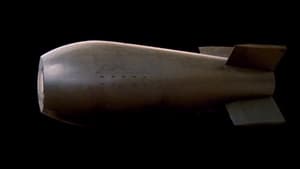
The Bomb
Filmmakers use archival footage and animation to explore the culture surrounding nuclear weapons, the fascination they inspire and the perverse appeal they still exert.
2017
State of Rest and Motion
This cine-portrait of New York City uses digital effects to turn the countless riders of the subway system into living, breathing paintings.
2017
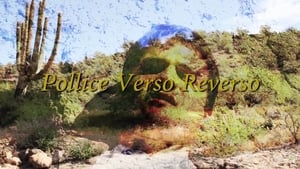
Pollice Verso Reverso
A 'reversal' of Jean-Léon Gérôme's 1872 painting Pollice Verso.
2017
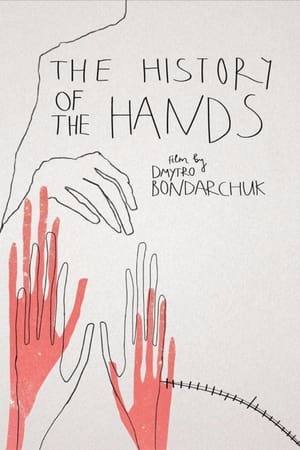
The History of the Hands
The film is a study of nature and significance of the hands in cinema. Besides review of movements and actions, which creates an independent story, it reveals interactions and interdependence of cinematic traditions of various authors, countries and periods
2016
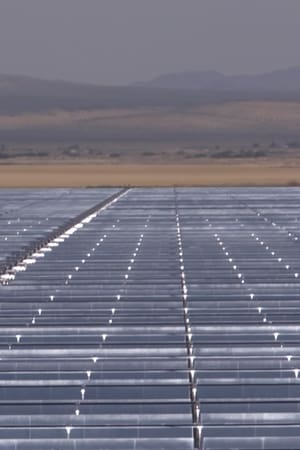
Irradiant Field
In the Mojave Desert, fields of solar panels follow the sun’s daily journey in perfect synchronicity.
2016
The Red Bank. James Joyce: His Greek Notebooks
This documentary aims to register this unknown side of James Joyce: His Greek Notebooks. Trieste. Bloomsday, 2013. Dance in slow motion, accompanied by text. By deconstructing the body, we turn it into a memory: of the body, of life, of texts. The biographical references to Joyce and Mando Aravantinou, combined with the diagonal slicing of the image, cancel the realism of the landscape, including that of the Narrator’s space/study. As a culmination, Joyce’s letter “A request for a loan in Greek” functions as a timely denunciation. Various routes through cities, such as Trieste, London, New York, and Athens; languages such as Greek and English. In addition to the primal myth of Ulysses, there is another issue: Greek is “the language of the subject of Ulysses”
2013
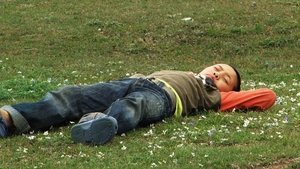
OLO, the Boy from Tibet
A 6-year-old Tibetan boy leaves his family and flees to a refugee camp in northern India.
2012
The Twenty-One Lives of Billy The Kid
Shot in the abandoned buildings of Gary, Indiana and the cornfields of Western Illinois, The Twenty-One Lives of Billy the Kid presents a fractured historical narrative without any real protagonist, one in which the titular character goes mostly unseen - Billy the Kid as the always-off-screen assailant, as a ghost’s laugh, as a shadow on the road.
2005
Daumë
Culled from four rolls of Super-8 film shot while the maker was a development worker in a small South American village, Daumë is at its center a film about ritual, power, and play. Daumë is both ethnography and critique; it is an interrogation into how to represent a place that can't be represented.
2000
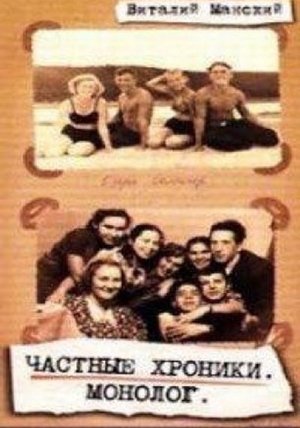
Private Chronicles: Monologue
The collective life of the generation born as Jurij Gagarin became the first man in space. Vitaly Mansky has woven together a fictional biography – taken from over 5.000 hours of film material, and 20.000 still pictures made for home use. A moving document of the fictional, but nonetheless true life of the generation who grew up in this time of huge change and upheaval.
1999
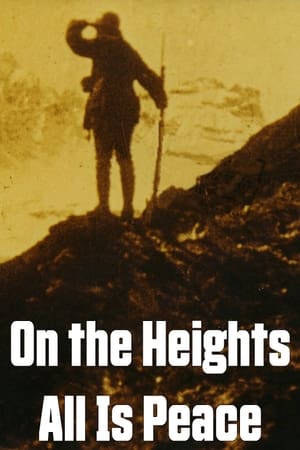
On the Heights All Is Peace
Found footage anti-war film comprising film documents of the Austro-Hungarian and Italian army on the Alpine front, and from first generation picture material by war-film pioneer Luca Comerio.
1998
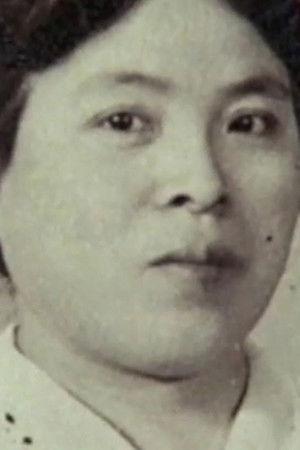
The Displaced View
The Displaced View traces a personal search for identity and pride, within the unique and suppressed history of the Japanese in Canada. Through an examination of the emotional and cultural links between the women of one family, the processes of the construction of memory and the re-construction of history, are revealed. Utilizing an innovative combination of experimental, dramatic and documentary forms, the film emerges as a deeply moving and compassionate love letter. Just as the official history of the Japanese Canadians has been thrown into question, so does the film’s fictionalized narrative, question documentary as truth.
1988
Jeune femme à sa fenêtre lisant une lettre
Jean-Claude Rousseau's Jeune femme à sa fenêtre lisant une lettre is not only his first medium-length film, but a chance to discover this filmmaker whom Jean-Marie Straub has called, along with Frans Van de Staak and Peter Nestler, the greatest working in Europe. With this newly restored print there is also a possibility to discover the relationship between Rousseau's art of filming and Jan Vermeer's famous painting. As Prosper Hillairet wrote in 1988, four years after Rousseau had finished Jeune femme ... (for the first time as we know today): «Without adopting the usual systematic spirit and form of cinéma structurel, Rousseau presents us with simple images and leaves it at that. Keeps the image in hand. A minimalist and ascetic expression of cinema: a shot that lasts.»
1983
2minutes40seconds
One of the major works by South Korean feminist film collective Kaidu Club, this short is a dynamic, idiosyncratic, and mosaic-like portrait of Korean life, culture, and people who dream of a unified North and South.
1975

The Middle Dog's Day
shows visual and metaphorical representation using rope as a motif through various rope images and meanings.
1974

The Hole
One of Han Ok-hee’s renowned pieces called The Hole uses the flicker, oblique angles, the cross-cutting of reality and fantasy to express inner entrapment and the desire for liberation. Han Ok-hee’s The Hole, The Rope and Untitled not only experimented with cinematic forms of expression, but also played an important role in the protest against forms of expression in experimental films and the artistic protest against the social suppression and censorship in 1970s Korea. (Art Cinema OFFoff)
1973
Chinese Ping-Pong
An experimental sports film made partly during the Scandinavian Open Championships in Halmstad in 1970, partly during the Chinese players' exhibition tour in Denmark immediately after the SOC. First of all, it is a film about their style, about the artistic culmination that is ping-pong at its best, it records China's comeback into the international sports world.
1972
Running Shadow I
Rapidly changing images of natural objects, scenery, animals, plants, and people flicker, flash, tumble, and cascade across the screen.
1971
Clouds
Clouds 1969 by the British filmmaker Peter Gidal is a film comprised of ten minutes of looped footage of the sky, shot with a handheld camera using a zoom to achieve close-up images. Aside from the amorphous shapes of the clouds, the only forms to appear in the film are an aeroplane flying overhead and the side of a building, and these only as fleeting glimpses. The formless image of the sky and the repetition of the footage on a loop prevent any clear narrative development within the film. The minimal soundtrack consists of a sustained oscillating sine wave, consistently audible throughout the film without progression or climax. The work is shown as a projection and was not produced in an edition. The subject of the film can be said to be the material qualities of film itself: the grain, the light, the shadow and inconsistencies in the print.
1969
Rytmus
An experimental film from Jirí Lehovec, mixing the sound process with animated rhythms.
1942