Watch Queen of Chess (2026) Online Free
A Hungarian girl dreams of conquering international men’s chess. After a 15-year battle against world champion Garry Kasparov and her domineering father, Judit Polgár revolutionizes the sport’s patriarchal culture to become one of the greatest chess prodigies in history and the greatest woman chess player of all time.
Cast
Judit Polgar, Garry Kasparov
More Like This

Madwoman's Game
Follows the journey of a young Latina chess enthusiast, Bianca Mitchell-Avila, as she explores life's lessons through the lens of the game.
2026

Je vais te tuer
This documentary offers a rare look at domestic abuse through the concept of coercive control. With exceptional access to hearings in Poitiers, Colmar, and Paris, Karine Dusfour captures the first French trials to address this form of psychological violence. The film shows how coercive control traps partners through constant monitoring, a hidden terror affecting hundreds of thousands of women and children in France.
2025

Femmes à l'Assemblée : histoire d'un combat
2025

Mädchen können kein Fußball spielen
The film tells the story of the fight for a national soccer team in West Germany and East Germany. It tells of the forgotten lifetime achievements of the German female soccer pioneers and the fight for their place "on the pitch". A fight full of unbelievable, almost absurd twists and turns and stories that reveal a great deal about male heroic images and clichéd images of women in East and West.
2025

Free Space
Under pressure from activist groups, art is increasingly being cancelled for ideological reasons, because of 'cultural appropriation' or because of the desire for a 'safe space'. The colour and gender of the artist seem to be all-determining in this. How do you relate to this as an artist? Is this a disturbing development or a sign of emancipation? And what does it mean for freedom of expression? Director Karin Junger investigates this with Anne-Fay Kops, Ted van Lieshout, Angel-Rose Oedit Doebé, Raymi Sambo, Boris van Berkum, Marian Markelo, Stephan Sanders and Thomas Chatterton Williams.
2024
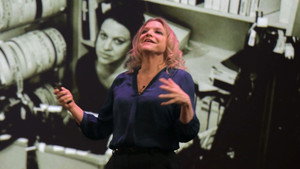
Brainwashed: Sex-Camera-Power
Investigates the politics of cinematic shot design, and how this meta-level of filmmaking intersects with the twin epidemics of sexual abuse/assault and employment discrimination against women, with over 80 movie clips from 1896 - 2020.
2022

I’m Not a Slut, I’m a Journalist
More than twenty sports journalists – working mainly on television (BeIN Sports, RMC Sport, France Télévisions, Canal+, TF1) but not only (L'Équipe, Radio France) – testify to the anger, despondency and helplessness they felt when they had to endure the “Yucky jokes”, the « culture de boy’s club » and degrading insults on social networks, while at the same time the presence of women in these programs and in the press has increased. Without forgetting the misogynistic comments, the heaps of small sentences on the physique or the competence, the sexual innuendos… until the moral or sexual harassment.
2021

Coded Bias
Exploring the fallout of MIT Media Lab researcher Joy Buolamwini's startling discovery that facial recognition does not see dark-skinned faces accurately, and her journey to push for the first-ever legislation in the U.S. to govern against bias in the algorithms that impact us all.
2020
Bitch! Une incursion dans la manosphère
2019

L7: Pretend We're Dead
A real time journey witnessing the rise, fall, and ultimate redemption of the fierce feminist pioneers of American grunge punk: L7.
2017
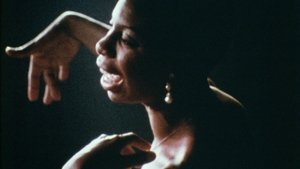
What Happened, Miss Simone?
The film chronicles Nina Simone's journey from child piano prodigy to iconic musician and passionate activist, told in her own words.
2015
She is an Umpire
Liu Bo-Jiun is the first female international baseball umpire. “First” seems to be an honor, but in a male-surrounded baseball field, the first female must experience an unprecedented review. As she fixes her eyes on every pitch coming forward, people fix their eyes on every judgment she made. If judgments on pitches were personal out of technical aspects, how about those judgments on people? The game begins at three balls, two strikes and two outs. What about her?
2014
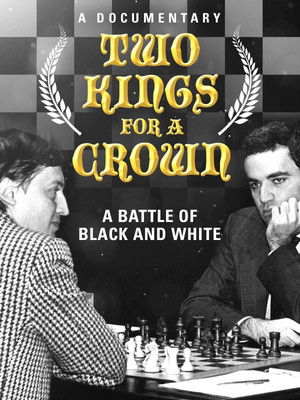
Karpov Kasparov - Two Kings for a Crown
Interwoven portraits of Anatoli Karpov and Garry Kasparov, whose 25-year bitter rivalry accompanied the fall of the USSR. The story of a duel between two chess giants, fighting a personal war in a world gone to ruin. This battle of black and white was more than a face-off over a chessboard. Part psychological drama, part political thriller, the film brings to life their hostilities, nested like Russian dolls. Karpov vs. Kasparov represents the battle between the faltering empire and the young liberals several steps ahead of the game, checkmating the old guard. Or how two stories – the societal one and the personal one – started out separately and ended up superimposed, twining together into one tale.
2014
Algorithms
Four blind Indian boys compete to become chess masters.
2013
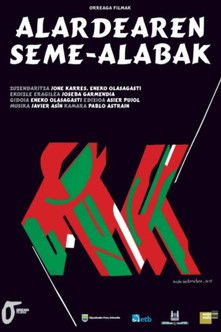
Alardearen seme-alabak
An analysis of the controversy over the participation of women in the Irun and Hondarribia festivity known as Alarde. It is divided into three parts: in the first part, the history, structure, and characteristics of the Alarde are explained; in the second part, the beginning of the conflict and its development in the 1990s; and in the third part, the present situation, reflecting on the present and future of the festival.
2013

Miss Representation
The film MISS REPRESENTATION exposes how American youth are being sold the concept that women and girls’ value lies in their youth, beauty and sexuality. Explores the under-representation of women in positions of power and influence in America, and challenges the media's limited portrayal of what it means to be a powerful woman. It’s time to break that cycle of mistruths.
2011
Heckler
HECKLER is a comedic feature documentary exploring the increasingly critical world we live in. After starring in a film that was critically bashed, Jamie Kennedy takes on hecklers and critics and ask some interesting questions of people such as George Lucas, Bill Maher, Mike Ditka, Rob Zombie, Howie Mandel and many more. This fast moving, hilarious documentary pulls no punches as you see an uncensored look at just how nasty and mean the fight is between those in the spotlight and those in the dark.
2007

DNA: Secret of Photo 51
On April 25, 1953, James Watson and Francis Crick published their groundbreaking discovery of the double helix structure of DNA. But their crucial breakthrough depended on the pioneering work of another biologist, Rosalind Franklin. 50 years later, NOVA investigates the shocking truth behind one of the greatest scientific discoveries and presents a moving portrait of a brilliant woman in an era of male-dominated science.
2007

Un racisme à peine voilé
October 2003, Alma and Lila Levy are excluded from the Lycée Henri Wallon in Aubervilliers solely because they were wearing a headscarf. What follows is a deafening political and media debate, justifying in most cases the exclusion of girls wearing head-scarves to school. February 2004, a law was eventually passed by the National Assembly. "A thinly veiled racism" is about this controversy since the affair of Creil in 1989 (where two schoolgirls were excluded for the same reasons) and attempts to "reveal" that maybe what hides behind is the desire to exclude these girls. This film gives them a voice as well as others - teachers, community activists, feminists, researchers - gathered around the group "A School for You-All" fighting for the repeal of this law they consider sexist and racist ... This movie was censured in Septembre 2004 in France.
2004

Love Meetings
Pier Paolo Pasolini sets out to interview Italians about sex, apparently their least favorite thing to talk about in public: he asks children if they know where babies come from; asks old and young women if they support gender equality; asks both sexes if a woman's virginity still matters, what do they think of homosexuality, if divorce should be legal, or if they support the recent abolition of brothels. He interviews blue-collar workers, intellectuals, college students, rural farmers, the bourgeoisie, and every other kind of people, painting a vivid portrait of a rapidly-industrializing Italy, hanging between modernity and tradition — toward both of which Pasolini shows equal distrust.
1965